Yadkin Valley Heritage & Trails Visitor Center
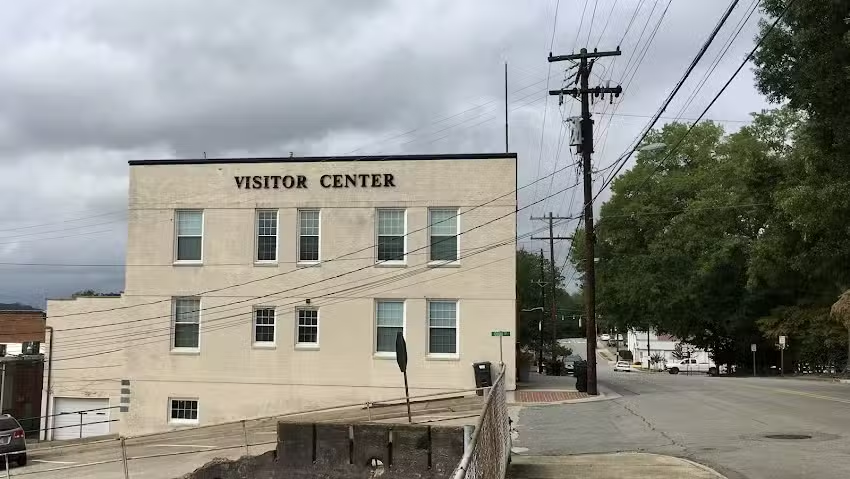
BackThe Yadkin Valley Heritage & Trails Visitor Center, located at 257 Standard Street in Elkin, North Carolina, presents itself as more than a simple repository for maps and brochures. It functions as a dynamic starting point for any visit to the region, operating in a capacity that closely mirrors a dedicated travel agency. Its primary role is to equip visitors with the necessary information and resources to engage with the area's attractions, particularly its renowned wineries and extensive trail systems. The staff is consistently described by past visitors as being highly knowledgeable and informative, capable of offering personalized recommendations that align with individual interests. This level of service is crucial for effective vacation planning, allowing travelers to move beyond generic itineraries and create a more tailored experience. The center houses numerous historical displays that provide context to the Yadkin Valley's heritage, adding an educational layer to its practical resources.
Services for Diverse Traveler Types
One of the most notable aspects of this center is its specialized support for different types of travelers, a key feature of modern tourism services. For the growing community of recreational vehicle (RV) enthusiasts, the center is a registered Harvest Host location. This designation allows self-contained RVs to park overnight, providing a convenient and centrally located base. This service transforms the center from a brief stop into a functional part of the travel experience. Visitors have noted the availability of showers, a valuable amenity for those on the road. Its location within a five-minute walk of downtown Elkin's restaurants, breweries, and shops further enhances its appeal as an overnight spot. This strategic positioning allows travelers to easily access local culture and dining without needing additional transportation.
Furthermore, the center acts as a direct facilitator for wine tourism, a major draw for the Yadkin Valley. It serves as the departure point for the "Vine Line," a shuttle service that transports visitors to a selection of local wineries. This service, which reportedly runs on weekends, is a significant asset, promoting safe and convenient access to the area's wine trail. By organizing such transport, the center takes on a role similar to a tour operator, offering a pre-arranged way to experience a key regional attraction. This is an invaluable service for those unfamiliar with the area or who prefer not to drive, making the process of planning a day of wine tasting seamless.
Community Integration and Local Offerings
Beyond its informational and logistical functions, the Yadkin Valley Heritage & Trails Visitor Center is deeply integrated into the local community. It periodically hosts an indoor farmers market, which provides a platform for local artisans and producers to connect directly with visitors. Reviews mention a variety of goods available, from homemade soaps and jewelry to wood carvings and locally made remedies. This initiative not only enhances the visitor experience by offering authentic local products but also supports the regional economy. It adds a tangible, interactive element to the visit, distinguishing it from more sterile information centers and contributing to a richer understanding of local tourism.
Points of Consideration and Potential Drawbacks
Despite its many strengths, potential visitors should be aware of certain operational aspects. The most significant limitation is the center's official operating hours, which are listed as Monday through Friday, 9:00 AM to 5:00 PM. It is officially closed on Saturdays and Sundays. This schedule presents a considerable inconvenience for weekend travelers, who constitute a large portion of visitors. Anyone arriving on a Saturday or Sunday may find the building itself inaccessible, which could be frustrating for those seeking last-minute information, maps, or access to the historical displays. This weekday-only schedule is a notable drawback for an organization focused on holiday planning.
However, there appears to be a noteworthy exception to the weekend closure. The aforementioned Vine Line shuttle service to the wineries is reported to operate from the center on weekends. This creates a slightly confusing situation: while the building may be closed, the location still functions as a crucial hub for a key tourist activity. Visitors planning to use the shuttle should confirm schedules and pickup procedures in advance, as staff assistance may not be available on-site during those times. Another point for RV travelers to consider is the center's proximity to a railroad. While one visitor charmingly referred to the train sounds as a "free wake up," light sleepers might find the noise disruptive for an overnight stay. It is a characteristic of the location that could be either a quaint feature or a distinct negative, depending on personal preference.
Final Assessment
In summary, the Yadkin Valley Heritage & Trails Visitor Center operates as a multifaceted organization that effectively supports the region's travel and tourism industry. Its strengths lie in its knowledgeable staff, its specific accommodations for the RV community through the Harvest Host program, and its proactive role in facilitating wine tourism via the Vine Line. The integration of local culture through events like the farmers market further elevates its standing. The primary weakness is its restrictive weekday-only operating hours, which can be a significant hurdle for weekend visitors. While the operation of the Vine Line on Saturdays provides a valuable service, the lack of clarity regarding on-site support during those times could be improved. For travelers planning a trip to the Yadkin Valley, a stop at this center on a weekday is highly recommended to fully leverage its resources for comprehensive destination management and planning. For those arriving on a weekend, it is advisable to conduct research online beforehand and verify the schedules of services like the Vine Line directly.