
Women’s Rights National Historical Park
BackThe Women's Rights National Historical Park, located at 136 Fall St in Seneca Falls, New York, offers a profound journey into a pivotal moment in American history. While categorized under various labels including museum, art gallery, and even travel agency, its primary function is to serve as a custodian of the narrative surrounding the first Women's Rights Convention of 1848. This institution operates not as a commercial entity booking trips, but as a destination that facilitates a unique form of cultural tourism, inviting visitors to step directly into the spaces where a national movement for equality began. With an overwhelmingly positive public reception, reflected in its high average rating of 4.6 stars from over 1,200 reviews, it stands as a significant tourist attraction for those interested in social justice and American history.
The Visitor Experience: Strengths and Highlights
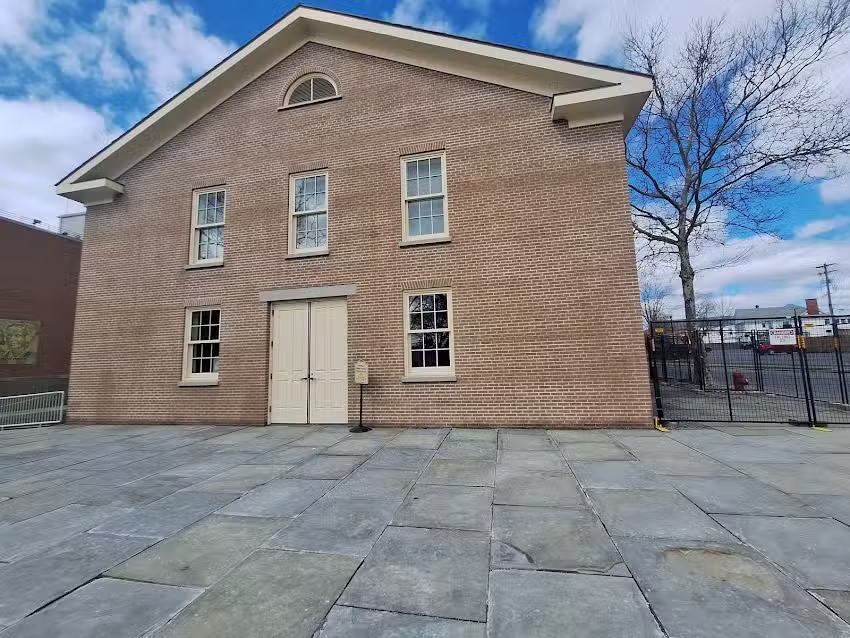
One of the most commendable aspects of the Women's Rights National Historical Park is its accessibility, beginning with the fact that admission is entirely free. This policy removes financial barriers and ensures that its educational resources are available to everyone, from students on educational travel to families and solo travelers. The experience is centered around a main visitor center and the adjacent Wesleyan Chapel, the actual site of the 1848 convention. Visitors consistently report being deeply moved by standing within the chapel's walls, a space that feels saturated with historical significance.
The exhibits themselves are a major strength. According to visitor feedback, they are not merely static displays of artifacts but are thoughtfully curated narratives that bring the struggles and triumphs of the early women's rights movement to life. The use of multimedia presentations, historical documents, and personal stories creates an immersive and emotionally resonant atmosphere. Many leave with a renewed appreciation for the figures who spearheaded the movement, feeling a powerful connection between past efforts and contemporary conversations about equality. The staff, comprised of National Park Service rangers, receives consistent praise for being exceptionally knowledgeable, welcoming, and passionate. Attending a ranger-led talk, particularly one held in the Wesleyan Chapel, is frequently cited as a highlight that provides crucial context and depth to the self-directed portions of the visit. This element elevates the experience beyond a simple museum walkthrough into a compelling session of historical tours.
Further enhancing the visit is a well-regarded gift shop. Unlike typical souvenir stores, it is stocked with inspirational books, apparel, and items related to the park's mission, allowing visitors to take a meaningful piece of their experience home. The overall impression is that of an institution that is not just preserving history, but actively making it relevant and empowering for a modern audience.
Considerations and Potential Drawbacks for Travel Planning
Despite the overwhelmingly positive feedback, prospective visitors should be aware of several logistical factors to ensure a fulfilling trip. The most common pitfall noted by past attendees is underestimating the amount of time required to fully appreciate the park. Some have reported arriving with only an hour or two to spare and finding it insufficient to see all the exhibits. This is a critical point for anyone's itinerary planning.
This time-management challenge is compounded by the park's operating hours. From Monday to Thursday, the facility closes at 4:00 PM. While weekend hours are more generous (9:00 AM to 5:00 PM), this earlier weekday closing can be a significant constraint for those undertaking long day trips or arriving in the afternoon. Proper scheduling is essential to avoid a rushed or incomplete visit.
Another important consideration is the park's structure. It is not a single, contained building but a collection of historically significant sites. While the main Visitor Center and Wesleyan Chapel are located at the Fall Street address, the park also includes the homes of key organizers like Elizabeth Cady Stanton and the M'Clintock family, where the Declaration of Sentiments was drafted. These homes are in separate locations within Seneca Falls. Visitors must factor in the time needed to travel between these sites, which may have different hours or accessibility. This multi-location format requires more detailed travel planning than a visit to a standard museum and is a crucial detail for any destination management effort, whether for individual travelers or group tours.
Who Should Visit?
The park holds a broad appeal, but it resonates most strongly with certain types of travelers:
- History Aficionados: For anyone with a deep interest in American history, civil rights, or the suffrage movement, this park is an essential pilgrimage. It offers a direct connection to primary historical events and locations.
- Students and Educators: As a hub for educational travel, the park provides a tangible and impactful learning experience that complements classroom studies. The free admission makes it particularly suitable for school trips and academic visits.
- Advocates and Activists: Those involved in social justice work often find the park to be an inspiring and reaffirming destination, connecting their own efforts to a long and courageous lineage of activism.
- Families: The park presents a valuable opportunity to introduce complex themes of equality and civic responsibility to younger generations in an engaging way.
In conclusion, the Women's Rights National Historical Park succeeds profoundly in its mission. It is far more than a collection of buildings; it is an immersive and moving experience that chronicles a vital chapter of the nation's story. Its primary assets are its powerful, well-presented exhibits, the passion of its staff, and its commitment to free access. However, a successful visit hinges on careful planning. Visitors must allocate ample time, be mindful of the shorter weekday hours, and prepare for the multi-site layout. For those who plan accordingly, the park offers a deeply rewarding journey into the heart of a movement that reshaped society and continues to inspire today.