Wilbur Visitor Center
BackTravelers passing through the small agricultural town of Wilbur, Washington, will find the remnants of a local tourism effort known as the Wilbur Visitor Center. It is crucial for anyone planning a trip through this part of Lincoln County to understand that this establishment is permanently closed. What once served as a point of interest and a rudimentary local travel agency has ceased operations, leaving behind a collection of outdoor artifacts that tell a fragmented story of its past and the region's history. The center's legacy is a mix of rustic charm and visible decline, offering a brief, curious roadside stop but no longer providing any form of travel service or information.
In its operational days, the Wilbur Visitor Center was intended to be a welcoming beacon for those exploring the sprawling wheat fields of the Big Bend region. It functioned on a small scale, not as a comprehensive tour operator with grand vacation packages, but as a humble repository of local knowledge. Visitors could, in theory, stop here for maps, brochures about nearby tourist attractions, and perhaps a friendly chat about the town's heritage. The physical structure itself, a small, weathered wooden building, aimed for a rustic, frontier aesthetic. This was complemented by an array of outdoor exhibits, including antique farming equipment and a distinctive statue of a coyote, affectionately nicknamed "Wilber." For some visitors, this composition was successful; one reviewer described the location as "So cute!!!", suggesting that the curated, old-fashioned ambiance held a certain appeal.
The Outdoor Appeal: A Roadside Photo Opportunity
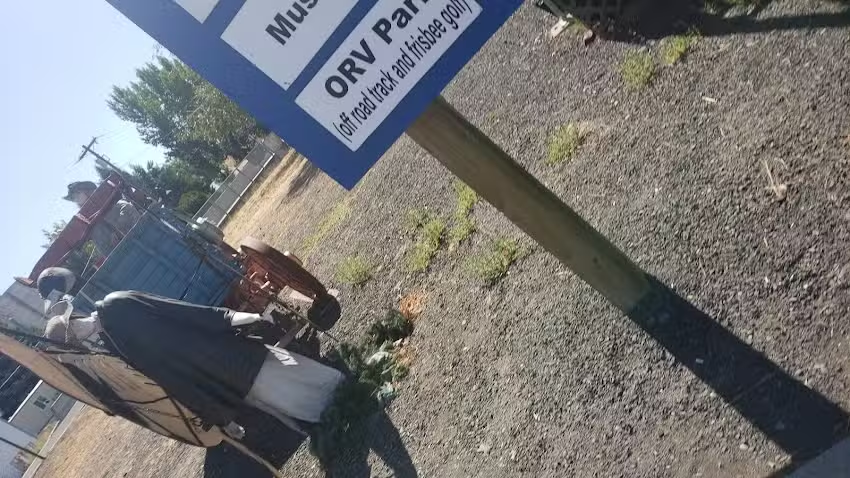
The most enduring aspect of the Wilbur Visitor Center, and the only element that remains potentially accessible, is its collection of outdoor items. The sentiment from a past visitor that "the stuff outside is cool if you want to stop and get a picture with willber" perfectly encapsulates its current value. This is not a destination for in-depth holiday planning or for arranging complex, customized itineraries. Instead, it is a classic roadside photo opportunity, a nostalgic nod to the era of cross-country road trips dotted with quirky attractions. The collection of rusted, antique farm machinery speaks to Wilbur's deep agricultural roots, offering a tangible connection to the past for those interested in the history of farming in the Pacific Northwest.
The centerpiece is the coyote statue, a common feature in towns looking to create a memorable mascot. Such roadside giants are staples of American adventure travel, inviting passersby to pull over, stretch their legs, and capture a unique memory. While the center itself is defunct, this statue and the surrounding artifacts continue to serve that limited purpose. They exist as silent monuments to a bygone tourism strategy, where a simple, visual curiosity was enough to entice travelers off the main highway. However, prospective visitors should temper their expectations; this is not a meticulously maintained museum exhibit but rather a static, weathered display exposed to the elements.
Signs of Decline and Eventual Closure
Despite the charm perceived by some, the center's reality in its later years was far from pristine. The same review that highlighted the cool photo opportunities also noted that the place was "kinds run down." This observation points to a significant issue that likely contributed to its eventual closure: a lack of resources for upkeep and maintenance. The low average rating of 3.5 stars, based on a scant total of two public reviews, suggests that the visitor experience was inconsistent at best and that the center failed to make a significant impact on the vast majority of travelers passing through. A successful destination management entity requires consistent quality and engagement, two areas where the Wilbur Visitor Center evidently struggled.
The state of disrepair indicates that the center was not a thriving hub of activity. It was a small-town effort that, like many similar ventures in sparsely populated areas, faced an uphill battle for funding and relevance. Without a steady stream of visitors or significant community investment, such facilities can easily fall into neglect. The weathered wood, peeling paint, and the general sense of abandonment visible in photographs tell the story of an operation that was slowly winding down long before it officially closed its doors. It stands as a case study in the challenges faced by micro-tourism initiatives that lack the infrastructure to evolve or compete for the attention of modern travelers who might be seeking more polished or interactive sightseeing tours and experiences.
What Remains for Today's Traveler
For anyone driving through Wilbur today, the site of the former visitor center is little more than a historical footnote. The building is shuttered, and no informational services are available. The promise of a travel agency that can assist with local exploration is long gone. However, the outdoor exhibits—the farm tools and the iconic coyote—may still be visible from the road. For photographers, historians, or enthusiasts of roadside Americana, a brief stop might still be worthwhile. It offers a poignant glimpse into the life and death of a small-scale tourist attraction.
The closure of the Wilbur Visitor Center means that travelers seeking information must look elsewhere. The town of Wilbur itself has other points of historical interest, but visitors will need to rely on online resources or other local businesses for information. The center no longer functions as a gateway to the region, and its absence leaves a small void in the local tourism landscape. Its story serves as a reminder that not all ventures succeed, and in the competitive world of tourism, even places with charm and good intentions can fade away.