Visit Seattle
BackLocated at 701 Pike Street within the Washington State Convention Center, Visit Seattle presents itself as the primary resource for travelers. However, it's crucial for potential visitors to understand its specific role. This is not a conventional travel agency where one books flights and comprehensive holiday packages. Instead, Visit Seattle operates as the city's official non-profit destination marketing organization (DMO). Its stated mission is to promote the economic prosperity of the region by championing Seattle as a premier destination for tourism. This distinction is key to managing expectations; it is an information and resource hub, not a full-service booking agent.
The Human Touch: A Key Asset
Where Visit Seattle truly distinguishes itself is through its staff. Multiple visitor accounts highlight the exceptional quality of the human interaction at their visitor centers. Testimonials frequently praise the team for being knowledgeable, insightful, and genuinely helpful. One visitor, preparing for out-of-town guests, specifically mentioned a staff member named James who provided excellent recommendations and deep insight. Another traveler described the location as the "ultimate visitor centre," primarily due to the presence of a "properly knowledgeable human" at the information desk. This consistent feedback points to a team of genuine destination experts who offer a personal touch that is often missing in the digital age of travel planning. For those looking for authentic local travel recommendations, from navigating public transport to finding tickets for events, the staff appears to be an invaluable resource. They are equipped to provide maps, brochures, and detailed information on everything from museum exhibits to neighborhood festivals.
Services and Accessibility
The organization offers a suite of services aimed at enhancing the visitor experience. They provide sightseeing assistance, referrals for Seattle tours, and in-depth information on countless sightseeing attractions. The main visitor center, located in the Arch building of the convention center, is wheelchair accessible and serves as a convenient first stop for many travelers, particularly those in town for conventions or business. The proximity to large meeting spaces makes it a practical resource for professionals looking to extend their stay for leisure. Additionally, Visit Seattle maintains another information center in the iconic Pike Place Market, offering daily service to accommodate the heavy foot traffic in that area.
The Dichotomy of Promotion vs. Reality
While the direct services of Visit Seattle's staff receive positive marks, a significant portion of the feedback associated with the organization paints a more complicated picture of the city it promotes. Several reviews on its public profiles are not critiques of the staff but rather visceral reactions to the realities of a visit to Seattle. These accounts serve as a crucial counterpoint to the polished image a DMO is designed to project.
One of the most pointed criticisms comes from travelers encountering unexpected costs and urban challenges. A detailed account from one visitor outlines a litany of frustrations, starting with hotel and parking fees that significantly inflated the final bill. This same review highlights a "$5.04 'Seattle tourism fee'"—a charge that can feel galling to tourists who are, by their very presence, already contributing to the local economy. This fee is the Seattle Tourism Improvement Area (STIA) assessment, which was established to fund the marketing efforts of Visit Seattle itself. Initially a $2 per night charge on hotel rooms, it was doubled to $4 in 2022 to bolster the city's competitiveness in the tourism market. While this funding mechanism is logical from a business standpoint, for the uninformed traveler, it can feel like a penalty for visiting.
Urban Environment and Visitor Experience
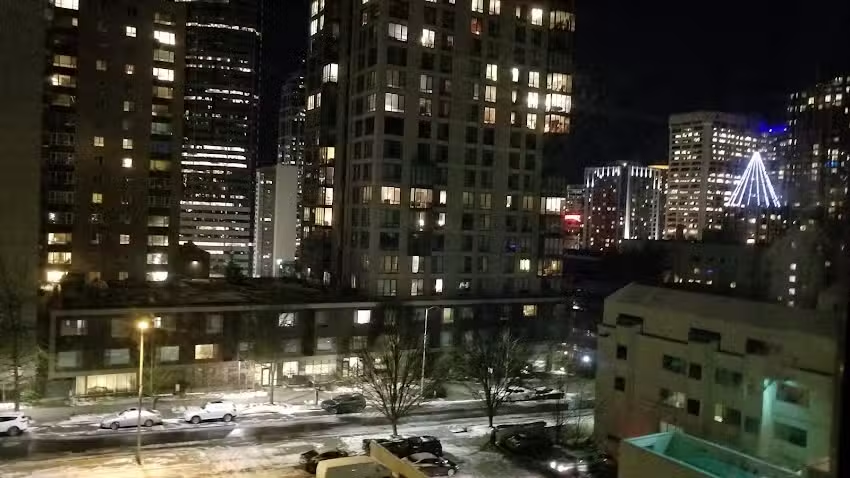
Beyond the financial aspects, visitor feedback frequently touches upon the broader urban environment. Complaints about "BRUTAL" traffic, the difficulty and expense of parking, and visible signs of urban decay, such as graffiti and public sanitation issues, are recurring themes. These negative experiences directly conflict with the idyllic picture often associated with tourism marketing. While these are problems common to many large American cities, they are part of the holistic visitor experience that a tourism agency like Visit Seattle is tasked with selling. The contrast between the helpfulness of the staff inside the visitor center and the challenging environment just outside its doors is stark. This creates a difficult position for the organization, as it has little direct control over the issues that most significantly tarnish a visitor's perception of the city.
Operational Limitations and Considerations
From a practical standpoint, potential visitors should be aware of some operational limitations. The main visitor center at the Washington State Convention Center operates only on weekdays, from 9:00 AM to 5:00 PM. It is closed on Saturdays and Sundays. This schedule is a significant drawback for leisure travelers, a primary audience for tourism, who often arrive for weekend trips and would benefit most from on-the-ground advice during that time. While the Pike Place Market location offers daily service, the limited hours of the main hub are a clear operational weakness for an organization dedicated to serving tourists.
Final Assessment for the Traveler
In conclusion, Visit Seattle functions as a valuable but complex resource. As a source of information, maps, and personalized recommendations from knowledgeable staff, it excels. Travelers who seek out their visitor centers for direct assistance with their vacation planning are likely to have a positive and helpful experience. The staff are consistently lauded as the organization's greatest strength.
However, travelers must balance this with the candid feedback regarding the city itself. The issues of high costs, aggressive tourism fees, traffic congestion, and urban blight are real and frequently cited by other visitors. Visit Seattle, as the city's chief promoter, is inextricably linked to these challenges. Potential visitors should therefore use Visit Seattle as a tool for informed travel planning, leveraging their expert advice on attractions and logistics, while also being mentally and financially prepared for the less-marketable realities of the Seattle experience. It is a resource best used by the pragmatic traveler who understands the difference between a destination's promotional image and its on-the-ground reality.