Tonto National Monument Visitor Center
BackServing as the critical gateway to a profound historical experience, the Tonto National Monument Visitor Center is far more than a simple administrative building; it functions as an essential, specialized travel agency for anyone planning to witness the 700-year-old Salado cliff dwellings. While it doesn't book flights or hotels, its role in preparing, educating, and equipping visitors for the journey ahead is indispensable. A successful trip to this significant archeological site begins here, and bypassing this first step can lead to a less fulfilling, or even a missed, opportunity.
Garnering a high average rating of 4.7 stars, the center is widely praised for its most valuable asset: the staff. Visitors consistently report interactions with friendly, knowledgeable, and helpful National Park Service rangers. This expert team provides the kind of personalized travel advice that is crucial for understanding the monument. They offer context, answer questions, and ensure that travelers are fully aware of the conditions and requirements for the trails, transforming a simple visit into an educational experience.
Your Pre-Hike Briefing: What the Center Offers
Before you even set foot on the trail, the visitor center provides the necessary foundation for your visit. Inside, you'll find well-curated interpretive displays and a collection of artifacts that offer a tangible connection to the Salado people who inhabited this area between 1150 and 1450 CE. A key feature is the 18-minute informational film, shown on demand, which details the history and culture of the Salado, explaining their innovative farming techniques and sophisticated craftsmanship in pottery and textiles. Watching this film is highly recommended as it enriches the subsequent hike by providing a narrative for the silent stone walls you are about to see.
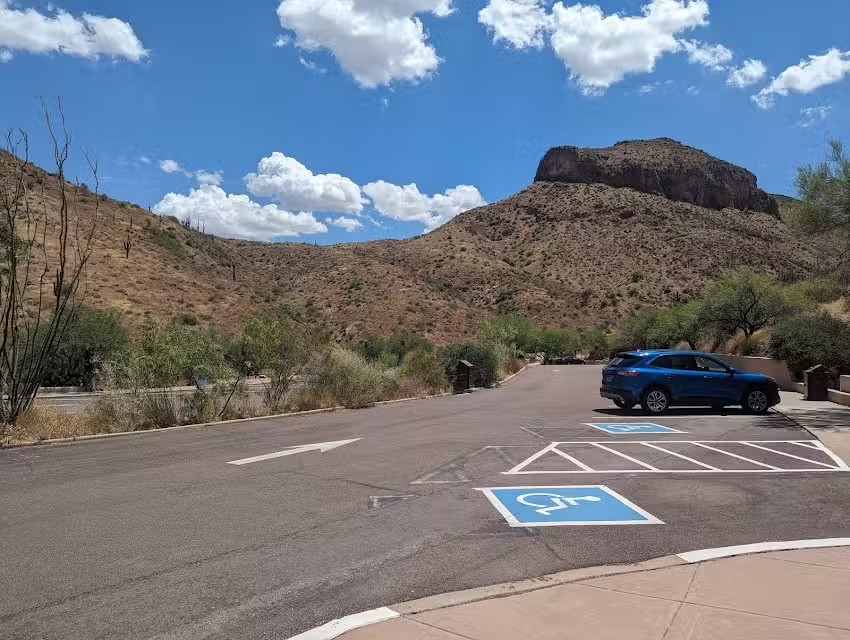
The facility also includes practical amenities that enhance the visitor experience. A well-stocked bookstore and gift shop, operated by the Western National Parks Association, allows for further reading and souvenir purchases. Clean restrooms and a beverage dispenser are also available, ensuring basic comforts are met before you embark on what can be a strenuous hike. For those with mobility concerns, the visitor center, museum, and picnic areas are fully accessible.
The Main Attraction: Accessing the Cliff Dwellings
The visitor center is the starting point for the trail to the primary tourist attraction: the Lower Cliff Dwelling. It's important for visitors to understand the physical demands of this trek. The trail is a paved, half-mile path, but it involves a steep ascent with a 350-foot elevation gain. While manageable for most, it requires a moderate level of fitness. The reward is an up-close encounter with a 16-room, multi-story dwelling nestled in a natural alcove.
Entrance to the monument, which includes access to the trail, costs $10 per person for those 16 and older; children are free. Federal recreational passes like the America the Beautiful pass are accepted. This fee is a small price for the preservation and maintenance of such a fragile historical site.
Critical Considerations: The Drawbacks and How to Plan for Them
Despite the overwhelmingly positive aspects, potential visitors must be aware of significant limitations that can impact their experience. These are not so much failures of the center but realities of preserving a delicate archaeological site, making proper holiday planning essential.
Timing is Everything
A recurring theme in visitor feedback is disappointment due to poor timing. Several people have reported arriving too late in the day to be allowed on the trail to the Lower Dwelling. The trail entrance typically closes at least one hour before the park's 5:00 PM closing time, and even earlier during the hot summer months (May to September), when hikers must start before noon. Arriving without checking these seasonal hours can result in missing the main attraction entirely. This makes the center's role as an information provider, and the visitor's responsibility to check the official NPS website, paramount.
Understanding the Tiers of Access
Perhaps the most significant point of potential confusion lies in the two separate cliff dwellings. The easily accessible one is the Lower Cliff Dwelling. However, the larger and more impressive 40-room Upper Cliff Dwelling has highly restricted access.
- Lower Cliff Dwelling: Open for self-guided tours year-round, weather permitting, via the steep half-mile trail from the visitor center.
- Upper Cliff Dwelling: Accessible only by a reservation-based, ranger-guided tour. These tours are only offered on specific days (weekends and some weekdays) from November through April to avoid extreme summer heat. The hike is a more strenuous 3-mile round trip and takes about 3-4 hours. Reservations must be made by phone and can fill up months in advance.
Many first-time visitors are unaware of this distinction and may be disappointed to learn they cannot see the Upper Dwelling. This is where the center’s function as a de facto tour operator comes into play; the rangers at the desk are the sole point of contact for booking these exclusive tours, making a phone call well in advance a mandatory part of any comprehensive tourism plan for this monument.
The State of the Ruins
Visitors should also manage their expectations regarding the condition of the dwellings. After more than 700 years of exposure, some structures have naturally collapsed. However, what remains is remarkably well-preserved, and the on-site rangers and the preparatory information from the visitor center help fill in the gaps, allowing you to appreciate the ingenuity of Salado architecture. The goal is not to see a pristine reconstruction, but to connect with an authentic piece of history.
Conclusion: An Essential First Step
The Tonto National Monument Visitor Center is not merely a stop along the way; it is the foundational element of a successful visit. Its educational resources provide depth and context, while its staff offers the critical guidance needed to navigate the monument's opportunities and limitations. By treating the center as the first step in your itinerary—checking hours online, calling ahead for tour information if desired, and taking the time to absorb the exhibits—travelers can ensure their journey to the past is both rewarding and complete. Without its services, one risks only scratching the surface of what this incredible historical site has to offer.