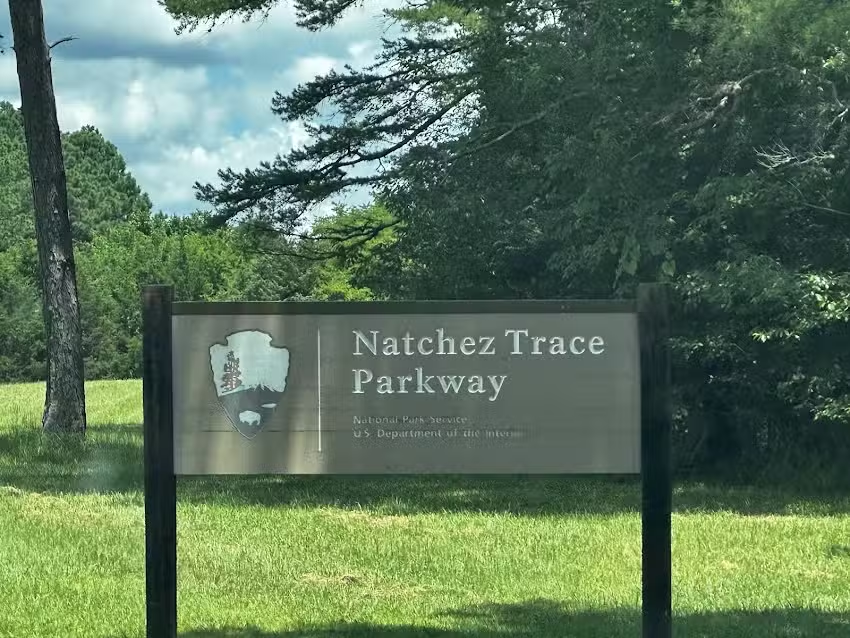
The Natchez Trace
BackWhen considering a travel agency, one typically imagines an office that books flights and hotels. The Natchez Trace, however, is something fundamentally different. It is not a service that plans a trip for you, but rather the trip itself: a 444-mile scenic and historic parkway managed by the U.S. National Park Service. This establishment functions as a curated journey, a self-guided tour package stretching from Nashville, Tennessee, to Natchez, Mississippi, with the primary visitor center located in Tupelo. With an overwhelmingly positive public reception, it offers a distinct travel experience, though it requires a specific mindset and careful planning to be fully appreciated.
The Appeal: A Slow-Paced, Immersive Journey
The core appeal of the Natchez Trace Parkway is its deliberate pace. A strictly enforced speed limit, generally 50 mph, transforms the drive from a race to a relaxing experience. Travelers consistently praise the smooth, well-maintained roads, gentle curves, and the absence of commercial traffic, stoplights, and billboards. This controlled environment makes it an exceptionally popular destination for motorcycle touring, where riders can enjoy the road without the typical hazards of a public highway. The journey is frequently described as peaceful and stress-free, a stark contrast to modern interstate travel.
Beyond the driving experience, the Parkway is a deep dive into cultural tourism. It follows a historic corridor that has been used for 10,000 years by Native Americans, settlers, soldiers, and traders. The route is dotted with nearly a hundred historical markers, archaeological sites like the Bynum Mounds, sections of the original "Sunken Trace," and points of interest such as the Meriwether Lewis gravesite. This rich historical tapestry invites travelers to make frequent stops, turning a simple drive into an educational and immersive activity. For a family vacation focused on history and nature, it provides countless opportunities to learn and connect with the past.
Key Strengths for the Traveler
- Exceptional Maintenance and Scenery: The roads are consistently described as clean and smooth. The scenery is a continuous corridor of lush greenery, forests, and fields, providing a serene backdrop for the entire trip. Restrooms and pull-offs are also noted for their cleanliness.
- Safety and Accessibility: The absence of cross-traffic and commercial vehicles creates a uniquely safe environment for cars, RVs, and especially cyclists. The entire 444-mile route is designated as a bicycle route.
- Informative Visitor Center: The main Parkway Visitor Center in Tupelo (milepost 266) is highly recommended as a first stop. It offers a bookstore, exhibits, and an informative film that provides essential context for the journey ahead, enhancing the overall experience.
The Reality: Planning and Potential Pitfalls
While the Natchez Trace offers a unique form of tourism, it comes with a set of challenges that potential visitors must understand. The very features that make it serene can also be its drawbacks. The most critical point for any traveler to grasp is the complete lack of commercial services directly on the Parkway. By design, there are no gas stations, restaurants, or hotels. This requires meticulous vacation planning. To refuel your vehicle or find a meal, you must exit the Parkway into one of the adjacent communities. This can add significant time to your journey and requires careful monitoring of your fuel gauge, especially in more remote sections.
Another frequently mentioned aspect is the potential for the scenery to become monotonous. While beautiful, the view consists largely of a continuous tree line for hundreds of miles. For travelers expecting dramatic, varied landscapes, the consistency of the view might feel repetitive. As one reviewer noted, it's a "corridor of mostly woods on both sides," and you won't see "a lot of anything different." This makes the Parkway best suited for those who appreciate subtle beauty and are primarily interested in the historical stops and the meditative quality of the drive.
Important Considerations Before You Go
- Time Commitment: Driving the entire 444-mile length at 50 mph takes approximately 9-10 hours without any stops. To truly experience the historical sites and nature trails, a trip should be planned over multiple days. A three-day journey is often recommended for a good overview, while a five-day trip allows for more in-depth exploration.
- Potential for Traffic: While generally quiet, the sections of the Parkway near larger cities like Tupelo and Jackson can experience commuter traffic during rush hours. Travelers seeking solitude should plan to navigate these areas outside of peak times.
- Limited Services: Beyond the lack of gas and food, cell service can be spotty or non-existent in many areas. It is highly advisable to download maps and the official NPS app for offline use. Furthermore, the three primitive campgrounds on the Trace are free but operate on a first-come, first-served basis and lack amenities like showers or electricity.
Conclusion: A Specialized Travel Experience
Ultimately, The Natchez Trace is not a conventional road trip destination; it is a specialized form of adventure travel. It does not cater to those in a hurry or those who require constant stimulation and convenience. Instead, it offers a profound experience for a specific type of traveler: the history enthusiast, the long-distance cyclist, the motorcycle touring group, and anyone seeking a peaceful, reflective journey through the American South. Its success as a travel destination hinges entirely on the visitor's preparedness. With proper travel planning—charting out fuel stops, accommodations, and points of interest in advance—the Natchez Trace Parkway delivers a deeply rewarding and unforgettable journey through history and nature.