Tensas River National Wildlife Refuge Admin Building and Visitor Contact Station
BackLocated at 2312 Quebec Rd in Tallulah, the Tensas River National Wildlife Refuge Admin Building and Visitor Contact Station serves as the primary gateway to one of Louisiana's most significant natural habitats. With an overall visitor rating of 4.4 out of 5, it presents a compelling case for nature enthusiasts. However, prospective visitors should be aware of several operational realities that shape the experience. This facility is not a conventional travel agency that books comprehensive trips, but rather a crucial resource center for self-directed immersion into the nearly 80,000 acres of protected bottomland hardwood forest.
The Visitor Experience: Strengths and Offerings
For those able to visit during its operational hours, the visitor center is a valuable asset. Reviews frequently praise the "very knowledgeable and friendly staff" who provide essential information for navigating the vast refuge. Inside, visitors find interactive presentations, historical photographs, and wildlife exhibits that detail the area's rich ecological story. This includes its storied past as part of the "Singer Tract," the last universally confirmed location of the ivory-billed woodpecker in the 1940s. The center effectively sets the stage for any eco-tourism adventure into the wild, offering maps and insights that are crucial for a successful visit.
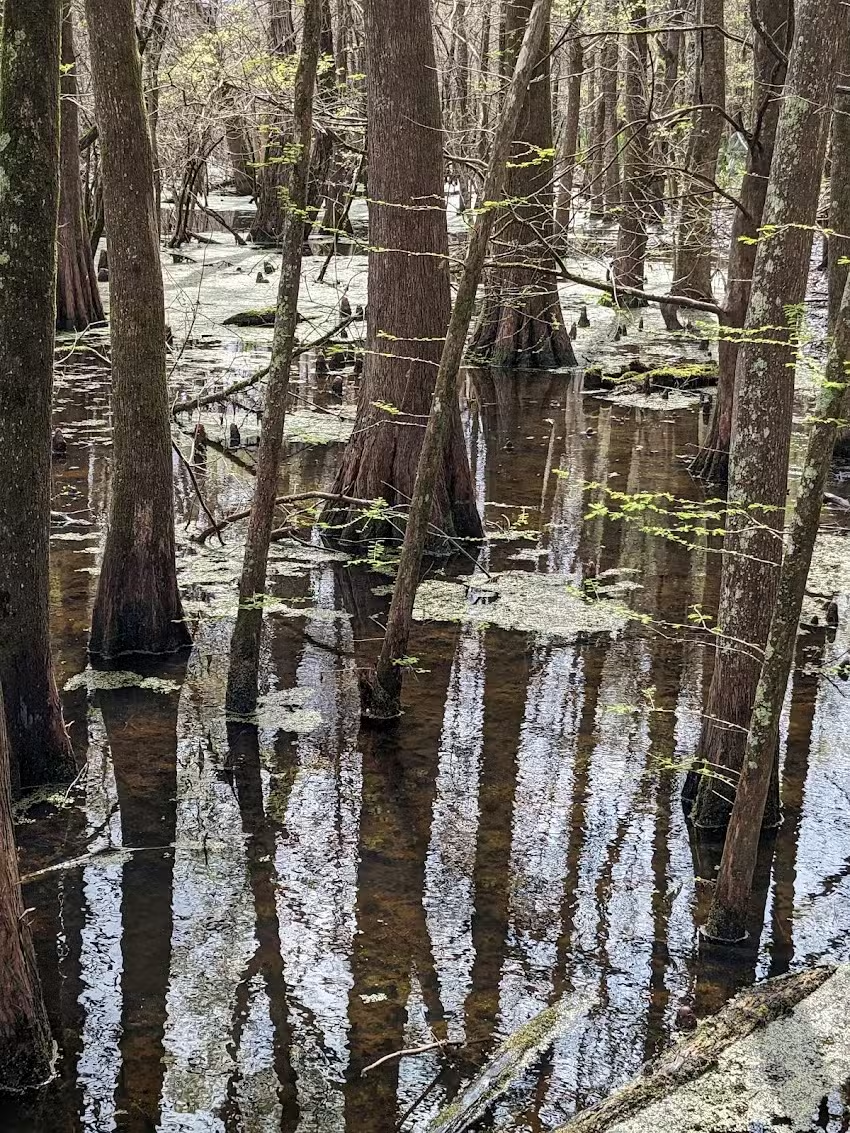
Directly accessible from the visitor center is a well-regarded nature trail. This wheelchair-accessible path features a boardwalk, the Hollow Cypress Trail, that winds through the forest to an observation tower overlooking a field. Visitors report that this tower is a prime spot for seeing white-tailed deer, wild turkeys, and occasionally, the Louisiana black bear, especially during the early morning or late afternoon.
Unparalleled Wildlife Viewing Opportunities
The primary draw for most visitors is the chance for exceptional wildlife sightings, making it a key stop among Louisiana travel destinations for nature lovers. The refuge is home to what may be the largest concentration of the Louisiana black bear in the state. The area holds historical significance connected to President Theodore Roosevelt's 1907 bear hunt, which famously inspired the "Teddy Bear." Beyond bears, the diversity is immense. Visitors and official sources list an incredible array of species, including:
- Mammals: White-tailed deer, bobcats, coyotes, raccoons, American river otters, wild hogs, and melanistic squirrels.
- Birds: A host of migratory birds, wild turkeys, wood ducks, barred owls, pileated woodpeckers, and various wading birds found near the lakes and swamps.
- Reptiles: American alligators are commonly seen sunning themselves near water bodies like the barrow pits in the Africa Bottom area.
The refuge offers several ways to engage in wildlife tours, primarily through self-guided exploration. The Greenlea Bend Wildlife Drive, a 4.5-mile gravel loop, is highly recommended. It passes through different managed habitats, and visitors frequently report seeing large herds of deer. For those seeking deeper adventure travel, the refuge allows regulated hunting for deer and other game, as well as fishing in its numerous lakes and bayous.
Significant Drawbacks and Considerations
Despite its natural appeal, the Tensas River NWR Visitor Contact Station has one glaring issue that significantly impacts accessibility: its operating hours. The facility is only open to the public from 8:00 AM to 3:30 PM on Tuesdays, Wednesdays, and Thursdays. It is closed every Monday, Friday, Saturday, and Sunday. This schedule is a major impediment for weekend tourists, families with school-aged children, and anyone with a standard work week. Multiple visitors have arrived to find the building locked, missing out on the valuable context and resources offered inside. It is crucial to note, however, that the refuge itself is generally open from sunrise to sunset, so trails and drives remain accessible even when the visitor center is closed.
The Reality of a Wild Environment
While the potential for animal encounters is high, it is never guaranteed. Some visitors report leaving without seeing much wildlife, a common reality in any natural setting. Success often depends on the time of day, season, and sheer luck. Furthermore, the environment itself is dynamic; one review noted a lack of water at a certain time, which can affect the landscape and animal behavior. Potential visitors should manage their expectations and understand that patience is key.
Another point to consider is the refuge's remote nature. As one visitor celebrated, cell service is "spotty," which is perfect for those looking to disconnect. However, this can be a serious concern for safety and navigation. It is highly advisable to download maps of the area beforehand and inform someone of your plans. While not a complete vacation package, a trip here requires a degree of self-sufficiency and preparation that is central to the experience of nature tourism.
Planning Your Visit
Given the limitations, a successful trip requires careful planning. If access to the visitor center's exhibits and staff is a priority, you must schedule your visit for a weekday. For those primarily interested in the trails and wildlife drives, a weekend visit is feasible, but you will be on your own for information and orientation. The combination of incredible natural beauty and significant logistical hurdles defines the Tensas River National Wildlife Refuge experience. It is an outstanding destination for the dedicated naturalist and wildlife photographer, but its restrictive schedule may prove frustrating for the casual traveler.