
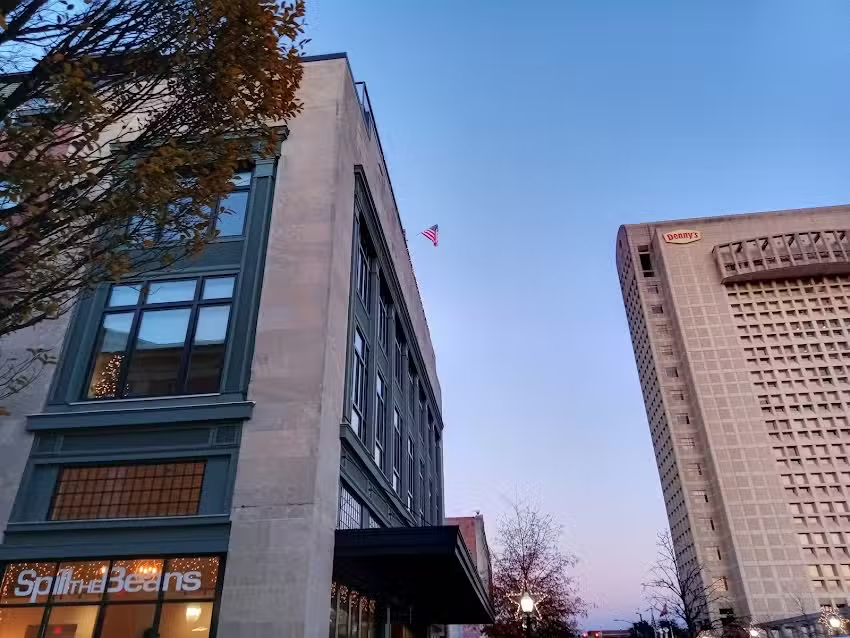
SPARTA Passenger Center
BackThe SPARTA Passenger Center, located at 100 N Liberty St, serves as the central hub for the Spartanburg Area Regional Transit Agency's public bus service. For residents and visitors alike, it presents a mixed bag of functionality and frustration. While it provides essential commuter services and a degree of tourist transportation for those navigating the city, the system is hampered by significant operational limitations and inconsistent customer experiences that prevent it from being a truly reliable and modern transit solution.
Assets and Positive Attributes
On the positive side, the core infrastructure of the service has commendable qualities. User feedback frequently points to the cleanliness of both the central passenger center and the buses themselves. This attention to hygiene creates a more pleasant environment for riders. Furthermore, the system is designed to be accessible. The vehicles are equipped to accommodate individuals with disabilities, and the main entrance to the passenger center is wheelchair accessible, ensuring that the service is available to a broader segment of the community. Several riders have also noted the safe driving practices of the bus operators, which is a fundamental aspect of any public transportation system. When the system works as intended, with friendly and helpful staff, it provides a valuable service. Some customers report positive interactions with employees who are courteous and professional, contributing to a satisfactory travel experience.
Core Service and Routes
SPARTA operates eight fixed routes that connect key destinations across the city and some surrounding areas. These routes service important locations such as:
- Shopping centers like Westgate Mall and Dorman Centre
- Educational institutions including Spartanburg Methodist College, Wofford College, and Spartanburg Community College
- Medical facilities like Spartanburg Regional Medical Center
- Community hubs and government buildings
This network makes the service a viable, low-cost option for students, seniors, and commuters who rely on public transit for daily travel. The existence of this network is a crucial piece of the city's infrastructure, offering an alternative to personal vehicles.
Significant Drawbacks and Areas for Improvement
Despite its foundational strengths, the SPARTA system is plagued by issues that significantly detract from its overall effectiveness and user satisfaction. These problems span from customer service to fundamental operational hours, painting a picture of a service struggling to meet the demands of its community.
Inconsistent and Poor Customer Service
A recurring and damaging theme in user feedback is the inconsistency of customer service. While some users report friendly staff, many others describe experiences with drivers and station personnel who are unprofessional, unhelpful, or outright rude. One rider recounted being harshly reprimanded by a driver over a misunderstanding. Another, a visitor from out of town trying to get to a job interview, found the station staff completely unhelpful, forcing them to rely on the kindness of other passengers for directions. An older, highly critical review even accused a specific driver of intentionally leaving passengers behind and arguing with customers. This level of inconsistency is a major deterrent for potential riders and creates a stressful environment for those who depend on the service. For any public-facing entity, especially one that functions as a form of travel agency for local transit, reliable and courteous staff are non-negotiable.
Severely Limited Operating Hours
Perhaps the most significant flaw in the SPARTA system is its restrictive schedule. The service generally runs from the early morning until about 5:00 or 6:00 PM on weekdays and has an even shorter schedule on Saturdays. Crucially, there is no service on Sundays or on numerous public holidays. This schedule immediately excludes a large portion of the population, including those who work second or third shifts, evening retail jobs, or in the weekend hospitality industry. Multiple users have expressed extreme frustration with this limitation, stating that the service is not practical for modern work schedules. The sentiment is that the system operates on an outdated, traditional model that has not adapted to the community's evolving needs. This lack of evening and Sunday service severely curtails its utility for both daily commuters and visitors who might want to use public transit solutions for evening activities.
Lack of Modern Communication and Technology
In an era where real-time information is standard, SPARTA lags behind. A notable complaint from a daily rider highlights the absence of monitors or a reliable app to show whether buses are running on a 30-minute or hourly schedule. This lack of transparent, real-time trip planning information led directly to the passenger being late for work. For a system to be considered reliable, users must have access to accurate, up-to-the-minute information about schedules, delays, and route changes. The inability to provide this basic technological convenience is a serious deficiency that undermines rider confidence and makes planning journeys unnecessarily difficult.
Recent Developments: SpartaGo
In a positive step towards modernization, the City of Spartanburg has recently launched a pilot microtransit program called SpartaGo in partnership with Via Transportation. This on-demand service operates similarly to rideshare apps like Uber and Lyft, allowing users to request curb-to-curb transportation for a small fee within specific zones of the city. This initiative is designed to reach residents who cannot easily access the fixed bus routes and offers more flexibility. While this is a promising development and a step in the right direction, it is currently a limited pilot program and does not yet resolve the systemic issues of the main fixed-route bus service. The success of SpartaGo could, however, provide a model for future expansions and improvements in the city's overall approach to destination management and public transport.
Need for Expanded Routes and Frequency
Beyond the limited hours, there is a clear demand from the public for more comprehensive service. Riders have explicitly stated a need for more routes to cover a wider area and for buses to run more frequently. One user even mentioned a willingness to pay higher fares in exchange for later service and expanded route options. This feedback suggests that the community sees the value in public transportation but finds the current implementation to be inadequate. Expanding the network and increasing the frequency of buses are essential steps if the service is to become a truly effective transportation solution for a growing city.
In conclusion, the SPARTA Passenger Center and its associated bus service function as a baseline public transit system. It offers a clean, accessible, and fundamentally safe way to travel on a limited number of routes. However, its potential is severely undermined by unprofessional customer service, critically insufficient operating hours that do not reflect the needs of a modern workforce, and a lack of technological integration for real-time information. While the new SpartaGo program shows a willingness to innovate, the core bus system requires significant improvements in scheduling and service to transition from a service of last resort to a convenient and reliable choice for the Spartanburg community.