
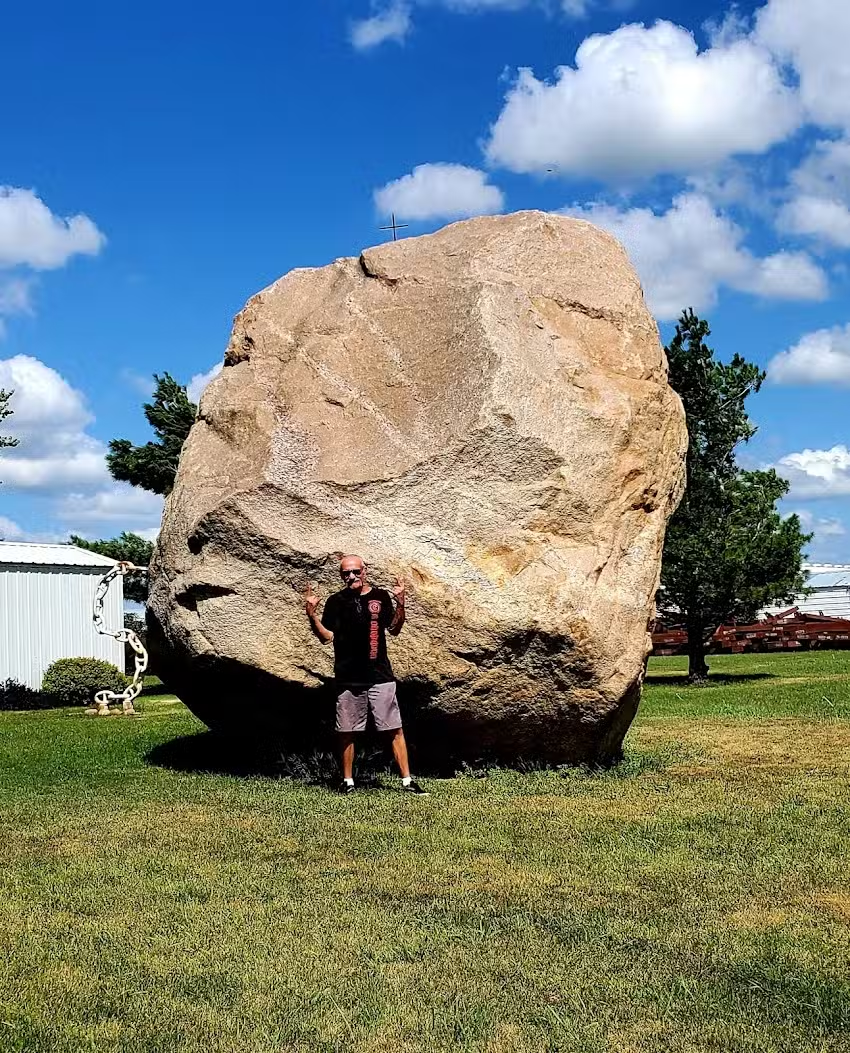
Slayton Rock
BackLocated on a rural road in Adair County, Slayton Rock presents itself not as a building or a service, but as a singular, massive object with a compelling history. While its Google classification may list it as a travel agency, it's crucial for potential visitors to understand that this is not a place for booking trips. Instead, Slayton Rock is the destination itself—a testament to one family's immense effort and a unique feature of Iowa tourism. It is, in essence, a point of interest that inspires a journey, rather than arranging one.
This enormous granitic boulder is a genuine geological anomaly for the region, a glacial erratic left behind by ice sheets thousands of years ago. Its sheer scale is the first thing that commands attention. According to visitor accounts and local stories, the rock stands approximately 16 feet high, measures 14 feet across, and has a circumference of 58 feet. Its estimated weight is a staggering 500,000 pounds, or about 250 tons. For perspective, that's the equivalent of roughly 40 full-sized elephants. These dimensions make it one of Iowa's largest fully exposed glacial deposits, a significant natural landmark for those with an interest in geology or simply an appreciation for natural grandeur.
The Appeal: More Than Just a Rock
The primary draw of Slayton Rock isn't just its size, but the human story of its placement. The rock is named after the Slayton family, who, in the late 1990s, decided to move it from a nearby field to its current, more prominent location. This was no small feat. What started as a plan to excavate a modest landscape rock quickly spiraled into a monumental undertaking. As farmer Donald Slayton began digging, more and more of the boulder was revealed until its true, immense scale became apparent.
The effort to move it became a local legend. It reportedly required the combined power of multiple Caterpillar bulldozers and Steiger tractors, totaling around 3,000 horsepower, to push and pull the behemoth across the land and down a gravel road. The process was slow and arduous, sometimes moving only inches a day. This story of rural ingenuity and sheer determination is what elevates Slayton Rock from a geological curiosity to one of the most intriguing roadside attractions in the state. Visitors are not just looking at a boulder; they are witnessing the result of a farmer's promise to see a job through, a project that united friends, neighbors, and local construction companies who lent their equipment and expertise. Nearly 100 people were involved in the project, turning it into a true community effort.
A Destination for Niche Travelers
For those engaged in vacation planning centered around authentic and offbeat Americana, Slayton Rock is a perfect fit. It is an uncommercialized, free-to-visit attraction open daily with generous hours from 8:00 AM to 9:00 PM. Its appeal lies in its simplicity and the quiet sense of awe it inspires. Furthermore, it can be easily integrated into a larger itinerary of unique tourist spots. One reviewer noted its proximity to the famous Freedom Rock, suggesting that a visit could be part of a series of day trips dedicated to discovering the unique character of rural Iowa.
Points of Consideration Before You Visit
Despite its unique appeal, prospective visitors should be aware of several potential drawbacks. It is essential to set realistic expectations. At its core, Slayton Rock is, as one visitor bluntly put it, "just a boulder." Those seeking interactive exhibits, extensive facilities, or a full day of activities will not find them here. The attraction's value is deeply tied to its backstory, and without that context, its impact might be diminished.
Logistical Challenges
The most significant practical issue is its accessibility. Multiple reports confirm that the only way to reach Slayton Rock is via gravel roads. This can be a considerable deterrent for several reasons:
- Vehicle Suitability: Not all vehicles are ideal for gravel travel. Low-clearance cars, sports cars, or motorcycles might find the journey challenging.
- Weather Conditions: After heavy rain or snow, these roads can become muddy, slippery, or difficult to navigate, potentially making the trip unsafe or impossible.
- Cleanliness: A trip down a gravel road will invariably leave a vehicle coated in dust or mud.
This access issue is a critical piece of information for anyone planning a visit and should be factored into their decision, especially if traveling in a rental car or during periods of inclement weather.
Lack of Amenities
As a rural, informal attraction, Slayton Rock has no on-site amenities. There are no restrooms, no visitor center, no gift shop, and no food or drink vendors. Visitors must be entirely self-sufficient. This reinforces its character as an authentic, uncurated experience but means that planning for basic needs like hydration and restroom breaks must be done in advance. It is a stop on a journey, not a full-service destination.
Final Assessment
Slayton Rock is a powerful symbol of perseverance and a fascinating piece of Iowa's landscape. It is not a conventional tourist trap but rather a rewarding stop for a specific type of traveler: the one who appreciates history, human endeavor, and the quiet, quirky corners of the country. While it might not be a primary destination that warrants a trip on its own for most people, it is an excellent addition to a list of unique travel destinations for those already passing through the area or specifically seeking out such curiosities.
Ultimately, the decision to visit should be based on a clear understanding of what it offers. It is a massive, impressive rock with an even more impressive story. It is also isolated, accessible only by gravel roads, and devoid of any facilities. For those prepared for the journey and intrigued by the story of a farmer who decided to move a 250-ton rock just because he could, Slayton Rock offers a memorable and genuinely unique experience that no commercial sightseeing tours could ever replicate.