
Seneca Museum of Waterways and Industry
BackThe Seneca Museum of Waterways and Industry presents a focused and deeply informative experience for those visiting Seneca Falls, New York. Functioning as both a museum and a niche tourist attraction, it carves out a specific identity in a town more widely recognized for its pivotal role in the women's suffrage movement. This establishment does not offer broad vacation packages, but instead provides a concentrated dose of local history that can significantly enrich any itinerary focused on cultural tourism. It tells the story of how water shaped commerce, community, and innovation in this key Finger Lakes location long before the first Women's Rights Convention was held.
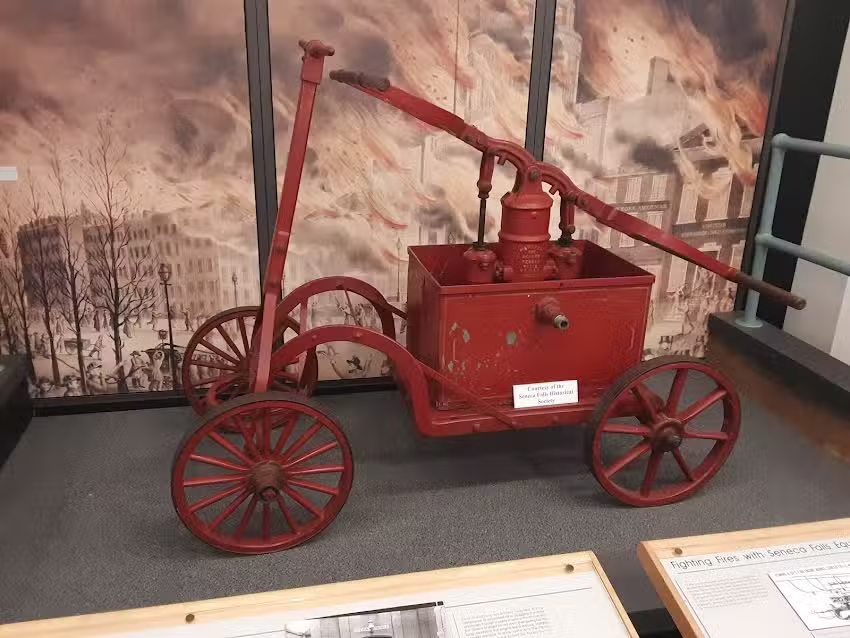
The museum's primary strength lies in its unique subject matter. While many visitors come to Seneca Falls for the Women’s Rights National Historical Park, this museum offers a complementary narrative that is essential for a complete understanding of the area. It details the town's rise as an industrial powerhouse, a history fueled by the power of the Seneca River and the logistical advantages of the Cayuga-Seneca Canal. Visitors will find displays dedicated to the major industries that once thrived here. The exhibits showcase everything from massive water and oil pumps, a nod to the enduring legacy of Goulds Pumps which was founded in the town, to fire engines, precision rulers, and even church bells. For anyone engaging in historical tours of the region, this content is invaluable, providing a tangible connection to the economic forces that built the community.
What to Expect from Your Visit
Based on visitor feedback and the museum's own presentation, potential guests should prepare for a content-rich environment. The experience is heavily reliant on reading detailed exhibit labels, which are supplemented by historical artifacts, maps, videos, and three-dimensional models. This makes it an excellent choice for those who appreciate a deep, academic dive into a subject. Those planning a trip will find the information is presented in an accessible, easy-to-understand manner, making complex topics like geology and industrial evolution digestible for the average person. The museum may not be large in terms of square footage, but it is dense with information, ensuring that an hour or two spent here can be incredibly rewarding. This makes it a prime destination for educational travel, particularly for older students and adults with a keen interest in American industrial history.
Another significant positive is the museum's staff, who have been described as very friendly and welcoming. This personal touch enhances the visitor experience, making the institution feel more like a community treasure than a sterile exhibit hall. Furthermore, the museum often features temporary displays that add fresh appeal. One such past exhibit included a collection of intricate, hand-crafted glass models of invertebrates on loan from Cornell University, blending science, art, and history. It is this kind of unique programming that keeps the museum relevant for both first-time and repeat visitors. A surprising and charming element for many is a subtle thematic tie-in to the classic film "It's a Wonderful Life," as Seneca Falls is widely believed to be the real-life inspiration for Bedford Falls. This connection adds a layer of nostalgic appeal.
The Financial and Logistical Upside
Perhaps the most compelling reason to add the Seneca Museum of Waterways and Industry to your New York travel plans is the cost of admission: it is completely free. In an era of rising travel costs, a high-quality, free-to-enter museum is a major benefit for families, solo travelers, and anyone on a budget. This allows visitors to allocate their funds to other local attractions while still enjoying a substantive cultural experience. Its location on Fall Street also makes it an easy and convenient stop while exploring the town's main thoroughfare.
Critical Considerations Before You Go
Despite its many strengths, the museum has some significant drawbacks that every potential visitor must consider during their holiday planning. The most critical issue is accessibility. The museum is located on the second floor of the Seneca Falls Heritage and Tourism Center, and there is no elevator or ramp, making it inaccessible for visitors who use wheelchairs or have significant mobility challenges. This is a major limitation and should be a primary consideration for many. Any professional travel agency would be remiss not to highlight this fact prominently.
The museum's size and format also define its ideal audience. While praised for its informational depth, it is considered a "quick stop" by some. It is not a sprawling institution that requires a full day. Visitors should plan for a visit of one to two hours. This makes it a perfect complement to other activities in Seneca Falls, but it may not be a primary destination in itself. Additionally, the text-heavy nature of the exhibits, while a positive for some, can be a negative for others. Families with young children or visitors who prefer highly interactive, hands-on displays might find the experience less engaging. The emphasis is on reading and quiet contemplation rather than dynamic interaction.
Finally, while the operating hours are listed as being fairly standard (Monday through Saturday), visitor reviews have sometimes mentioned them as being "quirky." As is common with smaller, community-focused museums, hours can be subject to change due to staffing, holidays, or special events. It is strongly recommended that anyone planning a visit first check the official website or call ahead to confirm the museum will be open, ensuring a smooth and successful trip.
The Verdict for Travelers
In conclusion, the Seneca Museum of Waterways and Industry is a valuable and highly recommended stop for a specific type of traveler. It is ideally suited for history enthusiasts, curious adults, and anyone interested in the industrial heritage that underpins much of American history. Its free admission makes it an undeniable bargain, and its unique focus provides a crucial layer of context to the Seneca Falls story. It stands as a testament to the idea that the most impactful elements of Finger Lakes tourism are not always the most famous.
However, it is not a universally suitable attraction. The lack of wheelchair accessibility is a significant barrier that will unfortunately exclude some visitors. Its dense, reading-focused style and compact size require managed expectations. For those to whom these considerations are not a hindrance, the museum offers a fascinating and intellectually stimulating glimpse into the past, making it a worthy and memorable part of any visit to Seneca Falls.