
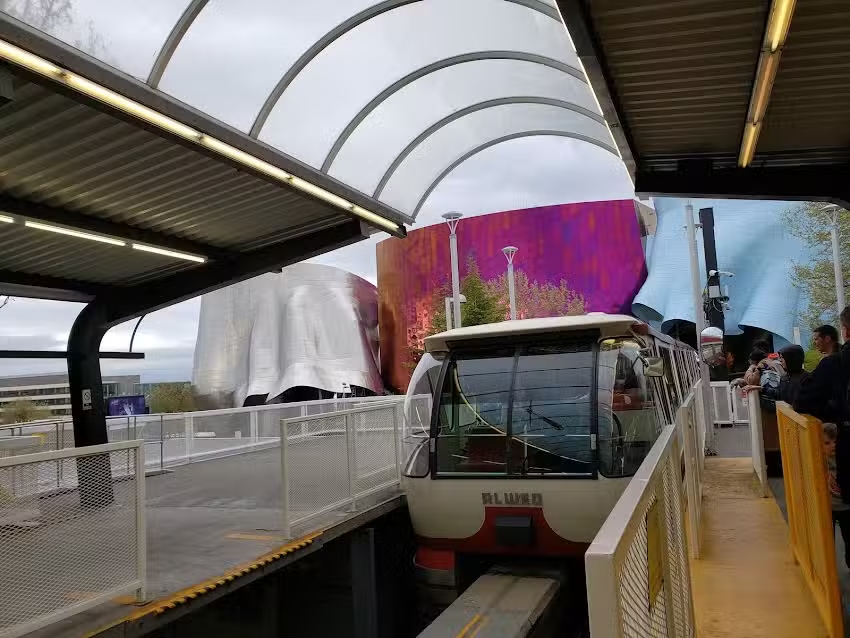
Seattle center monorail
BackThe Seattle Center Monorail presents itself as more than just a transportation link; it's a piece of living history and a distinct element of the city's identity. Originating from the 1962 World's Fair, this elevated train system provides a direct connection between two of Seattle's most frequented areas: the downtown retail core at Westlake Center and the sprawling cultural campus of the Seattle Center. For travelers engaged in trip planning, understanding the specific role, benefits, and drawbacks of the Monorail is key to optimizing their time in the city.
A Critical Link for Sightseeing
The primary function of the Monorail, and its greatest strength, is its role as a dedicated shuttle between these two major hubs. The journey itself is remarkably brief, clocking in at approximately two minutes, making it the most efficient method by far to travel between the Space Needle and downtown shopping. This speed is a significant advantage over navigating city traffic by car, rideshare, or bus. For any visitor crafting a sightseeing tour, this rapid transit saves valuable time that can be better spent at the attractions themselves. The convenience factor is high, particularly for those with limited time or those who prefer to avoid the complexities of urban driving and parking.
The experience of the ride is an attraction in its own right, making it a popular choice for family travel. The elevated tracks provide passengers with a unique perspective of the city streets below. One of the most memorable moments of the short trip is when the train passes directly through the Museum of Pop Culture (MoPOP), offering a fleeting but fascinating glimpse into the uniquely designed building. This novelty transforms a simple transit ride into a memorable part of a Seattle visit. Its historical significance also adds a layer of appeal. Riding the Monorail is, in a small way, participating in the futuristic vision of the 1960s, making it a nostalgic journey for some and a fun, retro-futuristic experience for others.
Accessibility and Connection to Tourist Hotspots
Upon arrival at the Seattle Center station, visitors are deposited at the doorstep of a dense collection of tourist attractions. The service acts as a gateway to:
- The Space Needle
- Chihuly Garden and Glass
- Museum of Pop Culture (MoPOP)
- Pacific Science Center
- Climate Pledge Arena
- The Bill & Melinda Gates Foundation Discovery Center
This proximity makes the Monorail an integral part of many pre-arranged vacation packages focused on Seattle's main sights. Furthermore, the system is noted for its wheelchair accessibility, ensuring that visitors with mobility challenges can utilize this convenient service. The downtown station's location on the third floor of Westlake Center is also strategic, placing riders directly within a major shopping mall and steps away from the city's primary retail district and the Westlake Link light rail station, which provides broader access to other neighborhoods and the airport.
Practical Limitations and Considerations
Despite its clear benefits, potential riders should be aware of the Monorail's significant limitations. The most critical point is its scope: it is a point-to-point system with only two stations. It is not a comprehensive public transit network for getting around the entire city. Visitors looking for extensive transportation services will need to supplement the Monorail with Seattle's broader network of buses and light rail. Thinking of it as a specialized tourist shuttle rather than a city-wide subway is the correct approach.
The cost is another factor to consider. While not excessively expensive, the price for a two-minute, one-mile journey can feel steep when compared to the cost-per-mile of other public transit options. For a family, the fares can add up, making a round trip a notable expense in a day's budget. It's a trade-off between cost and the convenience and experience it offers. During peak tourist seasons and event days at the Seattle Center or Climate Pledge Arena, the trains can become extremely crowded. This can lead to waiting in line to board and a less comfortable ride, which may detract from the overall experience.
Operational Constraints
The Monorail's operating hours, typically starting around mid-morning and ending in the early evening at 7:00 PM, may not align with everyone's itinerary. Those hoping for an early start at the Seattle Center or attending a late concert or event might find the service has already closed for the day, necessitating alternative transportation. It is always advisable for travelers to check the official website for the most current schedule, as hours can vary based on season and events. While the system now accepts the regional ORCA transit card alongside credit cards and mobile payments, it remains a distinct entity from the King County Metro and Sound Transit systems, which can sometimes cause minor confusion for those new to the city's transit landscape.
Conclusion: A Niche but Valuable Service
Ultimately, the Seattle Center Monorail occupies a unique and valuable niche. It doesn't claim to be a comprehensive transit solution, but it excels at its specific purpose: providing a fast, fun, and historic link between downtown and the Seattle Center. For first-time visitors, families, and anyone prioritizing convenience for visiting the city's most famous landmarks, it is a highly recommended experience. A modern travel agency would advise clients to see it as an attraction that doubles as transportation.
While those on a tight budget or with transportation needs beyond its limited route may opt for other options, the Monorail remains an iconic part of Seattle tourism. For those deciding on booking travel logistics, the decision to ride the Monorail comes down to weighing its undeniable convenience and unique character against its cost and limited scope. For many, the memorable two-minute glide above the city is a quintessential Seattle moment that is well worth the price of the ticket.