Rock Harbor Visitor Center
BackThe Rock Harbor Visitor Center serves as the primary operational hub and point of entry for many travelers arriving at the northeast end of Isle Royale National Park. Far more than a simple information kiosk, this facility, managed by the National Park Service, functions as an essential logistical base in a remote wilderness setting. It provides the first official welcome, critical safety briefings, and the basic necessities that underpin any successful visit to the island. For those undertaking adventure travel, its role is pivotal, acting as both a starting block for backcountry treks and a final checkpoint before returning to the mainland.
Staff Expertise and On-Site Resources
One of the most consistently praised aspects of the Rock Harbor Visitor Center is the quality of its staff. The National Park Service Rangers are frequently described by visitors as welcoming, highly knowledgeable, and exceptionally helpful. They provide an initial orientation upon arrival, which is crucial for first-time visitors to understand the unique environment of Isle Royale. For travelers planning multi-day hikes, the rangers offer indispensable advice on trail conditions, water sources, and wildlife safety, making the center a vital stop for vacation planning and ensuring safe travel. Their expertise transforms a simple map into a practical plan, helping visitors navigate the park’s extensive trail system confidently.
Beyond personnel, the center itself is a key resource. Here, visitors can obtain backcountry permits, browse publications about the island's unique ecology—including its famous wolf-moose study—and get schedules for ranger-led interpretive programs. Adjacent to the visitor center, a trading post and store offer a curated selection of goods. While it's not a place to purchase a full set of camping gear, it is stocked with essential items that one might forget, such as snacks, basic supplies, and souvenirs. One useful tip shared by seasoned hikers is to check for partially used fuel canisters left by departing campers, a small but practical detail that underscores the community spirit among island visitors. These facilities collectively provide a crucial safety net in a location where self-sufficiency is paramount.
Amenities and Activities at the Harbor
The Rock Harbor area is the most developed on the island and offers a range of services that cater to different types of travelers. For those looking to experience the island from the water, the marina offers canoe, kayak, and motorboat rentals. This service is a cornerstone of many tour packages, allowing access to secluded coves and nearby islands that are inaccessible by foot. However, due to high demand during peak season, it is strongly recommended to reserve watercraft in advance to avoid disappointment. The harbor also offers sightseeing tours on the MV Sandy, which take visitors to historic sites like the Rock Harbor Lighthouse.
For accommodation, the area provides options beyond tent camping. The Rock Harbor Lodge offers hotel-style rooms and more secluded housekeeping cabins, appealing to visitors who prefer a solid roof over their heads after a day of hiking. This makes the destination accessible not just for rugged backpackers but also for those seeking a comfortable nature retreat. The lodge complex includes a restaurant and a snack bar offering meals like pizza and burgers. While convenient, visitors with tight schedules, especially day-trippers, have noted that food service can be slow. A practical alternative is to bring your own lunch, ensuring more time is spent on the trails rather than waiting for a meal.
The Practical Realities: A Significant Undertaking
While the experience at Rock Harbor is overwhelmingly positive, potential visitors must understand that a trip to Isle Royale is a significant logistical and financial commitment. This is not a casual destination, and the journey itself is a major part of the experience. The most critical factor in your trip planning will be transportation.
Transportation: Time and Cost
Reaching Rock Harbor requires a substantial investment of both time and money, a fact that can be a significant drawback for some. Several ferry services operate from the mainland, each with different departure points, travel times, and schedules.
- The Ranger III, operated by the NPS from Houghton, MI, is a six-hour journey one way.
- The Isle Royale Queen IV from Copper Harbor, MI, is a faster option, taking approximately three to four hours.
- The Voyageur II from Grand Portage, MN, circumnavigates the island and can take over seven hours to reach Rock Harbor.
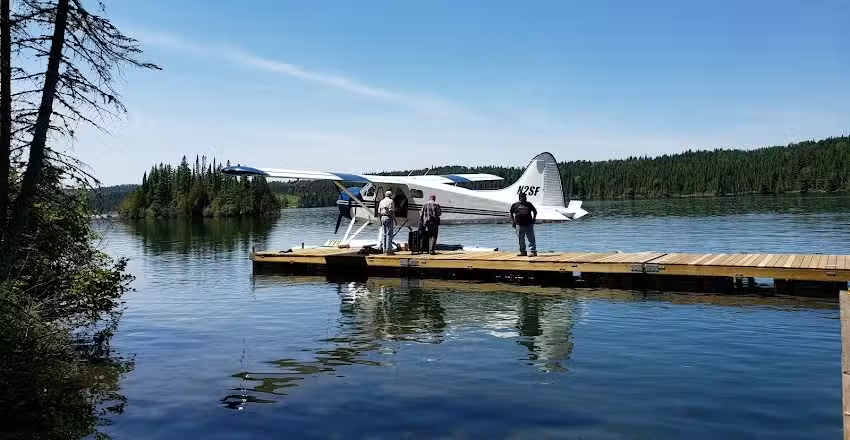
Seaplane services are also available and offer a much quicker transit time of under an hour, though at a considerably higher price. Ferry costs can be a major part of the travel budget, with one family of four reporting a boat fare of $650 for a day trip. This particular trip involved a 7.5-hour round trip on the water for only three hours on the island, highlighting the challenging time constraints for those not staying overnight. These factors must be weighed carefully when deciding on the length of a stay.
Limited Infrastructure and the Need for Self-Sufficiency
The infrastructure at Rock Harbor, including the visitor center, is intentionally minimal. The facility is described as "tiny," a deliberate choice by the National Park Service to limit the human footprint on the pristine wilderness. This philosophy of preservation is central to the island's appeal for eco-tourism, but it has practical implications for visitors. You must arrive well-prepared. The store stocks only the basics, so all specialized gear, clothing, and the majority of your food must be brought with you. This is especially true for those planning extended backcountry travel.
Furthermore, the island's remoteness means that external factors like weather can have a significant impact on your plans. Ferry and seaplane schedules can be disrupted by rough conditions on Lake Superior. One visitor reported a negative experience with the Rock Harbor Lodge's strict cancellation policy after their seaplane was grounded due to weather, resulting in a lost deposit. This highlights the importance of understanding the terms and conditions of all bookings and perhaps considering travel insurance. As a potential customer, it is wise to prepare for the unexpected and have contingency plans in place. This is not a destination that offers the flexibility of a mainland resort; it is a true wilderness experience where nature ultimately dictates the terms.