Richmond Hill Convention and Visitors Bureau
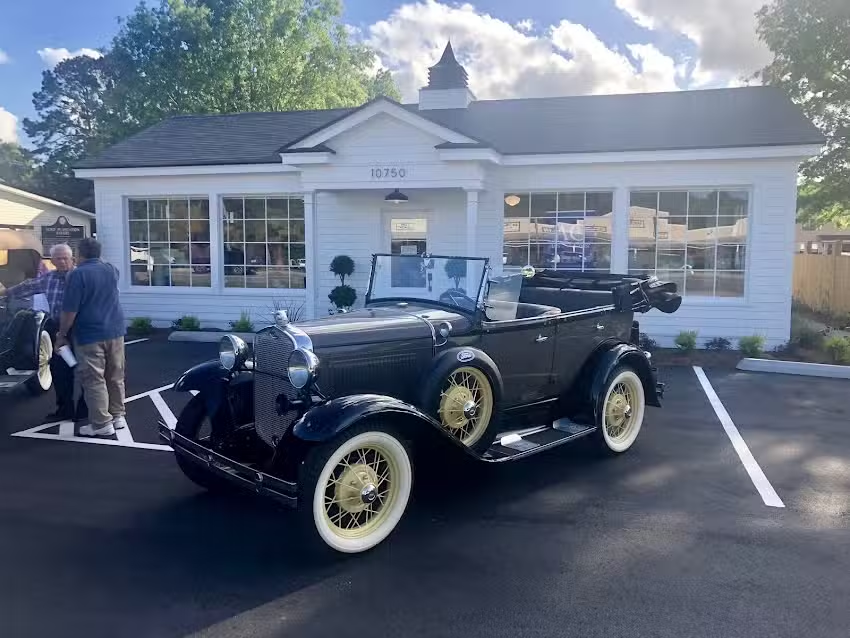
BackThe Richmond Hill Convention and Visitors Bureau operates as much more than a typical tourist information center. Located at 10750 Ford Avenue, it serves a dual purpose: providing essential resources for travelers and functioning as a cultural hub through its integrated art gallery. Housed in a historically significant building, this bureau offers a unique entry point into the region's heritage, particularly its deep connection to automotive pioneer Henry Ford. While it garners high praise for its knowledgeable staff and unique offerings, potential visitors must contend with operational constraints that can significantly impact their ability to access its services.
A Hub for Historical Insight and Local Culture
One of the most frequently praised aspects of the Richmond Hill CVB is the profound expertise of its staff, particularly its director. Multiple accounts highlight their deep knowledge of coastal Georgia and the intricate history of the town. This isn't merely a place to pick up brochures; it is a resource for travelers seeking a substantial understanding of the area. The staff's ability to engage in detailed conversations, especially regarding Henry Ford's transformative impact on the community, sets this bureau apart from many other travel agency operations. Visitors interested in heritage tourism will find the staff's insights invaluable for their itinerary planning.
The Henry Ford Connection
The story of Richmond Hill is inextricably linked with Henry Ford, who, starting in the 1920s, purchased over 85,000 acres in the area for a winter estate and agricultural experimentation. Ford's influence was profound; he didn't just build a home, he built a community. He was instrumental in constructing schools, medical facilities, churches, and modern infrastructure, effectively lifting the once-impoverished Ways Station into the 20th century and renaming it Richmond Hill. The CVB is well-versed in this history, providing context and resources for those wishing to trace Ford's legacy through the town's architecture and landmarks.
The very building housing the bureau is a piece of this history. It is the restored Ford Plantation Bakery, built in 1941 to supply fresh goods to Ford's employees. This restoration project saved a building that was nearly demolished, preserving a tangible piece of the Ford era. Inside, visitors can see artifacts like an original mixer and work table, which help to tell the story of the building's original purpose. This historical grounding gives the bureau an authenticity that enhances the visitor experience, making it a key stop for anyone undertaking historical tours of the region.
Arts on The Coast Gallery
A distinctive feature that elevates the bureau beyond a standard information center is the inclusion of the Arts on The Coast art gallery. This gallery, located within the same space, showcases and sells works by local and regional artists, with a strong emphasis on coastal themes. This integration of art and tourism provides a richer, more engaging experience. It allows visitors to connect with the region's contemporary culture and natural beauty through the eyes of its artists. For those interested in cultural tourism, the gallery is a significant draw, offering a chance to acquire a unique memento of their visit to coastal Georgia travel destinations.
Critical Considerations for Potential Visitors
Despite its many strengths, the Richmond Hill Convention and Visitors Bureau has significant drawbacks that potential clients must be aware of for effective travel planning. These issues primarily revolve around accessibility and managing visitor expectations.
The Challenge of Limited Operating Hours
The most substantial negative aspect of this establishment is its severely restricted hours of operation. The bureau is open only from 10:00 AM to 2:00 PM, Monday through Friday, and is closed entirely on weekends. These hours are exceptionally inconvenient for the vast majority of tourists. Travelers visiting for a weekend are unable to use its services at all. Even weekday visitors may find the four-hour window difficult to fit into a schedule of exploring local attractions. This limitation significantly undermines its role as a primary tourism center, as its availability does not align with typical travel patterns. Anyone planning a trip to Richmond Hill should consider these hours a critical factor and make arrangements to visit within this narrow timeframe or seek information through alternative channels.
Managing Expectations of the Historic Building
While the bureau's location in the historic Ford Bakery is a notable feature, it has also led to some mismatched expectations. One visitor, while appreciating the beautiful restoration, expressed disappointment at not seeing more of the bakery's interior preserved as it was. It is important for visitors to understand that the building's primary function is now a modern office, a destination management hub, and an art gallery. It is a work of adaptive reuse, not a preserved museum of a bakery. While historical artifacts are on display, those expecting a fully immersive bakery exhibit may feel let down. The value lies in its history and current function as a resource center, and setting expectations accordingly is key to a positive experience.
Conclusion: A Valuable but Inconvenient Resource
In summary, the Richmond Hill Convention and Visitors Bureau is a high-quality, valuable resource for any traveler looking to understand the unique history and culture of the area. Its expert staff, deep historical knowledge—particularly of the Ford era—and the charming Arts on The Coast gallery make it a standout institution. It serves as an excellent starting point for any vacation planning focused on the region's rich heritage.
However, the praise must be tempered by the practical reality of its accessibility. The extremely limited weekday-only hours are a major impediment that requires careful planning to overcome. For those who can align their schedules, a visit is highly recommended. For others, it remains a potentially frustrating missed opportunity. It is a genuinely helpful travel agency and information hub that, due to its operational schedule, does not fully meet the needs of the very tourists it aims to serve.