Plymouth Whale Watching
BackOperating from the historic Town Wharf in Plymouth, Massachusetts, Plymouth Whale Watching provides specialized boat trips focused on marine wildlife. This operation is a key offering from Capt. John Boats, a company with a long-standing presence in the region's maritime tourism, established back in 1946. This extensive history provides a foundation of experience, yet the day-to-day reality of each trip is subject to the unpredictable nature of the sea and its inhabitants. Prospective customers will find a service that receives high praise for its crew and successful sightings, but also faces criticism regarding inconsistent experiences and the physical challenges of a sea voyage.
The Onboard Experience: Crew and Sightings
A recurring theme in customer feedback is the quality of the crew. Many patrons describe the staff as friendly, professional, and, most importantly, highly knowledgeable. These are not simple boat drivers; the crew often includes naturalists or marine biologists who provide educational commentary throughout the journey. This transforms a passive viewing trip into an engaging eco-tourism event, where passengers can learn about the behaviors, migration patterns, and conservation status of the whales they hope to see, including Humpbacks, Finbacks, Minke, and the endangered Right Whales. This educational component is a significant value-add, particularly for families and those with a keen interest in marine biology.
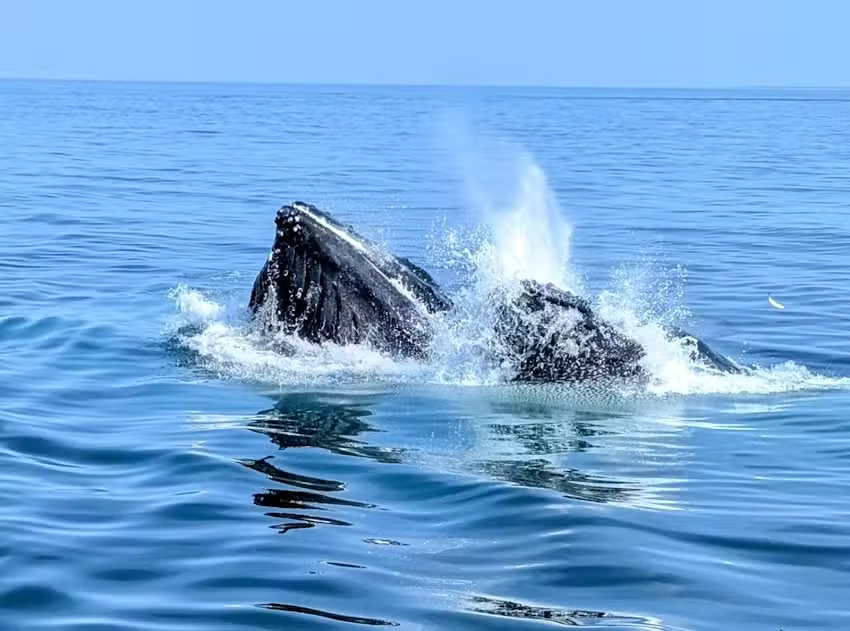
The primary goal of any whale watching tour is, of course, to see whales, and by many accounts, this operator frequently succeeds. Several reviews enthusiastically recount incredible sightings of multiple whales, sometimes coming very close to the vessel. The company's deep-sea fishing trips, which often depart earlier, can provide valuable intelligence, relaying whale locations back to the tour captains and increasing the probability of a successful outing. When these moments happen, customers describe the experience as amazing and unforgettable, validating the time and money spent. These successful trips are the foundation of the company's strong overall rating and its reputation as one of the premier Plymouth attractions.
Potential Downsides and Customer Criticisms
Despite the high potential for a memorable trip, there are significant drawbacks that any potential customer must consider. The most fundamental issue is that whale sightings are never guaranteed. Some customers have endured the entire four-hour trip without seeing any whales at all. This is an inherent risk in any wildlife excursion, but it can be a source of major disappointment, especially given the cost and time commitment.
Another frequently mentioned issue is the prevalence of seasickness. The journey to the Stellwagen Bank feeding grounds can take between 75 minutes to two hours each way. During this time, the vessel is moving in open water, which can be choppy even on days that appear calm from shore. Multiple reviews mention a large number of passengers becoming ill, with staff distributing sick bags. It is strongly advised that anyone prone to motion sickness take preventative measures before boarding, as this can easily ruin the entire experience. Furthermore, it is always significantly colder on the water—sometimes 10 to 15 degrees cooler than on land—so dressing in warm layers is essential, even in summer.
A more specific but serious criticism has been raised regarding the viewing experience itself. One customer reported that the captain appeared to consistently position the boat to favor one side, leaving passengers on the other side with poor or no views of the marine life. This led to frustration and anger among those who felt they were being excluded. While this may be an isolated incident, it points to the potential for an inequitable experience depending on where you are on the boat and who is at the helm.
Logistics, Cost, and What to Expect
Planning is crucial for a smooth trip with this tour operator. It is highly recommended to arrive early, as lines can be very long and the best viewing spots on the upper decks are taken quickly. Parking can also be a challenge in the busy wharf area. The total duration of the trip is typically between 3.5 to 4 hours, a significant portion of which is travel time to and from the whale feeding grounds.
The cost is another factor to consider. While pricing is comparable to other operators in the region, some patrons have found it to be expensive, particularly for larger groups or families, with one group of seven citing a cost of over $500. When whale sightings are plentiful, the price feels justified, but if no whales are seen, it can feel like a costly and uncomfortable boat ride. The vessels are equipped with amenities, including a galley serving food and beverages and restrooms. However, it's wise to confirm if cash is needed for onboard purchases. The company does offer wheelchair accessibility, which is a positive feature for those with mobility concerns.
Final Assessment
Plymouth Whale Watching, through the established Capt. John Boats, presents a compelling but mixed offering. As a travel agency specializing in marine life tours, it has the experience, knowledgeable staff, and local expertise to provide a truly breathtaking encounter with some of the ocean's most majestic creatures. The educational aspect provided by onboard naturalists elevates the trip beyond simple sightseeing.
However, the potential for disappointment is real. Customers must be prepared for the possibility of no sightings, the high likelihood of feeling cold, and the very real risk of seasickness. The investment of time and money is significant, and the return is not guaranteed. Potential issues like crowded vessels and uneven viewing opportunities should also be factored into the decision. Ultimately, this is an adventure for the well-prepared traveler who understands the risks and rewards of seeking wildlife in its natural habitat. Booking a trip should be seen as purchasing a chance for an incredible memory, not a guarantee of one.