
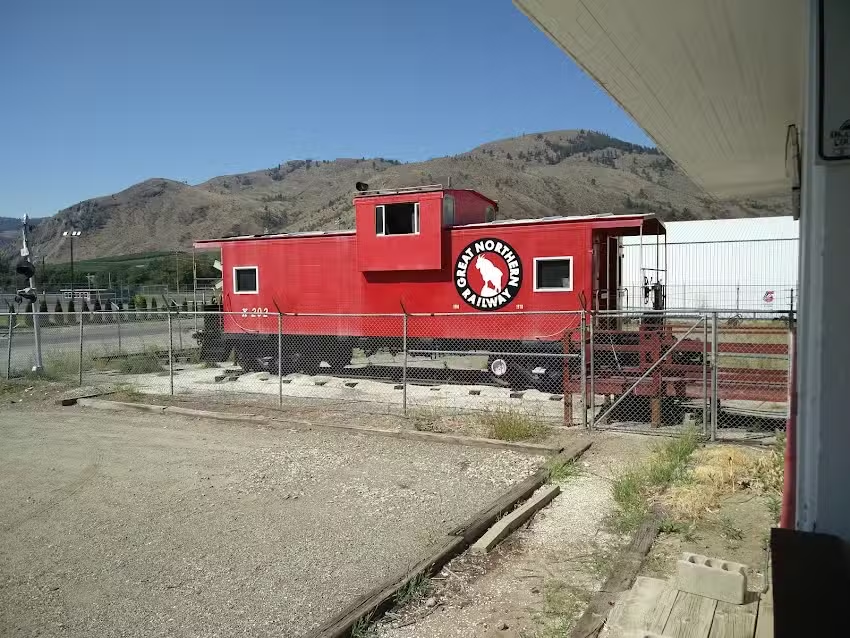
Oroville Visitor Info Center
BackLocated at 1210 Ironwood Street, the Oroville Visitor Info Center serves as a primary point of contact for travelers arriving in this northern Washington area, just four miles from the Canadian border. Operating under the umbrella of the local Chamber of Commerce and supported by county and city funds, this establishment presents itself as more than just a kiosk with pamphlets; it is categorized as a travel agency, suggesting a deeper level of service for those planning their visit. However, a closer examination of its public profile reveals a mixed and somewhat enigmatic presence, creating a nuanced picture for potential clients weighing its utility for their vacation planning.
Services and Strengths
On the positive side, the center's greatest asset is its function as a centralized, official source of local information. Housed in the historic 1907 Great Northern Railroad Depot, it offers a tangible connection to the area's heritage, which it shares with the Depot Museum. For any traveler, the availability of physical maps, brochures, and firsthand advice from staff is invaluable, particularly in a rural region where digital connectivity might be inconsistent. The staff are tasked with providing comprehensive information on lodging, recreation, local points of interest, and even border crossing regulations. This direct access to curated, local knowledge is a significant advantage over sorting through endless, often contradictory, online sources. Furthermore, the building features a wheelchair-accessible entrance, ensuring its services are available to all visitors.
The designation as a travel agency implies a capacity for more than just information dissemination. According to some service descriptions, the center may organize tours for sightseeing, nature and wildlife, and fishing. It is positioned as a potential partner in active itinerary planning, helping visitors connect with local businesses and opportunities for local excursions. This establishment could be the starting point for discovering everything from hiking on the Similkameen Trail to wine tasting at local vineyards or finding unique adventure travel opportunities in the Okanogan Highlands. In essence, it acts as a form of destination management organization, aiming to provide a coherent and enriching visitor experience by developing and maintaining a database of all tourist-related facilities in Oroville.
The Ambiguity of its Online Reputation
Despite these strengths, the Oroville Visitor Info Center's digital footprint presents a significant challenge for prospective clients. The center holds an average rating of 3.8 stars based on a very small sample of just four online ratings. While not a poor score, it lacks the statistical significance to provide a reliable measure of quality. More critically, none of these ratings are accompanied by any text or detailed feedback. This creates a vacuum of information for anyone trying to assess the center's effectiveness from afar. Potential customers are left to wonder about the specifics: Is the staff truly knowledgeable and friendly? Are their recommendations for lodging or dining reliable? Do the tour packages they might arrange offer good value?
In today's travel landscape, where peer reviews are a cornerstone of decision-making, this lack of substantive feedback is a considerable drawback. Travelers looking for dedicated travel specialists often rely on the detailed experiences of others to build trust. Without these testimonials, the center’s ability to attract clients for more involved services, such as booking comprehensive holiday packages, is likely hindered. This information gap forces potential visitors to take a leap of faith, relying solely on the center's official self-representation rather than on a body of public opinion.
Clarifying Expectations for the Modern Traveler
The core issue for a potential customer is understanding the true scope of the center's services. While the term travel agency suggests booking capabilities and transactional support, its primary identity as a visitor information center, run by the Chamber of Commerce, points toward a more informational and promotional role. It is highly probable that the center excels at providing resources and recommendations, effectively connecting tourists with local tour operators and businesses, but may not handle the booking logistics themselves. This is a critical distinction. A traveler expecting a one-stop-shop for all their travel arrangements might need to adjust their expectations.
For the self-sufficient traveler who enjoys piecing together their own itinerary, this center is an excellent resource. It provides the essential building blocks—maps, contacts for local businesses, and insider tips—to construct a personalized trip. However, for the visitor seeking a full-service agent to manage all their bookings and create a seamless, pre-arranged experience, the center's capabilities remain unconfirmed by its public profile. The best course of action for this type of traveler would be to contact the center directly via its phone number, (509) 476-2739, to clarify the extent of their service offerings before arrival.
In conclusion, the Oroville Visitor Info Center stands as a fundamentally useful and accessible resource for anyone visiting the Oroville area. Its strength lies in being a brick-and-mortar hub for reliable, local information. However, its ambiguous digital presence and the lack of detailed customer reviews make it difficult to fully endorse its capabilities as a comprehensive travel agency. It is best approached as an invaluable first stop for information and guidance, a place to get one's bearings and discover local gems, while being prepared to manage the finer details of booking and scheduling independently.