
Organ Cave
BackOrgan Cave, located at 242 Organ Cave Dr, Ronceverte, West Virginia, holds a significant place in the state's natural and cultural history. It is recognized as a National Natural Landmark and is listed on the National Register of Historic Places, designations that underscore its importance. However, for those considering a visit, the most critical piece of information is its current status: the attraction is marked as permanently closed, and its official website confirms it is closed for renovations without providing a timeline for reopening. This closure follows a period of inconsistent operation, creating a complex legacy for what was once a prominent tourist attraction.
A Deep-Rooted History
The appeal of Organ Cave has always been twofold: its geological formations and its profound connection to American history. The cave system is one of the longest in the state, with miles of mapped passages. Its name is derived from a specific calcite formation that resembles a large pipe organ, one of the many natural sculptures created over millennia. For many visitors, the main draw was the opportunity to witness these subterranean features firsthand.
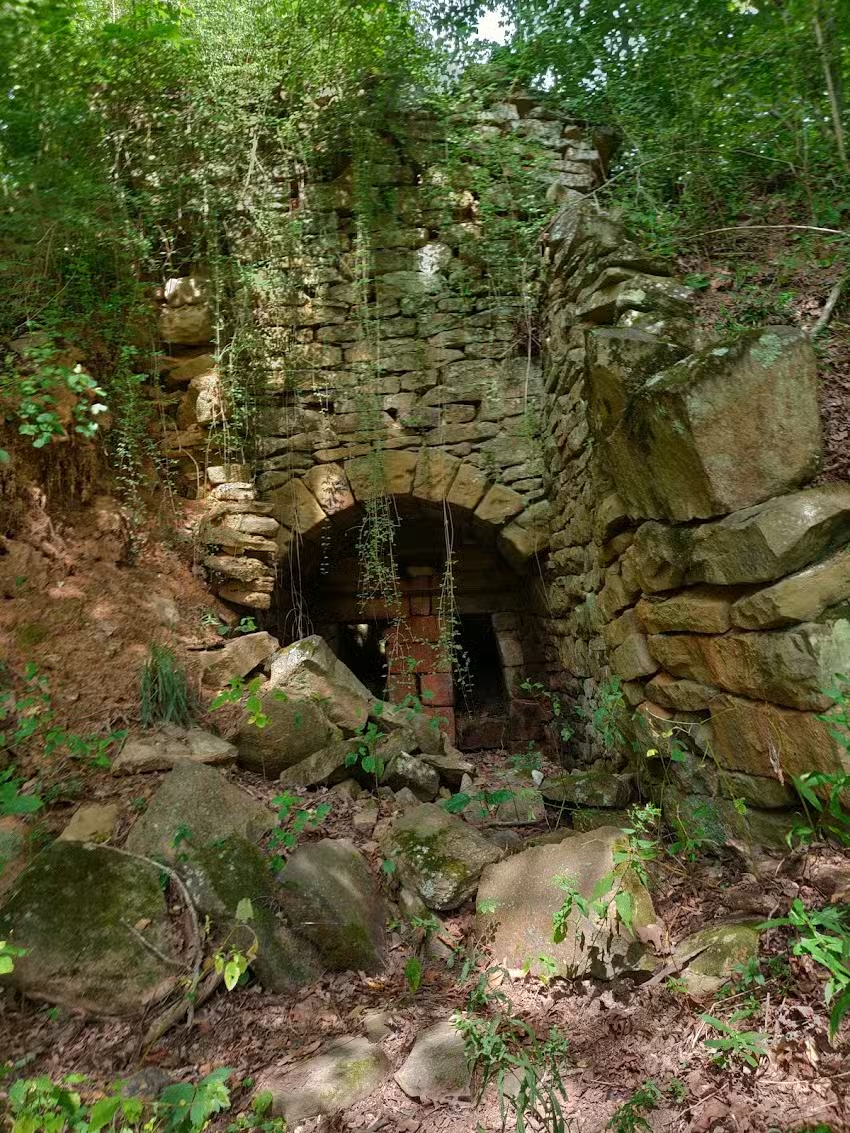
Equally compelling is the cave's human history. It played a crucial role during the Civil War when Confederate soldiers, under the command of General Robert E. Lee, mined its soil for saltpeter, a key ingredient for gunpowder. The cave still houses the largest collection of Civil War-era saltpeter hoppers in the nation, wooden structures remarkably preserved by the dry cave environment. Reports suggest that at times, over a thousand soldiers took shelter within its chambers, even holding church services there. This rich background made the historical tours a significant part of the Organ Cave experience, offering a tangible link to a pivotal moment in the nation's past. The cave is also connected to paleontological history, with fossils of prehistoric creatures like the giant ground sloth, Megalonyx jeffersonii, reportedly discovered there.
The Visitor Experience: A Tale of Two Extremes
When operating at its best, Organ Cave provided memorable experiences. Positive accounts from past visitors often praise the substance of the tours. Some recall tour leaders who were knowledgeable and passionate, effectively communicating the cave's extensive history and geological significance. These visits were seen as educational and worthwhile, making it a recommended stop for family vacation spots. The sense of descending into a living museum, where history was physically present in the form of mining artifacts and natural formations, left a lasting impression on many.
However, the operational reality of Organ Cave was not always so pristine. A significant number of visitors reported deeply negative experiences that stand in stark contrast to the positive ones. One of the most persistent complaints, even before the final closure, was unreliability. Multiple potential visitors noted arriving during advertised business hours only to find the gates locked, with no prior notice. This inconsistency severely damaged its reputation as a dependable destination.
Serious Concerns Over Safety and Professionalism
Beyond simple unreliability, more serious issues regarding safety and the quality of the guided tours have been raised. Several accounts describe the cave's pathways as inherently hazardous, with uneven and extremely slippery surfaces. While this is common in natural cave environments, the criticism directed at Organ Cave was that the staff allegedly failed to provide adequate warnings or assistance. One detailed account described a tour led by very young and unprofessional individuals who seemed to lack historical knowledge and were inattentive to the group's safety, only pointing out dangerous spots after people had already slipped or stumbled. This points to a significant lapse in operational standards for a business engaged in adventure travel.
This inconsistency in staffing—ranging from knowledgeable historians to unprepared teenagers—suggests a systemic issue within the management. For a tour operator, ensuring a consistent, safe, and professional experience is paramount, and the volume of negative feedback indicates that Organ Cave struggled to meet this standard. The lack of basic safety measures, such as liability waivers mentioned by one visitor, further compounded these concerns.
Current Status and Legacy
As it stands, Organ Cave is not an accessible destination for tourists. The conflicting information online—sometimes listed as temporarily closed, other times as permanently—and the static message on its own website create confusion. The most reliable information points to a long-term, indefinite closure. This situation represents a loss for West Virginia tourism, as the site holds immense potential. However, its history is a cautionary tale. The business's legacy is now a dual one: a site of incredible historical and natural value that was simultaneously marred by significant and persistent operational failings. For any future operators, should the cave ever reopen, addressing these deep-seated issues of reliability, safety, and professional training will be essential to rebuilding public trust.