
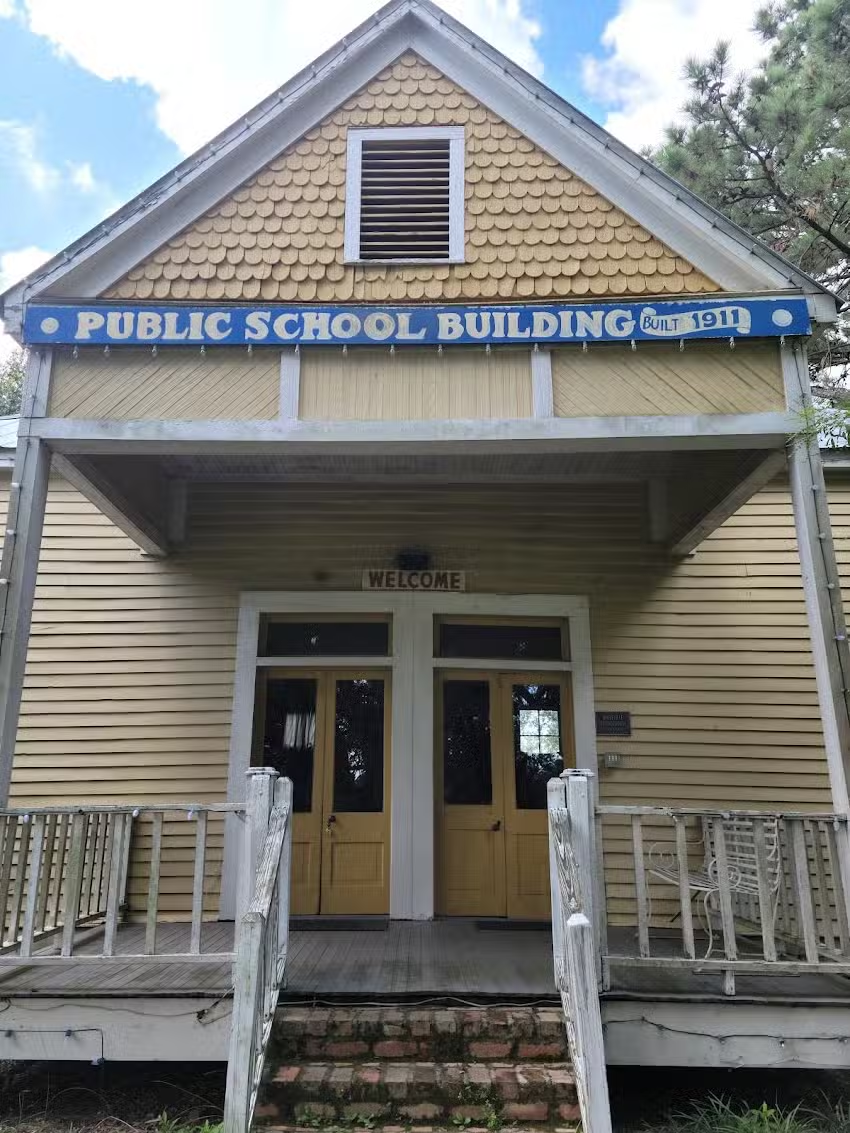
Opelousas Tourist Info Center – Le Vieux Village
BackThe Opelousas Tourist Info Center offers a service that extends far beyond a simple counter with brochures and maps. It is uniquely integrated with Le Vieux Village, a collection of historic buildings that provides an immediate, tangible connection to the area's past. This establishment functions as both a practical resource for travelers and a destination in its own right, a combination that defines its strengths and also outlines its limitations for certain visitors.
A Dual-Purpose Destination
Unlike a typical travel agency focused solely on bookings, this center's primary role is to enrich a visitor's stay through information and historical context. The staff are consistently and overwhelmingly praised as its greatest asset. Reviews frequently describe the personnel as enthusiastic, deeply knowledgeable, friendly, and exceptionally welcoming. Visitors report that the staff's passion for local and national history transforms a simple inquiry into an engaging learning experience. They are known for providing personalized attention, whether it's offering a cup of coffee, sharing detailed historical narratives, or even leading impromptu tours of the adjacent village buildings, sometimes in less-than-ideal weather. This level of service suggests a deep commitment to providing a high-quality visitor experience, making it an excellent first stop for anyone serious about understanding the region they are visiting.
The Living History of Le Vieux Village
The Info Center's location within Le Vieux Village is its most distinctive feature. Established in 1988, the village is not a replica but an assembly of authentic structures relocated from around Opelousas and St. Landry Parish. This arrangement provides a powerful tool for cultural heritage tourism. Visitors can physically step into the history the staff describes. Key buildings in the collection include:
- The Venus House: A rare Creole-style home dating to the late 18th century, notable for its bousillage construction (a mix of mud and moss) and its history as the home of a formerly enslaved person. It stands as one of the oldest buildings of its kind west of the Mississippi River.
- Whiteville Schoolhouse: A two-room country schoolhouse from around 1911, offering a glimpse into the educational environment of the early 20th century.
- Doctor's Office: A small, quaint office from the turn of the 20th century, representing the practice of rural medicine in that era.
- General Store and Railroad Depot: These buildings represent the commercial and logistical hubs of early rural life. The depot is particularly significant as it houses the Louisiana Orphan Train Museum, which tells the compelling story of children relocated to Louisiana from New York between 1873 and 1929.
These structures make the center an effective hub for historical tours, allowing for a more immersive experience than a traditional museum. The information provided is not abstract; it is anchored to the very buildings a visitor can see and enter. The center also features exhibits on Zydeco music and local historical figures like Jim Bowie, further cementing its role in local storytelling.
The Practical Side: A Hub for Trip Planning
As a tourist information center, the establishment is well-equipped to assist with itinerary development for Opelousas and the wider St. Landry Parish. Travelers can acquire essential resources and, more importantly, receive personalized recommendations from local experts. The staff's deep knowledge allows them to offer tailored suggestions that go beyond popular tourist spots, helping visitors discover authentic local experiences. This service is invaluable for anyone planning their Louisiana travel itinerary, especially those looking to delve into the region's rich Cajun and Creole heritage. The facility is also noted for having a wheelchair-accessible entrance, making it available to a broader range of visitors.
Points of Consideration for Potential Visitors
Despite its many positive attributes, the Opelousas Tourist Info Center has one significant drawback that potential visitors must consider: its operating hours. The center is open from 8:00 AM to 4:30 PM on weekdays and is closed entirely on Saturdays and Sundays. This schedule is convenient for local administrators but poses a substantial challenge for tourists, who often travel and sightsee over the weekend. A traveler arriving on a Friday evening and departing on a Sunday would miss the opportunity to visit entirely. This limitation is a critical piece of information for effective trip planning and is arguably the center's most significant weakness from a customer-facing perspective.
Another point to consider is the scale of the attraction. Le Vieux Village is a curated collection of buildings, not a sprawling historical park. While rich in history, the experience is contained. On days when large tour groups are present, as one visitor noted, the intimate nature of the small, historic buildings could lead to a crowded environment. Visitors seeking a quiet, solitary walk through history might want to call ahead to inquire about scheduled group tours.
Conclusion: An Essential, If Time-Sensitive, Resource
The Opelousas Tourist Info Center - Le Vieux Village stands out as a highly valuable resource for any traveler to the region. It successfully merges the practical functions of a tourist information center with the immersive experience of an open-air museum. The exceptional quality of its staff, combined with the unique historical setting, provides a rich and educational foundation for any visit. The overwhelmingly positive reviews and high ratings are a testament to its effectiveness. However, the restrictive weekday-only schedule is a major hurdle that requires careful planning. For those whose schedules align, it is an indispensable first stop that offers not just information, but a genuine connection to the soul of the area. It is less of a conventional tour operator and more of a cultural ambassador, providing the context that makes a trip meaningful.