Northwestern Travel Bureau
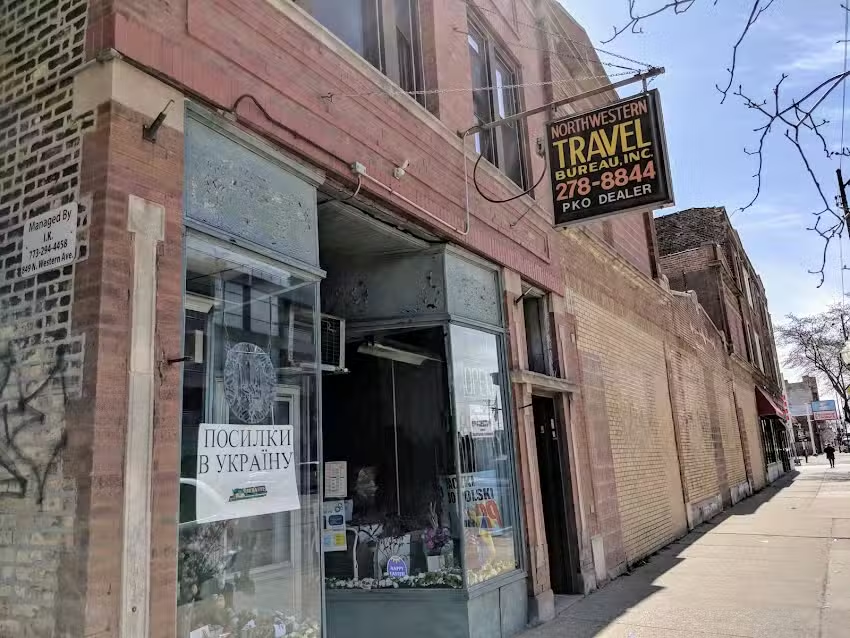
BackNorthwestern Travel Bureau is a functioning travel agency located at 849 N Western Ave in Chicago, Illinois. Unlike the vast majority of its contemporary competitors, this establishment operates almost entirely outside the digital realm. It maintains a physical storefront, suggesting a business model rooted in direct, face-to-face customer interaction. For a potential client, this approach presents a unique set of advantages and significant disadvantages that must be carefully weighed.
The Case for a Traditional Approach
In an era dominated by online booking engines and algorithm-based recommendations, the primary appeal of a business like Northwestern Travel Bureau is its commitment to personalized, human-centric service. The ability to sit down with experienced travel consultants to discuss complex plans is a tangible benefit. This is particularly valuable for clients organizing multi-destination international travel, group trips, or highly specific customized itineraries that automated systems might struggle to accommodate. The nuance of human conversation can resolve issues and uncover possibilities that a website cannot.
The agency’s operating hours are notably distinct. Opening at 7:00 AM from Monday to Saturday offers a rare window of convenience for early risers or individuals who wish to manage their travel arrangements before starting their own workday. This specific schedule could be a considerable advantage for a niche clientele whose daily routines do not align with standard business hours.
Furthermore, the very survival of a business with such a minimal digital footprint often implies a foundation built on longevity, trust, and word-of-mouth referrals. While information about its history is not publicly available online, agencies of this nature typically rely on a loyal base of repeat customers who value the consistency and reliability of the service they have received over years. For some travelers, this established community presence is more reassuring than a collection of anonymous online reviews. The process is straightforward: a customer walks in, discusses their needs for booking flights or hotel reservations, and receives direct assistance from a professional. This simplicity can be a welcome relief for those who find the endless options and confusing interfaces of online travel planning to be overwhelming.
The Significant Drawbacks of Digital Anonymity
While the traditional model has its merits, the near-total lack of an online presence poses substantial challenges for the modern consumer. The most immediate problem is the profound lack of information. There is no website to browse for specialties, no social media presence to announce deals, and no portfolio of sample vacation packages. Potential customers have no way of knowing if Northwestern Travel Bureau specializes in luxury cruises, budget-friendly backpacking tours, family vacations, or corporate travel. This information vacuum forces anyone interested to make a physical visit or a phone call just to ascertain the agency's basic service offerings and areas of expertise.
A Critical Lack of Social Proof
Today, consumers heavily rely on the experiences of others to make informed decisions. Northwestern Travel Bureau has a virtually non-existent public feedback profile. The business holds a single 5-star rating on its Google profile from a user who left no accompanying text. This single piece of data is insufficient to build a picture of customer satisfaction. Without a collection of reviews, a prospective client cannot gauge the quality of the agency's tourism services, the knowledge of its travel experts, or its ability to handle unforeseen problems like cancellations or travel disruptions. This absence of social proof requires a significant leap of faith from any new customer.
Operational Inconveniences
The operating hours, while beneficial for some, are a double-edged sword. By closing at 4:00 PM on weekdays and Saturdays and remaining closed on Sundays, the agency is inaccessible to many individuals working standard 9-to-5 jobs. This schedule can make it difficult for a large segment of the working population to engage in the very in-person consultations that form the core of the agency's business model.
Ultimately, Northwestern Travel Bureau appears to cater to a very specific type of traveler: one who is local, prioritizes direct human interaction above all else, and is not reliant on digital tools for research and validation. It may be an excellent choice for long-time residents who have an established relationship with the agency or for those referred by a trusted source. However, for the average traveler accustomed to comparing options, reading reviews, and seeking information online, the agency's opacity presents a formidable barrier. It stands as a relic of a previous era of trip planning, offering a deeply personal service at the cost of the transparency and accessibility that now define the industry.