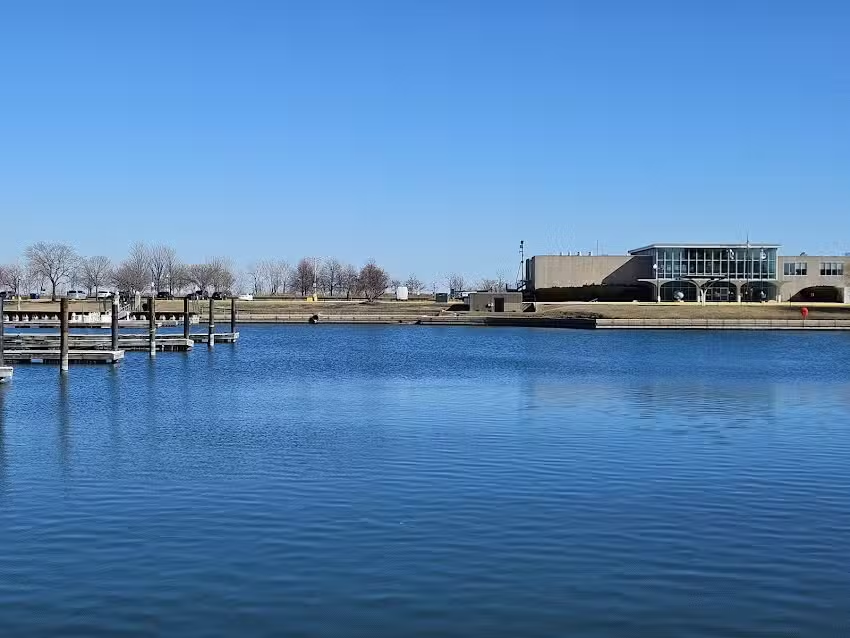
Northerly Island Visitor Center
BackSituated on a man-made peninsula with a history as turbulent as the waters of Lake Michigan beside it, the Northerly Island Visitor Center presents a complicated picture for those seeking tourism services. While labeled as a travel agency, its function is more accurately that of a park fieldhouse or a modest tourist information center. It occupies the former terminal building of the legendary Merrill C. Meigs Field, an airport whose controversial 2003 demolition by then-Mayor Richard M. Daley still fuels debate and shapes the visitor experience. For some, the center is a gateway to a serene nature preserve with unparalleled city views; for others, it’s a constant reminder of a contentious political act.
A Tale of Two Experiences: Nature Sanctuary vs. Historical Scar
The primary appeal of the Northerly Island Visitor Center is its location. It serves as the entry point to a 119-acre park designed to be an urban oasis, featuring prairies, a 5-acre pond, and walking paths teeming with native plants and wildlife. This environment offers a unique form of Chicago tourism, one focused on nature and tranquility just minutes from the downtown core. For those interested in birdwatching, quiet strolls, or simply finding a picturesque spot to view the skyline, the center is an invaluable starting point. Reviewers and official park information consistently praise the spectacular, unobstructed views of the city, making it a prime location for photographers and those looking to appreciate Chicago's architecture from a distance. Furthermore, the building itself can be rented for small events of 50-60 people, offering a memorable backdrop for private functions.
However, it is impossible to discuss the visitor center without addressing the ghost of Meigs Field. The airport was a beloved institution, once the busiest single-runway airport in the country and a critical hub for private, corporate, and medical flights due to its proximity to downtown. Its abrupt overnight destruction, where bulldozers carved large X's into the runway, was a national news story that left a lasting negative impression on many aviation enthusiasts and Chicago residents. This history directly impacts the center's reception. One highly critical review dismisses the entire location due to the "BS politics" of the airport's closure, reflecting a sentiment that the park's creation came at too high a cost. Other visitors lament that the airport no longer exists, even as a historical marker, which casts a gloomy atmosphere over their visit.
Operational Challenges and Visitor Frustrations
Beyond the historical context, potential visitors face significant practical hurdles. The most glaring issue is the center's severely limited operating hours. It is open only on weekdays, from 10:00 AM to 4:00 PM, and is closed entirely on Saturdays and Sundays. This schedule is fundamentally misaligned with the needs of most tourists, who are most likely to be seeking information and access to local attractions on weekends. This restriction significantly undermines its utility as a functional tourism hub and has been a source of public criticism.
Reliability is another major concern. One visitor reported arriving in January only to be told the center was closed for an extended period, until June. This user also noted that parts of the building appeared to be "falling apart," raising questions about the facility's maintenance and upkeep. While the center did undergo an 18-month restoration following fire damage and reopened in April 2025 with a restored lobby and new bird-friendly windows, the perception of inconsistent availability and disrepair can be a powerful deterrent. Anyone considering a visit for basic services like restrooms or shelter should verify its operational status directly with the Chicago Park District beforehand.
Setting Realistic Expectations: What the Center Offers
It is crucial for prospective visitors to understand that the Northerly Island Visitor Center is not a commercial travel agency. You will not find staff dedicated to trip planning or booking city tours, nor will you find brochures offering various vacation packages or travel deals. Its services are more aligned with those of a park facility, providing basic information about the island's natural features, hosting environmental programs like fishing and camping classes, and offering a physical shelter.
So, who should make a point to visit?
- Nature Lovers and Photographers: The center is the perfect launchpad for experiencing the unique urban ecology of Northerly Island and capturing stunning skyline vistas.
- History Buffs: For those interested in Chicago's urban planning and political history, the site offers a tangible connection to the story of Daniel Burnham's 1909 Plan of Chicago and the dramatic saga of Meigs Field.
- Event Planners: Individuals looking for a unique, small-scale venue with an incredible city view may find the rental options appealing.
Conversely, this center is likely not the right destination for:
- Weekend Tourists: The Saturday and Sunday closures make it inaccessible for the majority of short-term visitors.
- Travelers Seeking Comprehensive Services: Anyone in need of detailed itinerary planning or booking assistance should seek out a dedicated commercial travel agency elsewhere in the city.
- Visitors on a Tight Schedule: Given the potential for unexpected closures and its somewhat isolated location, it may not be a reliable stop for those with limited time.
In conclusion, the Northerly Island Visitor Center is an establishment of deep contrasts. It sits on a site of immense natural beauty and historical significance, yet is hampered by its controversial past and significant operational limitations. It offers a peaceful escape and world-class views but fails to provide the accessibility and services expected of a primary tourist facility. It is less a proactive agency for adventure travel and more a quiet, reflective space that tells a complex story about Chicago itself—a story of visionary plans, political power, and the ongoing effort to balance urban development with natural preservation.