
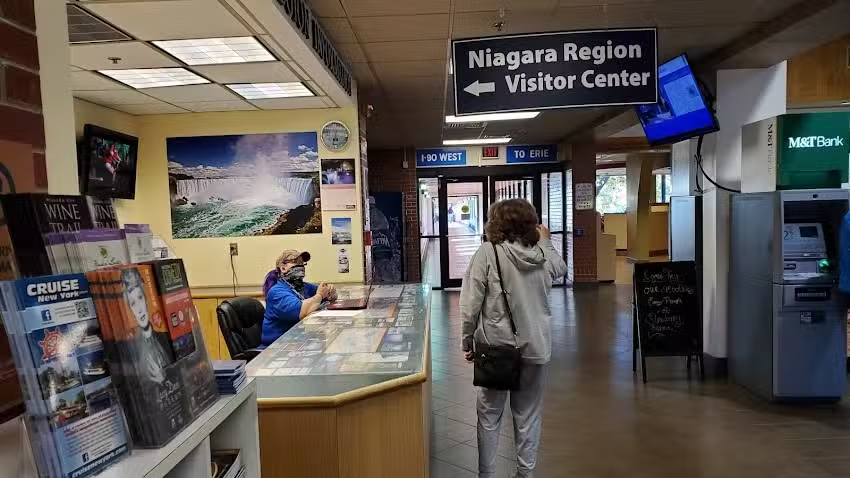
Niagara Region Visitor Center
BackThe Niagara Region Visitor Center, located at 1502 Inwood Ave in Angola, New York, presents a complex picture for travelers. Positioned as a key service area on the New York State Thruway (I-90), it is designed to be a comprehensive stop for those journeying towards Niagara Falls and other regional attractions. It functions not just as a rest stop but also as a source of tourist information, aiming to fulfill some duties of a conventional travel agency by providing resources for visitors. However, customer experiences paint a deeply divided portrait, highlighting significant strengths in its range of amenities alongside serious concerns regarding its maintenance, cleanliness, and accessibility.
A Hub of Traveler Conveniences
On paper, and for some visitors, this center is an exemplary model of roadside assistance. One of its most lauded features is the sheer breadth of services consolidated into a single location. Travelers will find a gas station, a food court with various dining options, and a Starbucks, covering the essential needs of almost any road trip. This concentration of amenities makes it a convenient point for refueling both vehicles and passengers. For anyone acting as their own road trip planner, a stop that combines fuel, food, and caffeine without requiring a detour off the highway is a significant logistical advantage. The presence of these facilities has led some patrons to describe it as a superior service center, offering everything one might require during a long journey.
Beyond the basic necessities, its designation as a "Visitor Center" implies a commitment to enhancing the travel experience through information services. This is where it aligns with the role of a tourism agency, providing maps, brochures, and details about local attractions. For tourists unfamiliar with the area, this can be an invaluable resource, offering insights that can help shape or refine their travel plans. This aspect of the center serves as a crucial link in the chain of travel services available to visitors exploring the state.
Significant Operational and Accessibility Flaws
Despite the comprehensive list of amenities, a substantial volume of feedback points to critical operational failures that detract heavily from the visitor experience. A recurring and primary complaint revolves around the facility's cleanliness. Multiple visitors have reported the center to be consistently dirty and poorly maintained. These are not isolated incidents but a pattern noted by different patrons over time. One of the most alarming accounts described the interior air quality as feeling thick with dust, an experience so unpleasant that it reportedly caused the visitor to become physically ill after leaving. This type of feedback raises serious questions about the health and safety standards of the facility.
Adding to the sanitation issues are reports of the center being perpetually understaffed. An insufficient number of employees can directly contribute to lapses in cleaning schedules, slow service at food counters, and an overall sense of neglect. For a high-traffic location intended to be a welcoming gateway to a major tourist region, these shortcomings create a profoundly negative first impression and can undermine the efforts of any destination management organization.
The Challenge of Layout and Accessibility
Perhaps one of the most significant structural criticisms of the Niagara Region Visitor Center is its physical layout, which poses considerable challenges for accessibility. The center serves both directions of the I-90, with the main building situated between the eastbound and westbound lanes, connected by a pedestrian overpass. A prominent complaint highlights the inconvenient and lengthy walk required to access the main services. One visitor noted that the restrooms are a ten-minute walk from the gas station and require crossing over the expressway via the walkway. This design is particularly problematic for individuals with disabilities, the elderly, or families with young children. For someone with a mobility impairment, what should be a quick rest stop becomes a strenuous and time-consuming ordeal. This flawed design stands in stark contrast to the convenience it aims to offer and is a critical factor for travelers to consider when planning their stops.
Conclusion: A Mixed Bag for the Modern Traveler
In assessing the Niagara Region Visitor Center, prospective visitors are faced with a choice between convenience and comfort. The facility undoubtedly offers a robust selection of amenities that are highly practical for anyone on a long drive. The ability to find gas, multiple food choices, coffee, and official tourist information in one place is its greatest strength.
However, the significant and consistent negative feedback regarding cleanliness, air quality, staffing levels, and a challenging physical layout cannot be ignored. The low average rating, based on user reviews, is a direct reflection of these deep-seated issues. While it may serve its purpose for a quick, essential-only stop, travelers seeking a pleasant, clean, and easily navigable rest area may want to consider other options. The center's potential as a valuable asset for regional tourism is evident, but based on customer accounts, it is hampered by fundamental problems in its upkeep and design. It serves as a reminder that for any establishment involved in travel services, the quality of the experience is just as important as the list of services offered. Before committing to a stop, travelers should weigh the convenience of its offerings against the potential for an unpleasant and inconvenient experience, especially if they have specific accessibility needs. The information provided here should be a key part of any traveler's itinerary planning when passing through the Angola, NY area.