Navajo National Monument Visitor Center
BackServing as the sole entry point to a trio of remarkable Ancestral Puebloan cliff dwellings, the Navajo National Monument Visitor Center functions as a highly specialized hub for cultural tourism. Located approximately nine miles off U.S. Highway 160 in Kayenta, Arizona, this National Park Service facility is the essential first stop for any traveler's trip planning involving the monument. It provides the necessary context, access, and facilities for experiencing the ancient sites of Betatakin, Keet Seel, and the permanently closed Inscription House. While not a conventional business, its role as the exclusive facilitator of all activities within the monument makes it the de facto tour operator for this unique destination.
Services and Positive Aspects
The primary strength of the Visitor Center lies in its ability to prepare and orient visitors for what they are about to witness. Upon arrival, guests are greeted by knowledgeable and friendly park rangers who offer detailed information about the monument's history and the available activities. Multiple visitor accounts praise the staff for their helpfulness, answering any and all questions, which is a critical service in such a remote area. The center itself, though described as small, is well-appointed with quality exhibits, including dioramas and historical artifacts, that provide a foundation for understanding the significance of the cliff dwellings. An informative short film is also available upon request, offering a visual introduction to the lives of the people who inhabited these canyons centuries ago.
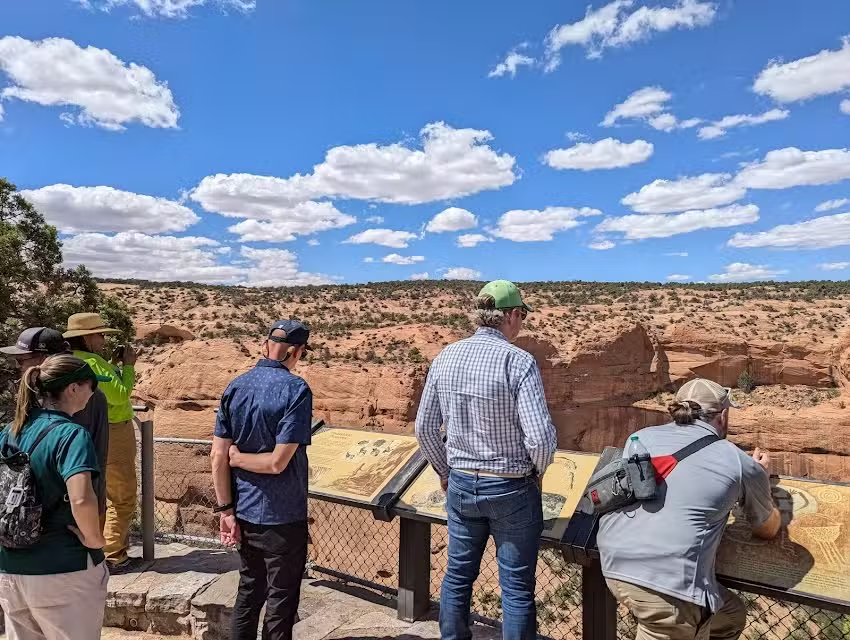
For many visitors, the immediate appeal is the access to stunning views and historical sites. The center is the starting point for three self-guided trails. The most popular, the Sandal Trail, is a 1.3-mile round-trip paved path leading to an overlook with a distant but clear view of the Betatakin cliff dwelling. This makes the monument accessible even to those on a tight schedule or with limited mobility, ensuring that a key part of the experience is available to all. This easy-to-access viewpoint is a major component of the sightseeing tours that visitors create for themselves when passing through the region.
In-Depth Experiences and Accommodations
For those seeking more than a glimpse from an overlook, the Visitor Center is the gateway to immersive guided tours. These ranger-led hikes are the only way to get a closer look at the Betatakin and Keet Seel dwellings. The tours to Betatakin are particularly noted for being strenuous, involving significant elevation changes of around 700 feet. These treks, typically offered during the summer season, are managed on a first-come, first-served basis via a sign-up sheet at the center. This system provides an opportunity for profound adventure travel, allowing small groups to descend into the canyon for a more intimate encounter with history. The even more demanding 17-mile roundtrip backcountry hike to Keet Seel, Arizona's largest Ancestral Puebloan structure, also requires coordination through the park service, cementing the center's role as the central point for all deep-dive experiences.
Another significant positive attribute is the availability of free camping. The monument features two campgrounds, Sunset View and Canyon View, which operate on a first-come, first-served basis. Visitors consistently rate this as a major benefit, with some calling it one of the best free camping options in the United States. The sites are reportedly beautiful and well-spaced, offering a peaceful stay amidst the pinyon-juniper landscape. This amenity is a huge draw for travelers on a budget and those crafting a comprehensive road trip itinerary, allowing for an overnight stay to fully appreciate the area's tranquility and dark skies.
Drawbacks and Important Considerations
Despite the overwhelmingly positive feedback, prospective visitors should be aware of several limitations and challenges. The center's remote location, while contributing to its serene atmosphere, requires a dedicated detour of about 18 miles round-trip from the main highway. This is a time commitment that must be factored into any travel plan. Furthermore, the services available are limited by the nature of its setting.
A specific point of criticism noted by visitors pertains to the restroom facilities. While generally clean, their capacity is limited. One user pointed out that the men's room had only a single stall and a urinal that was out of service during their visit. During peak times, this could lead to queues and inconvenience, a practical detail that impacts the visitor experience.
Another critical factor for modern travelers is connectivity. As one review clearly states, T-Mobile users should expect no service in the area. While Verizon LTE service is reportedly available, reliance on constant connectivity for navigation or communication is ill-advised. This digital isolation is a key piece of information for anyone planning a visit, emphasizing the need to download maps and information beforehand. The monument's website also notes the lack of WiFi service.
Limitations on Activities and Services
The highly sought-after guided tours come with their own set of caveats. They are physically demanding and not suitable for individuals with health issues related to hips, knees, heart, or respiration. The park service is clear about these challenges and advises potential participants to know their limits. Furthermore, these tours are seasonal, typically running from Memorial Day to Labor Day, and can be canceled due to weather, hazardous conditions, or staff availability. This means that a trip planned specifically around a canyon hike could be disrupted, and visitors should have alternative plans.
The camping, while a significant perk, is primitive. There are no RV hookups or dump stations, and the water available is not intended for filling RV tanks. While charcoal grills are provided, open wood campfires are prohibited, which might disappoint some campers seeking a traditional experience. These details are essential for those planning an overnight stay, especially in an RV, as they will need to arrive fully self-sufficient. For those seeking more robust services, the nearest facilities are in towns like Kayenta or Page, a considerable distance away.
In conclusion, the Navajo National Monument Visitor Center is an indispensable resource that masterfully facilitates a journey into ancient history. It offers invaluable educational context, free and scenic camping, and exclusive access to profound tour experiences. However, visitors must approach a trip here with careful planning, prepared for its remoteness, limited modern amenities, connectivity challenges, and the physical demands of its premier offerings. It stands as a prime example of destination-focused tourism, where the rewards are directly proportional to the visitor's preparation and respect for the environment.