
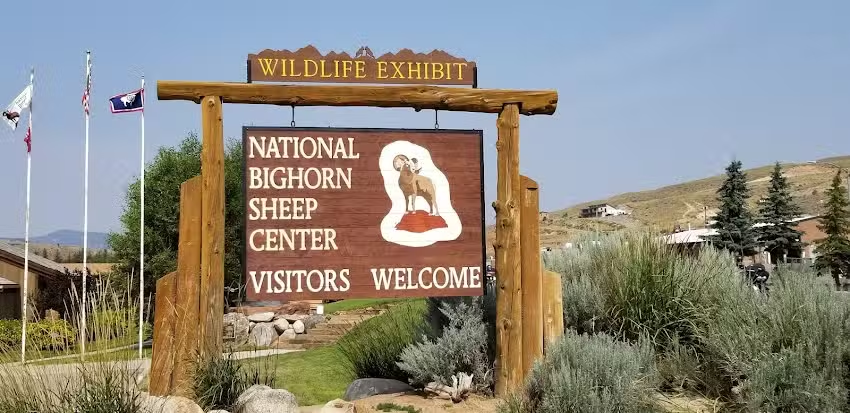
National Bighorn Sheep Center
BackAn In-Depth Look at the National Bighorn Sheep Center in Dubois, WY
Located at 10 Bighorn Lane in Dubois, Wyoming, the National Bighorn Sheep Center presents itself as much more than a typical roadside museum. It functions as a specialized educational institution, a non-profit conservation entity, and a launchpad for unique wildlife tours. For travelers planning a trip through this part of the country, the center offers a compelling stop, but it comes with a specific focus and operational constraints that warrant consideration. With an impressive average rating of 4.7 stars from over 200 visitors, the consensus is overwhelmingly positive, yet a closer examination reveals both its significant strengths and potential limitations for different types of tourists.
The Museum: A Deep Dive into Wild Sheep Conservation
Upon entering, visitors quickly realize this is not a cursory, 30-minute attraction. The exhibit space, though physically compact, is densely packed with well-curated information. The core mission of the center is to provide comprehensive education on the Rocky Mountain Bighorn Sheep, particularly the local Whiskey Mountain herd, which is the largest wintering herd in North America. The exhibits accomplish this through a variety of engaging methods. Visitors will find life-sized dioramas depicting the sheep in their natural habitats, showcasing everything from the dramatic clashes of rams during the rut to the high-altitude cliffs where lambs are born.
A significant strength highlighted by numerous visitors is the interactive nature of the displays. The center goes beyond static information panels by offering hands-on experiences. Guests can touch the fur of various local animals, handle skulls to understand their anatomy, and engage with exhibits designed to explain the unique biology and survival strategies of bighorn sheep. For families, this is a major advantage. The center provides scavenger hunt activities for children, transforming an educational visit into an engaging game that encourages deeper interaction with the material. This focus on hands-on learning makes complex topics like conservation and biology accessible and enjoyable for all ages.
The content itself is praised for its depth, covering the history of the species, their role in the ecosystem, and the critical conservation challenges they face due to habitat loss and disease. There's also a small theater that plays informational videos on a loop, offering another medium for learning. The staff's role in this experience cannot be overstated; reviews consistently describe them as exceptionally friendly, knowledgeable, and passionate, readily answering questions not just about the sheep but also about other local attractions, effectively serving as an informal tourist information center.
Beyond the Exhibits: A Hub for Eco-Tours and Adventure Travel
Perhaps the most compelling feature that elevates the National Bighorn Sheep Center beyond a simple museum is its function as a purveyor of guided tours. This is where it truly steps into the role of one of the area's niche travel and tourism agencies, specializing in authentic wildlife experiences. The center offers customized eco-tours that take visitors into the field to see the bighorn sheep and other wildlife in their natural environment. These tours are a significant draw and represent a highlight for many visitors' trips to the region.
The tours are led by expert guides, praised for their deep knowledge not only of the animals but also of the region's broader history, geology, and even ancient petroglyphs found in the area. This multi-disciplinary approach provides a rich, contextualized experience that goes far beyond simple animal spotting. The tours are customizable, catering to the specific interests of the group, which is a hallmark of high-quality adventure travel. It’s important for potential customers to know that these tours are often seasonal. The best viewing opportunities are typically from late fall through early spring, when the sheep migrate to their winter range in the Whiskey Basin. Specifically, the rutting season in late November and early December is noted as a prime time for activity. Anyone interested in these excursions should plan ahead, as they require advance notice for booking.
This service is a critical asset for travelers seeking immersive outdoor activities. By connecting its educational mission directly with field experiences, the center provides a seamless and enriching journey for wildlife enthusiasts. It’s an opportunity to apply what is learned inside the museum to the wild landscapes of Wyoming.
Additional Amenities and Offerings
Complementing the main exhibits and tours is a well-regarded gift shop. Rather than offering generic souvenirs, the shop focuses on items created by local craftspeople and artisans. This provides visitors with an opportunity to purchase unique keepsakes while supporting the local economy—a factor that resonates with many modern travelers. The center is also a 501(c)(3) non-profit organization, meaning that admission fees, shop purchases, and tour bookings directly support its mission of conservation and education. For many, knowing their visit contributes to a greater cause enhances the experience.
Points of Consideration for Potential Visitors
Despite the overwhelmingly positive feedback, there are several practical aspects that travelers should consider when planning a visit. The most significant is the center's operating hours. It is closed on Sundays and Mondays, which can be a major inconvenience for those on a standard weekend trip. Proper travel planning is essential to avoid arriving on a day when the doors are shut. The hours, generally from 10:00 AM to 4:00 PM, are also relatively short, requiring visitors to schedule their stop within a specific timeframe.
Another point is the center's specialized focus. While it excels in its niche, an institution dedicated entirely to bighorn sheep may not hold the same appeal for every member of a traveling party. Visitors looking for a broader overview of Wyoming's natural history might find the scope narrow. However, for those with a keen interest in wildlife, conservation, or ecology, this focused approach is a distinct advantage, allowing for a level of detail not found in more generalized museums.
Finally, while the museum is described as being full of information, it is physically small. Visitors expecting a large, sprawling complex should adjust their expectations. The value here is in the density and quality of the content, not the square footage. The experience is designed to be intimate and in-depth, a quality that many find superior to larger, less focused institutions.
In conclusion, the National Bighorn Sheep Center is a highly recommended destination that successfully merges education with tourism. It serves as an excellent museum with interactive and informative exhibits, and it stands out as a key provider of specialized wildlife tours in the Dubois area. Its passionate staff, commitment to conservation, and support of local artisans add significant value. However, prospective visitors must be mindful of its limited operating hours and niche subject matter. For wildlife lovers, families, and anyone seeking an authentic connection to Wyoming's natural world, it is an essential and deeply rewarding stop.