
NASA’s Wallops Flight Facility Visitor Center
BackFor years, NASA's Wallops Flight Facility Visitor Center served as an unassuming but highly regarded point of interest for those traveling along Virginia's Eastern Shore. Functioning as part museum, part educational hub, and part tourist attraction, it carved out a unique niche. However, anyone currently engaged in vacation planning for this region must be aware of a critical and disappointing development: the visitor center is closed. News reports from August 2025 confirmed that the facility would close its doors on October 1, 2025, as part of broader cost-cutting measures by the agency. This permanent closure marks a significant loss for public outreach and science tourism in the area, leaving a void for the tens of thousands of visitors it once welcomed annually.
The Positive Legacy of a Beloved Institution
Despite its current status, it is essential to understand what made the Wallops Visitor Center such a valued destination. Overwhelmingly, visitor feedback paints a picture of a small but powerful museum experience that consistently exceeded expectations. One of its most significant advantages was the cost of admission: it was completely free. This accessibility made it an invaluable resource for families, school groups, and casual travelers, positioning it as a key stop in many family vacation packages focused on the Chincoteague area.
Inside, the center offered a compelling look into the work of the Wallops Flight Facility, which has launched over 16,000 rockets since its inception in 1945. The exhibits were frequently described as informative and engaging. Visitors could find scale models of rockets and aircraft, a genuine Moon rock from the Apollo 17 mission, and interactive displays like the popular "Science On a Sphere" exhibit. These hands-on elements were particularly effective for educational travel, allowing a younger audience to connect with complex scientific concepts in a tangible way. The staff consistently received high praise for being friendly, knowledgeable, and passionate, elevating a simple museum visit into a genuinely educational and welcoming event.
Outdoor Exhibits and Unique Viewing Opportunities
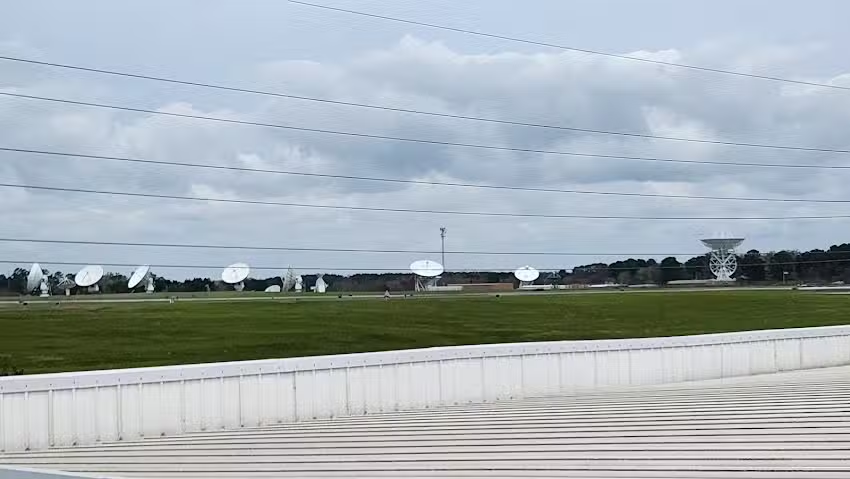
The experience extended beyond the building's walls. The grounds featured an impressive "rocket garden," showcasing a collection of full-scale rockets and aircraft that have played a role in space and atmospheric research. This outdoor display provided a dramatic sense of scale and history. Furthermore, the center included a rooftop observation deck. While it offered great views of the surrounding landscape, its primary purpose was far more exciting: it served as an official public viewing area for rocket launches from the nearby pads, located just seven miles away. This feature alone made the center a critical asset for any trip focused on space exploration, offering a safe and accessible vantage point to witness science in action. Visitors also reported the unexpected bonus of seeing military aircraft from a nearby practice field, adding another layer of excitement to their visit.
Drawbacks and The Unfortunate Reality
Even during its operational years, the center was not without its minor flaws. A recurring piece of feedback involved its limited hours. It was often open only a few days a week, such as from Thursday to Saturday, which required careful travel planning to ensure a visit was possible. Some visitors also felt the exhibits, while interesting, were somewhat dated and that the center was primarily geared toward school field trips rather than adult space enthusiasts seeking a deep dive into aerospace history. Compared to larger NASA sites, its scale was modest, with most guests spending about an hour exploring the exhibits.
However, these are minor criticisms compared to the primary negative factor today: its permanent closure. The decision, announced in August 2025, was met with significant concern from employees, local officials, and federal lawmakers, who cited the center's vital role in public engagement and its positive impact on the local economy. For any travel agency or tour operator considering destinations in the area, the closure is a non-negotiable reality. The gates are locked, the exhibits are gone, and the primary public gateway to understanding the incredible work done at Wallops has been shut down.
Conclusion for Prospective Visitors
In summary, NASA's Wallops Flight Facility Visitor Center was once a hidden gem that provided immense educational value and a unique connection to the nation's space program, all without an admission fee. Its combination of indoor interactive exhibits, an impressive outdoor rocket garden, and its role as a prime launch viewing site made it a highly recommended stop. Unfortunately, the narrative has shifted completely. The facility is no longer temporarily unavailable; it is permanently closed. While there has been discussion and hope for a new facility in the future, no concrete plans or timelines have been established. Therefore, travelers should not include a visit in their current itineraries. The legacy of the center remains a positive one, but its physical presence as a destination for tourism and education has come to an end.