Mt. Washington Auto Road
BackOperating since 1861, the Mt. Washington Auto Road holds the title of America's oldest man-made tourist attraction. This 7.6-mile toll road offers a direct route to the summit of the highest peak in the Northeastern United States, presenting a complex proposition for travelers. It's an experience defined by sharp contrasts: stunning natural beauty against a nerve-wracking drive, historical significance against a contentious modern price point. For those engaged in vacation planning, understanding both the significant rewards and the considerable drawbacks is essential before committing to the ascent.
The Driving Experience: Thrills and Trepidation
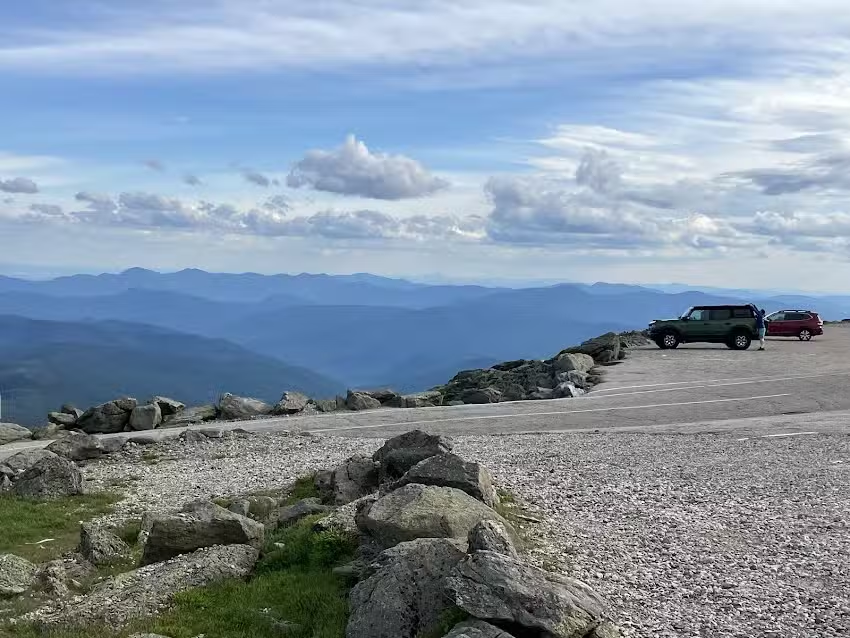
The core of the Mt. Washington Auto Road experience is the drive itself. Ascending 4,618 feet with an average gradient of nearly 12%, the road is a feat of engineering and a significant test for both vehicle and driver. For a long time, a portion of the road was gravel, adding to the challenge, but as of 2022, the entire length is paved, which smooths the ride but does little to lessen the intensity. Many visitors describe the drive as a highlight, a true mountain adventure with constantly changing scenery. You begin in a dense forest and emerge above the treeline into a stark, alpine environment with panoramic views that can stretch across states on a clear day.
However, this scenic drive is not for the faint of heart. The road is narrow in many sections and, most notably, lacks guardrails for much of its length. This feature is frequently cited by visitors as a source of considerable anxiety, with a steep, sheer drop-off just feet from the edge of the pavement. Drivers with a fear of heights or those unaccustomed to mountain driving may find the experience more terrifying than thrilling. The descent requires equal attention, demanding that drivers use their vehicle's lowest gear to avoid overheating and destroying their brakes—a critical instruction that underscores the seriousness of the drive. Stops at pull-offs on the way down are recommended not just for photos, but to allow brakes to cool. It's an intense undertaking that results in the coveted "THIS CAR CLIMBED MT. WASHINGTON" bumper sticker, a badge of honor for those who complete the journey.
At the Summit: More Than Just a View
Reaching the 6,145-foot summit provides a palpable sense of accomplishment. Beyond the breathtaking, and often wind-whipped, vistas, the peak hosts several facilities. The Sherman Adams Visitor Center contains the Mount Washington Observatory's museum, offering insights into the peak's notoriously extreme weather. There is also a gift shop and a small post office. The historic Tip Top House, which dates back to 1853, stands as a tangible link to the mountain's long history as a destination for travelers. These amenities provide a welcome opportunity to stretch your legs and spend time at the top, with many visitors reporting they spent hours taking in the scenery and exploring the facilities. For those on a road trip destination tour of New England, the summit provides a unique stop. However, opinions on the summit's food services are mixed; some find the café cozy with reasonably priced food, while others describe the options as limited and overpriced, which is a common reality for remote attractions.
The Contentious Cost: A Major Point of Consideration
The most significant and consistently mentioned drawback of the Mt. Washington Auto Road is its cost. Unlike many national parks that charge per vehicle, the Auto Road's pricing is often structured as a flat fee for the vehicle and driver, plus an additional, substantial fee for each adult passenger. Many visitors express shock and frustration at this model, labeling it as "pricey," "ridiculous," or "absurd." Several reviews draw unfavorable comparisons to week-long passes at major national parks that cost less than a single trip up this private road. This pricing structure can make the excursion prohibitively expensive, especially for families or groups, turning a potential highlight of a trip into a source of resentment. One visitor noted that two separate cars with one person in each would have been the same price as one car with two people, highlighting the perceived illogical nature of the fees. This is a critical factor for any family travel budget.
Alternatives and Practicalities for Your Visit
For those apprehensive about the drive or the state of their vehicle, the establishment offers an alternative: guided tours. These two-hour tours are conducted in vans operated by experienced drivers who narrate the journey, sharing historical anecdotes and pointing out areas of interest. This option eliminates the stress of the drive, allowing all passengers to focus on the scenery, making it an excellent choice for those who want the summit experience without the white-knuckle driving. It's a service that positions the business as more than just a road, but a comprehensive travel agency for accessing the peak.
Key Considerations Before You Go:
- Vehicle Restrictions: The road has strict limitations on vehicle size, weight, and even specific models known to have issues with braking on the steep descent. It is absolutely imperative to check the official website for the latest restrictions before you arrive to avoid being turned away.
- Weather: Mount Washington is famous for having the "world's worst weather." Conditions at the summit are often drastically different from the base—it can be a pleasant day in Gorham and snowing with hurricane-force winds at the peak. Check the summit forecast specifically and bring extra layers of clothing, regardless of the weather at the bottom.
- Seasonal Operation: The Auto Road is a seasonal attraction, typically open from May to October, with hours that vary depending on the time of year. All operations are weather-dependent, and the road can close with little notice.
In conclusion, the Mt. Washington Auto Road is a landmark of New England tourism that offers an unforgettable experience, but it demands careful consideration. The drive is a genuine piece of adventure travel, the views are unparalleled, and the sense of history is profound. However, the high cost is a major deterrent for many, and the drive itself can be a significant source of stress. Potential visitors must weigh the promise of an epic journey against the very real concerns of price and the intimidating nature of the road itself.