
Mono Lake Committee Information Center & Bookstore
BackThe Mono Lake Committee Information Center & Bookstore operates as far more than a typical roadside stop for maps and souvenirs. It functions as the public-facing heart of a dedicated conservation organization, a role that fundamentally shapes the experience for any visitor. This establishment, located on US-395 in Lee Vining, serves a dual purpose: it is a critical resource for travelers navigating the Eastern Sierra and a testament to one of California's most significant environmental victories. Its services touch upon those of a specialized travel agency, focusing intensely on the immediate region with an authority few can match.
Upon entering, visitors find a space that blends commerce with education. The staff is consistently cited as being exceptionally knowledgeable and friendly, capable of providing nuanced advice that goes beyond simple directions. Travelers have found detailed assistance here for complex logistical challenges, such as navigating vehicle height restrictions in nearby Yosemite or selecting the perfect campsite based on specific needs. This level of personalized service is a cornerstone of effective trip planning, transforming a potentially stressful process into a well-informed one. The team's expertise is not just in geography but in the ecology and history of the Mono Basin, allowing them to offer insights that enrich a visitor's itinerary.
Services and Offerings: A Deep Dive
The center's offerings are curated to reflect its mission of protection and education. While it doesn't offer comprehensive vacation packages in the traditional sense, it provides the essential components for building a customized local adventure.
- Information Services: This is the primary function. Staff provide up-to-the-minute information on trail conditions, weather, road closures, and wildlife sightings. They are a reliable source for navigating the complexities of visiting both the Mono Basin and adjacent areas like Yosemite National Park.
- Bookstore and Gift Shop: The selection is extensive and highly specialized. You will find a wide array of books on local natural history, geology, birding, and regional history, alongside works by local authors and artists. The gift shop features handcrafted items, apparel, and souvenirs that directly support the committee's work. Every purchase contributes to their conservation programs, a fact that resonates with many visitors.
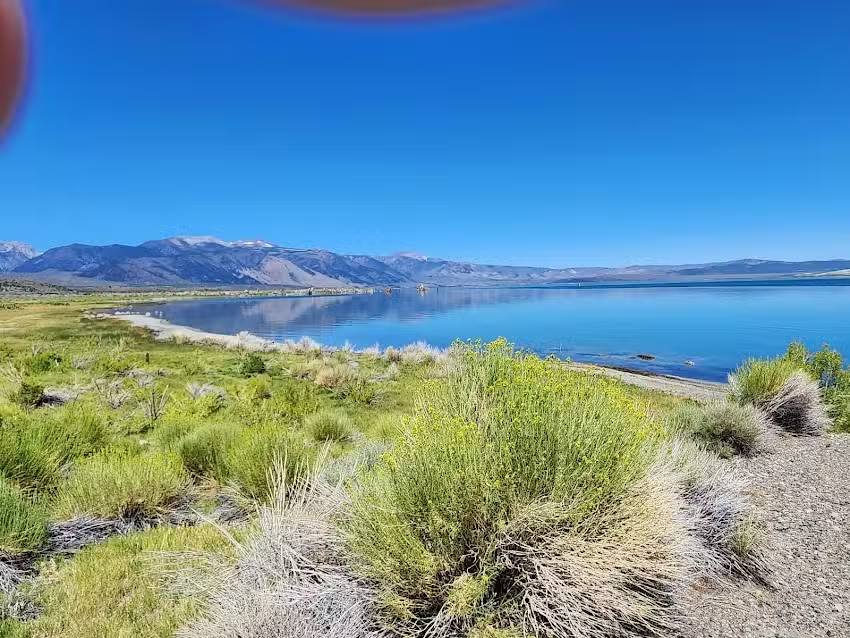
- Educational Exhibits: The center houses a small gallery and informational displays that narrate the story of Mono Lake. Visitors can watch a short film detailing the ecological crisis the lake faced due to water diversions by the Los Angeles Department of Water and Power (LADWP) and the subsequent legal battles that saved it. This context is crucial for understanding the landscape you are about to see.
Guided Activities and Local Excursions
A significant advantage of this center is its role as a tour operator for local activities. The committee organizes a variety of programs, many of which are free or low-cost, designed to connect people with the environment directly.
- Tufa Tours: One of the most popular offerings is the free guided tours of the South Tufa Area. These walks are led by naturalists who explain the fascinating geology of the limestone tufa towers and the unique ecology of the lake's alkali flies and brine shrimp. The hands-on demonstrations of how tufas form are particularly memorable for visitors of all ages.
- Canoe and Kayak Tours: During the summer months, the committee offers guided trips on the lake itself. This provides a different perspective on the tufa formations and the vast, open water, making for an exceptional adventure travel experience.
- Bird Walks: Given Mono Lake's importance as a critical habitat for millions of migratory birds, the guided bird walks are a major draw for ornithology enthusiasts. These sightseeing tours are tailored to highlight the incredible avian diversity of the basin.
The Positive Aspects: Strengths of the Center
The overwhelming consensus from visitors is positive, with an average rating of 4.7 stars reflecting a high degree of satisfaction. The primary strength lies in its authenticity and mission-driven approach. Visitors don't just receive information; they connect with a cause. The staff's passion is palpable, stemming from a deep-seated commitment to the preservation of Mono Lake. This establishment effectively serves as a hyper-local destination management company, ensuring that tourism in the area is informed, responsible, and sustainable.
Another significant positive is the quality and depth of the resources. The bookstore is often described as one of the best for regional-specific topics in the entire Eastern Sierra. For those planning extended stays or in-depth photographic or scientific pursuits, the maps, field references, and historical texts available are invaluable. The center's historical role also adds a layer of significance. It was the Mono Lake Committee, headquartered here, that spearheaded the campaign to protect the lake's tributary streams, a fight that set legal precedents for water rights throughout the American West. Visiting the center is a chance to stand in a place of historical importance for the environmental movement.
Points for Consideration: Potential Downsides
While highly praised, there are aspects potential visitors should consider to set proper expectations. The center's greatest strength—its specific focus—can also be a limitation. If your travel inquiries extend far beyond the Mono Basin or Eastern Sierra, the staff's expertise may be less relevant. They are specialists in their domain, not generalists for all of California.
Furthermore, because the center is operated by an advocacy group, the information presented is, by its nature, from a strong conservationist viewpoint. While fact-based, the narrative is shaped by their mission to protect the lake. This is not a neutral, government-run information portal, and visitors should be aware that they are stepping into the home of a passionate environmental organization. This is rarely a negative for visitors but is a key characteristic of the institution.
Finally, the physical space is relatively small. Described by some as a "little" center, it can become crowded during the peak tourist season in summer. While the staff manages this well, those seeking a quiet, expansive museum-like experience might need to time their visit for off-peak hours. The scope of its local excursions is also, naturally, limited to the immediate area. It excels at providing deep experiences within the Mono Basin but does not arrange travel or tours for other destinations.