
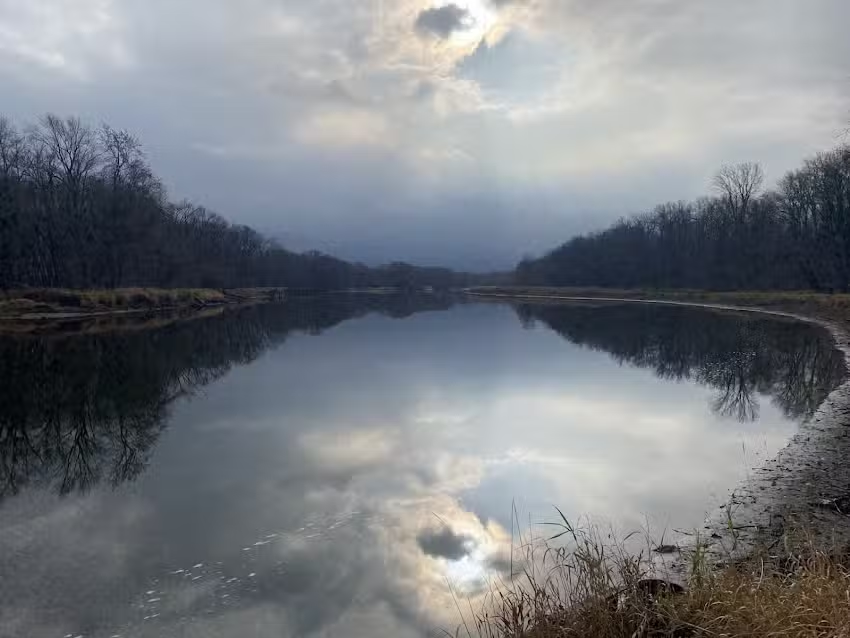
Missisquoi National Wildlife Refuge Admin Building and Visitor Contact Station
BackThe Missisquoi National Wildlife Refuge Admin Building and Visitor Contact Station serves as the primary gateway for visitors looking to engage with the significant natural habitats of northwestern Vermont. While it carries the classification of a travel agency, its function is more accurately described as a specialized hub for eco-tourism and self-directed outdoor adventures. It does not book flights or hotels, but instead provides the critical information, permits, and orientation necessary for visitors to responsibly access the more than 6,700 acres of wetlands, forests, and grasslands under its stewardship. The station is the starting point for a range of activities, from casual walks to regulated hunting, making it an essential first stop for effective trip planning.
Assets for the Nature-Focused Traveler
The primary strength of this institution lies in the quality of the natural experiences it facilitates. The refuge itself is a designated Wetland of International Importance and an Audubon Important Birding Area, making it a premier destination for nature travel. The visitor center is the source for trail maps and wildlife checklists that enhance these experiences. For bird enthusiasts, the offerings are exceptional. The refuge provides critical habitat for Vermont's largest breeding population of the state-endangered Black Tern and nearly a third of its nesting Ospreys. Visitors can also expect to see a wide variety of migratory waterfowl, the largest Bobolink population in the state, bald eagles, and great blue herons. For those seeking structured activities, the Friends of Missisquoi organization leads bird monitoring walks on the third Saturday of each month, offering a valuable opportunity that functions much like a guided tour.
The trail system is another significant asset, consistently praised in visitor feedback for being well-maintained and clearly marked. These are not rugged mountain climbs but rather accessible paths designed for observation and leisurely hikes, making them ideal for family vacations. Key trails include:
- The Discovery Trail: A one-mile loop starting directly from the visitor center, it features boardwalk sections through wetlands and is an excellent place to spot songbirds and deer.
- Stephen J. Young Marsh Trail: A 1.25-mile loop offering an observation platform with views of the freshwater wetland, attracting ducks and geese, particularly in the fall.
- Black Creek & Maquam Creek Trails: A 2.5-mile round trip that follows the creeks, offering high chances of seeing beaver, muskrats, and various waterfowl.
Beyond hiking, the refuge supports a range of seasonal local excursions. In warmer months, the Missisquoi River is open for canoeing and kayaking, providing a different perspective on the floodplain forests. During winter, the trails are open for snowshoeing and cross-country skiing, ensuring it remains a year-round tourist attraction. For sportsmen, the visitor center is the place to acquire necessary permits for hunting and fishing. The refuge allows regulated hunting for deer, waterfowl, and certain upland game, with clear rules and designated zones, a service that caters to a specific tourism segment.
Crucial Limitations and Planning Considerations
Despite its many strengths, the Missisquoi National Wildlife Refuge Visitor Contact Station has significant operational limitations that potential visitors must factor into their plans. The most critical drawback is its operating schedule: the center is officially open only from Monday to Friday, 7:00 AM to 3:30 PM, and is closed on weekends and federal holidays. This presents a major challenge for tourists who typically plan their visits for Saturdays and Sundays. While the trails themselves are open from dawn to dusk daily, access to the visitor center's staff, exhibits, and permit services is restricted to the work week.
Furthermore, while the experiences are pristine, they are not without their challenges. Visitor feedback frequently mentions the seasonal presence of biting insects, with horseflies being a particular nuisance during warmer months. This is a natural part of the ecosystem, but something for which visitors should come prepared. Accessibility is also a nuanced issue. While the building has a wheelchair-accessible entrance and many trails are flat, user reviews suggest that boardwalks and unpaved sections can be challenging for wheelchair users without assistance, especially during wet conditions. This indicates that while accessible, the trails are not universally easy for all mobility levels.
Finally, visitors must be aware of seasonal restrictions. Certain areas and trails, such as the Jeep Trail, are closed from April through August to protect nesting migratory birds. During designated hunting seasons, some trails may have advisories or temporary closures, making it essential to check with the refuge ahead of a visit. The requirement for permits for activities like hunting is straightforward, but it is an extra step that requires planning, especially given the visitor center's weekday-only hours. This is not a facility for spontaneous, unregulated activity but one that operates within a framework of conservation-first principles, which can sometimes translate to limitations on public access.
The Overall Assessment
The Missisquoi National Wildlife Refuge Admin Building and Visitor Contact Station is an invaluable resource for a specific type of traveler: one who is deeply interested in wildlife, conservation, and serene natural beauty. It functions effectively as a launchpad for sustainable tourism, providing the tools and knowledge needed for low-impact recreation. The quality of the bird watching is world-class, and the well-kept trail system is perfectly suited for families and individuals seeking peaceful immersion in nature. However, the restrictive weekday-only hours for the visitor center is a substantial barrier that requires visitors to be deliberate and proactive in their planning. For those who can navigate this schedule and come prepared for the realities of a wild environment, the station is the key to unlocking one of Vermont's most significant ecological treasures.