
Massacre Canyon Historical Monument
BackThe Massacre Canyon Historical Monument in Trenton, Nebraska, presents a solemn and significant stop for those engaged in historical tourism. This is not a conventional attraction but a commemorative site marking a pivotal, and tragic, event in 19th-century American history. For individuals undertaking travel planning with a focus on authentic historical experiences, particularly those related to Native American history and the American West, this monument offers a profound connection to the past. It is categorized as a point of interest and even a travel agency in some listings, likely because it serves as a destination hub for visitors seeking to understand the region's complex heritage.
The primary value of this tourist destination lies in its historical weight. The monument commemorates the battle that took place on August 5, 1873, which is recognized as the last major conflict between the Pawnee and the Lakota Sioux. Visitor accounts consistently highlight the site's importance in telling this story. The conflict arose when a Pawnee hunting party, moving through territory guaranteed to the Lakota by the 1868 Treaty of Fort Laramie, was attacked. The Pawnee had a complicated relationship with other tribes due to their role as scouts and allies for the U.S. government, which created significant resentment. The resulting defeat was devastating for the Pawnee and was a primary factor in their decision to relocate to Indian Territory, now Oklahoma. The granite obelisk, erected in 1930, stands as a stark reminder of this event, making it an essential component of any heritage tours through Nebraska.
Visitor Experience and Amenities
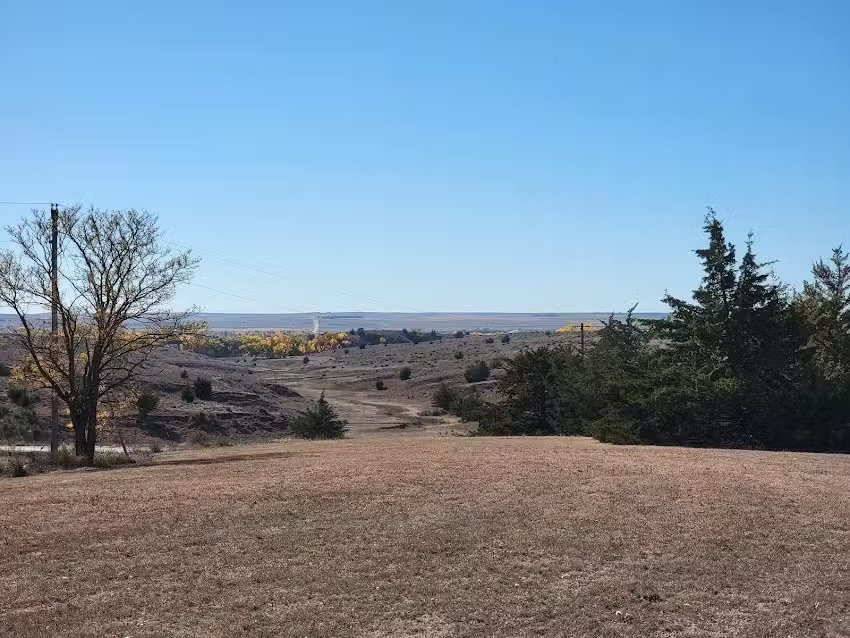
For many, a visit here is a deeply personal or educational act. One visitor noted their trip was to "pay our respects to the Chatiks si chatiks" (a term for the Pawnee), appreciating the monuments built in their remembrance. This highlights the site's role as a place of memory and reflection. Beyond the main obelisk, the surrounding area provides context and a sense of place. The monument's location, while somewhat remote, is accessible and includes a wheelchair-accessible entrance, ensuring that visitors with mobility challenges can approach the site.
A surprising and positive aspect noted by visitors is the presence of on-site facilities, which is not always a given for historical markers. Several reviews mention a staff member being present and a selection of items available for purchase. One visitor commented on a "nice" lady who was great to talk to, while another pointed out there was "lots of stuff to buy." This indicates the existence of a small visitor center or gift shop. This amenity elevates the experience from a passive observation of a monument to an interactive and more comfortable stop. It provides an opportunity for visitors to ask questions, gain deeper insights from a local perspective, and acquire literature or souvenirs related to the site's history. This makes the monument a more robust stop for those on a road trip or looking to add meaningful short stops to their itinerary planning.
Positive Aspects for Travelers:
- Deep Historical Significance: The site offers a direct link to a crucial event in Native American history, appealing to those seeking educational trips.
- Commemorative Atmosphere: It serves as a powerful memorial, providing a space for reflection on the complexities of the American frontier.
- On-Site Facilities: The presence of a visitor center with staff and a gift shop adds significant value, offering information, interaction, and convenience.
- Accessibility: The monument is designed to be accessible, including for those with wheelchairs, making it an inclusive destination.
Potential Drawbacks and Considerations
While the Massacre Canyon Historical Monument is a valuable destination, potential visitors should set their expectations appropriately. This is not a large-scale museum or a recreational park. Its purpose is singular: to mark and explain a historical event. For travelers or families seeking a full day of diverse activities, this will likely serve as a brief but impactful stop, perhaps lasting an hour or two. The experience is centered on reading the markers, observing the monument, and reflecting on the landscape.
Another point to consider is the operational aspect of the visitor center. While its existence is a clear positive, the staffing and hours may be limited, particularly depending on the season. Rural historical sites often operate on restricted schedules, and it would be prudent for anyone making a special trip to verify if the center will be open upon their arrival. Arriving to find the supplementary facilities closed could be a disappointment for those hoping for more than just the outdoor monument.
Finally, the subject matter is inherently somber. The name "Massacre Canyon" accurately reflects the violent and tragic nature of the event. While essential for a complete understanding of American history, it is a heavy topic. Families planning family vacations should be prepared to discuss the serious themes of conflict, loss, and displacement with their children. This is a site that educates and provokes thought rather than providing simple entertainment.
Points to Consider Before Visiting:
- Niche Focus: The attraction is narrowly focused on one historical event. It is best suited for those with a genuine interest in history, particularly that of the Plains tribes.
- Limited On-Site Activity: The core activity is observing the monument and reading interpretive signs. The duration of a typical visit is short.
- Variable Facility Hours: The visitor center and gift shop may have seasonal or limited hours. Checking ahead is recommended to avoid disappointment.
- Somber Theme: The historical narrative is one of violence and tragedy, which may not be suitable for all visitors or younger children without proper context.
In conclusion, the Massacre Canyon Historical Monument is a highly recommended stop for anyone whose cultural heritage travel takes them through Nebraska. It offers a poignant and educational experience that stands out from more conventional tourist spots. While its scope is limited and its subject matter serious, the site's historical gravity, combined with the unexpected convenience of a visitor center, makes it a worthy addition to any travel itinerary focused on the American West. For those looking to assemble unique vacation packages centered around history, this monument provides an authentic and memorable chapter in the nation's story.