
Lighthouse Visitor Center
BackSituated at the dramatic tip of the Point Reyes peninsula, the Lighthouse Visitor Center serves as the primary gateway to the historic Point Reyes Lighthouse. While boasting a high user rating, this National Park Service facility is a destination that demands significant planning and physical preparedness. It functions less like a conventional travel agency and more as a crucial information hub for a rugged coastal experience, providing context and safety information for the demanding trek to the lighthouse itself. Prospective visitors should understand that a trip here is not a casual stop but a commitment involving a long drive, a strenuous walk, and sensitivity to unpredictable weather conditions.
The Positive Aspects: Information, History, and Natural Splendor
The main function of the Lighthouse Visitor Center is to prepare and educate. Inside, exhibits detail the region's rich maritime history, the lives of the lighthouse keepers, and the diverse marine ecosystem just offshore. Staffed by knowledgeable park rangers, the center acts as an essential travel planner, offering updates on trail conditions, weather, and wildlife sightings. Adjacent to the main building, the Ocean Exploration Center provides deeper insights into the marine sanctuary, featuring displays like a real Fresnel lens and a touch table with marine artifacts that are particularly engaging for families.
The primary draw, of course, is the lighthouse. First lit in 1870, this historic structure served for 105 years as a vital beacon for ships navigating this treacherous stretch of coast. The opportunity to descend the cliffside and see the original, intricate first-order Fresnel lens is a unique experience, offering a tangible connection to maritime history. The structure's resilience is notable; it even withstood the 1906 San Francisco earthquake with minimal damage. The views from the lighthouse deck and the observation platform above are immense, providing panoramic vistas of the Pacific Ocean that are unmatched in the region.
This location is a premier site for wildlife tours, particularly during the gray whale migration. The headlands jut about 10 miles into the ocean, offering a land-based viewpoint that gets visitors exceptionally close to the migration path. The peak seasons for these whale watching tours are from December to February for the southern migration and March through May for the northern journey, when mothers and calves are often spotted. Beyond whales, the area is rich with other marine life, including elephant seals and sea lions, which can often be seen and heard from nearby overlooks.
The Significant Challenges: Accessibility, Logistics, and Operations
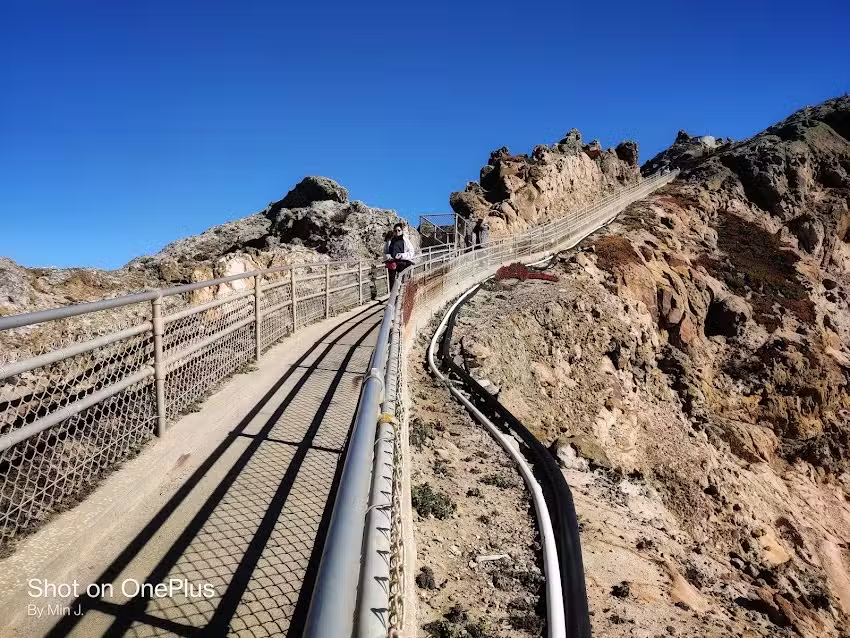
The most critical factor for any potential visitor to understand is the physical demand. Reaching the lighthouse from the observation deck requires descending and, more importantly, ascending 313 steep steps. This is frequently compared to climbing a 30-story building and is not recommended for individuals with mobility limitations or cardiovascular concerns. While the visitor center and a spectacular observation deck are wheelchair accessible, the lighthouse itself is not, a crucial detail for ensuring inclusive tourism. This stark contrast between the accessible entrance and the inaccessible main attraction can be a point of frustration if not anticipated.
Logistical hurdles begin before you even leave your car. The main parking lot is notoriously small, with only a dozen or so spots, leading to roadside parking that can add a significant walk—up to a mile each way—just to reach the visitor center. On weekends and during peak whale-watching season, the area becomes highly congested. While shuttle bus systems have been used in the past, their operation can be inconsistent, and visitors should check the official NPS website for the current status before planning their trip. Arriving very early in the morning or on a weekday is the best strategy to mitigate these parking challenges.
Furthermore, the site's operational constraints can lead to disappointment. The visitor center and lighthouse stairs maintain limited hours, typically from 10:00 AM to 4:00 PM, closing the path down well before sunset. More critically, the stairs to the lighthouse are immediately closed for safety when wind speeds exceed 40 mph (64 km/h), a frequent occurrence at one of the windiest points on the Pacific coast. It is not uncommon for visitors to complete the long drive only to find they can't access the main attraction due to high winds, making it essential to check weather forecasts and official park alerts beforehand.
Planning a Successful Visit
Given the combination of immense rewards and significant challenges, a successful trip to the Lighthouse Visitor Center hinges on preparation. Any destination management plan for this site must include the following considerations:
- Check Conditions First: Before driving, always check the Point Reyes National Seashore official website or call the visitor center at (415) 669-1534 for the latest information on wind speeds, stair closures, and road status.
- Arrive Early or on Weekdays: To secure a parking spot and avoid the largest crowds, plan to arrive shortly after opening time, especially on weekends or during the spring and winter.
- Be Physically Prepared: Wear sturdy walking shoes and be honest about your physical fitness. The 313-step climb back up is strenuous. If you have any mobility or health concerns, plan to enjoy the magnificent views from the accessible upper observation deck.
- Dress in Layers: The weather at the headlands is famously unpredictable and can change rapidly. It is often cold, foggy, and extremely windy, even when it's sunny just a few miles inland. A windbreaker is essential.
- Allocate Ample Time: The drive to the lighthouse is long and winding. Factoring in the walk from the parking lot, time at the visitor center, and the trek to the lighthouse, a visit should be considered a half-day commitment at minimum.
Ultimately, the Lighthouse Visitor Center is the starting point for a memorable adventure travel experience, not a simple roadside stop. It provides access to a site of profound historical importance and natural beauty. However, its dramatic location comes with inherent difficulties that every visitor must anticipate and plan for. Those who do will be rewarded with an unforgettable encounter with the raw power of the California coast.