
Laie Hawaii Temple Visitors’ Center
BackThe Laie Hawaii Temple Visitors' Center offers a distinct experience on Oahu's North Shore, functioning as more than just a point of interest but as a serene destination with a specific purpose. For those engaged in travel planning services for Hawaii, understanding its dual nature as a public attraction and a religious center is crucial. The center and its grounds are open to everyone, free of charge, seven days a week from 10:00 AM to 8:00 PM, making it a flexible addition to many itineraries. Its wheelchair accessibility ensures it is available to a wide range of visitors.
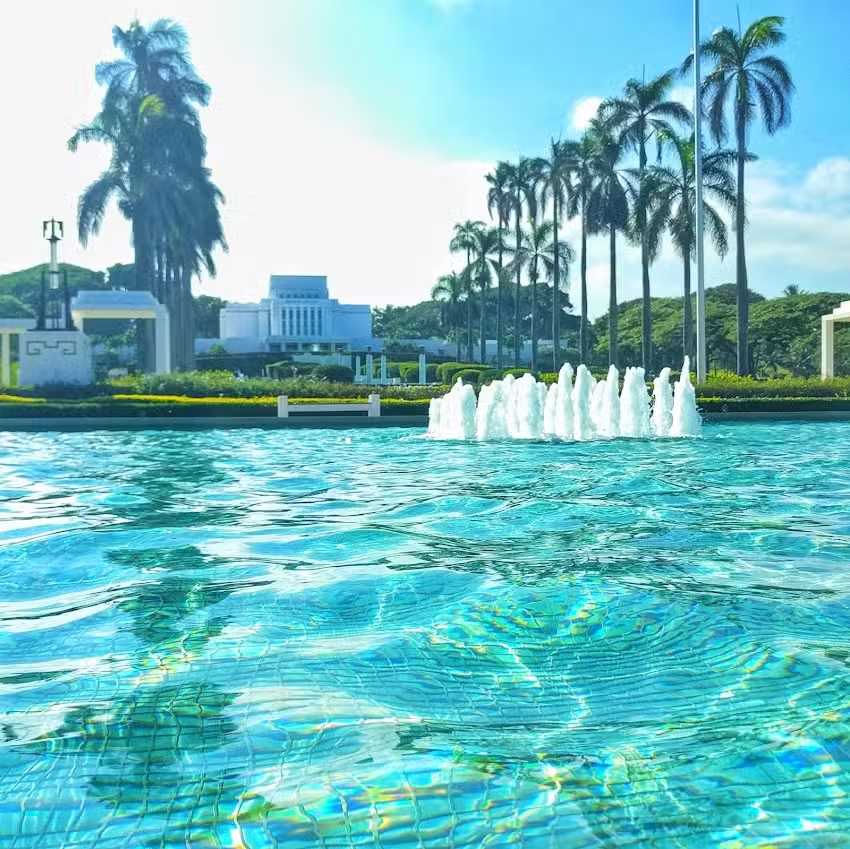
Upon arrival, the most striking feature is the landscape. The grounds are consistently described by visitors as immaculately maintained, gorgeous, and peaceful. With lush tropical gardens, reflective pools, and fountains, the area provides a tranquil atmosphere that stands in contrast to more bustling Oahu tourist attractions. This makes it a noteworthy stop for those seeking quiet contemplation, a place for peaceful walks, or simply a beautiful backdrop for photography. The architectural design of the temple itself, often nicknamed the “Taj Mahal of the Pacific,” is a significant draw. Constructed from native lava rock and coral, it was the first temple of The Church of Jesus Christ of Latter-day Saints built outside the continental United States, dedicated in 1919. Its unique design, inspired by ancient American temples and the Prairie School of architecture, provides a unique visual experience.
What to Expect During a Visit
The experience at the Visitors' Center is largely shaped by the staff, who are primarily sister missionaries of the Church. Reviews are overwhelmingly positive about their conduct, describing them as very kind, welcoming, and informative. They offer free guided tours Oahu visitors can take advantage of, explaining the history of the Church in Polynesia, the significance of the temple, and core beliefs centered on Jesus Christ and family. Inside the center, visitors will find informational videos and engaging displays. A key exhibit is a detailed, cross-sectioned scale model of the temple itself, which helps visitors understand the purpose and function of the interior rooms, which are otherwise not accessible to the general public. This model serves as a tool for transparency, aiming to demystify the temple's role for those of different faiths.
The Positive Aspects
- A Welcoming and Pressure-Free Environment: A significant concern for non-religious visitors might be the potential for proselytizing. However, multiple accounts confirm that while the missionaries are eager to share their beliefs, they are respectful if visitors decline to discuss religion. This allows people to enjoy the beauty and history of the site on their own terms, making it a more inclusive destination.
- Educational Value: For those interested in cultural tours Hawaii offers, the center provides a deep dive into an important part of Laie's history. The town itself was established as a gathering place for Latter-day Saints in 1865, and the center explains this unique heritage. Visitors can gain a better understanding of the community that anchors the nearby Brigham Young University–Hawaii and the Polynesian Cultural Center.
- Community Commitment: A powerful testament to the center's role in the community was its function as a tsunami safety zone. One visitor recounted how the temple grounds were opened to the public during an evacuation, with organized traffic direction, open restrooms, and a safe space for people to wait. This act of service highlights a commitment to public welfare that goes beyond its primary mission.
- Cost and Accessibility: As a completely free attraction, it is an excellent option for those planning budget travel Hawaii itineraries. The long operating hours and open access to the grounds make it an easy and low-stress stop.
Points to Consider
- Explicitly Religious Purpose: The primary function of the Laie Hawaii Temple Visitors' Center is to share the faith of The Church of Jesus Christ of Latter-day Saints. While it is a welcoming place for all, every aspect of the visit is connected to this purpose. Travelers who are uncomfortable with religious settings should be aware of this focus before planning a visit. It is not a secular historical site.
- Temple Access is Restricted: It is a common point of confusion that needs clarification for potential visitors. While the Visitors' Center, gardens, and grounds are open to the public, the temple building itself is only accessible to members of the Church in good standing who hold a temple recommend. Expectations should be managed accordingly; you will be able to admire the temple's exterior but not enter the main building.
- Location and Travel Time: Laie is located on the North Shore of Oahu, which can be a 60 to 90-minute drive from the primary tourist areas of Waikiki and Honolulu, especially with traffic. Any customized itineraries that include the Visitors' Center must account for this significant travel time. It is often paired with a visit to the adjacent Polynesian Cultural Center.
Is This a Good Addition to Your Travel Plans?
The Laie Hawaii Temple Visitors' Center is best suited for travelers looking for a serene and beautiful stop that offers a unique cultural and historical perspective. It is an ideal component of family-friendly destinations, providing a calm, safe, and educational environment. Photographers and those with an interest in architecture and landscaping will find much to appreciate in the meticulously cared-for grounds and the temple's striking design. For those on a spiritual journey or curious about different faiths, it offers a welcoming space for learning and reflection. However, travelers seeking high-energy activities or purely secular attractions may find that it doesn't align with their interests. Ultimately, it offers a different kind of Hawaii sightseeing experience—one that is less about commercial tourism and more about peace, beauty, and community history.