Kofa National Wildlife Refuge Admin Building And Visitor Contact Station
BackThe Kofa National Wildlife Refuge Admin Building and Visitor Contact Station, located in Yuma, Arizona, serves as the gateway to over 665,400 acres of rugged Sonoran Desert wilderness. Established in 1939 primarily to protect the desert bighorn sheep, this vast expanse offers a profound experience for a specific type of traveler—one who prioritizes solitude, self-sufficiency, and authentic adventure travel over structured amenities. While the refuge itself is a highly-rated natural wonder, potential visitors should be acutely aware of the significant distinction between the administrative center's offerings and the realities of the untamed land it represents.
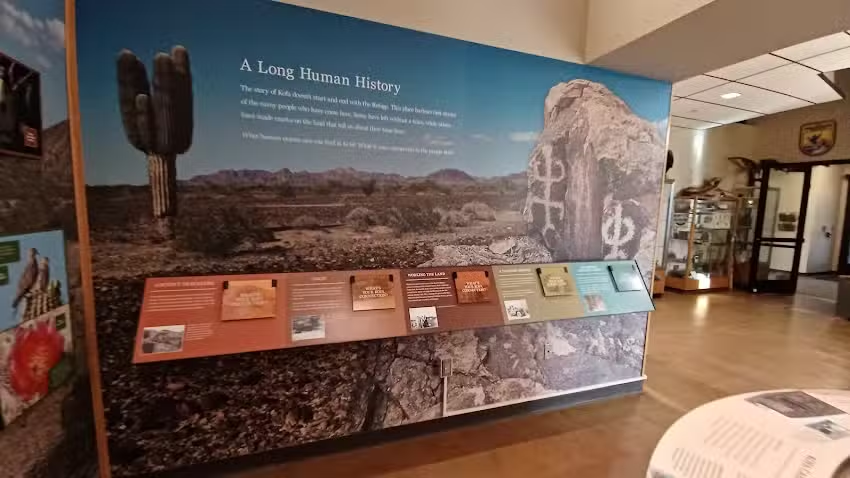
While it is categorized under services like a travel agency, its function is not to book commercial tours but to provide information for a protected wildlife area. It acts as a starting point for travel planning, but with some notable inconsistencies that require visitors to be proactive. The Visitor Contact Station is intended to be a resource hub, offering maps, brochures, and exhibits. However, visitor feedback points to a critical operational issue: unreliability. There are reports of the center being closed during its posted weekday hours due to limited staffing, leaving travelers without access to information or personnel. Compounding this, the external brochure kiosks have also been found empty, creating a significant hurdle for those arriving without prior research. This underscores a crucial takeaway: do not depend solely on the visitor center for your planning. It is imperative to call ahead and visit the official U.S. Fish and Wildlife Service website for Kofa to download maps and check for alerts before departure.
The Unspoiled Natural Experience: What Kofa Excels At
For those who come prepared, Kofa National Wildlife Refuge is an exceptional tourist destination. Its primary draw is the opportunity for genuine eco-tourism and unparalleled outdoor recreation. The refuge is named after the historic King of Arizona (K of A) Mine and encompasses two major mountain ranges, the Kofa and Castle Dome Mountains. This dramatic topography creates stunning desert landscapes and provides the perfect habitat for its flagship species, the desert bighorn sheep.
- Wildlife Viewing: The core mission of the refuge is conservation, and it offers one of the best chances to see desert bighorn sheep in their natural environment. While sightings are not guaranteed and often require patience and binoculars, the experience is a profound reward for wildlife enthusiasts. The area also supports other desert dwellers like kit foxes, badgers, coyotes, and a variety of reptiles and birds, making it a prime location for photography and observation.
- Hiking and Backpacking: With over 80% of its area designated as wilderness, Kofa is a paradise for hikers seeking solitude. The most famous of the hiking trails is Palm Canyon, a relatively short but steep trail leading to a secluded canyon that shelters the only native palm trees in Arizona, the California fan palm. For more ambitious trekkers, remote destinations like Signal Peak or Skull Cave offer challenging routes with panoramic views.
- Primitive Camping: Kofa does not offer developed campgrounds. Instead, it allows for dispersed, primitive camping sites, letting visitors choose their own spot in the vast wilderness. This approach appeals to seasoned campers and RVers who are fully self-contained, offering an incredible opportunity for stargazing in skies free from light pollution. Camping is permitted for up to 14 days, but strict Leave No Trace principles apply, and campsites must be at least a quarter-mile from any water source.
Navigating the Challenges: The Reality of a Rugged Refuge
The very wildness that makes Kofa appealing also presents its greatest challenges. The positive experiences shared by many visitors are almost always prefaced with warnings about preparation. This is not a casual day-trip park; it is an unforgiving environment that demands respect and readiness.
Roads and Accessibility
A recurring theme in visitor accounts is the condition of the roads. While some main access routes like Palm Canyon Road may be passable for high-clearance 2WD vehicles in dry conditions, most of the interior road network requires a robust 4x4 vehicle. These roads are primitive, unmaintained, and often rocky, with sharp stones that can easily puncture standard tires. One visitor learned this the hard way, driving for hours down a single-track trail only to find the gate at the end was closed, forcing a long and careful backtrack. This highlights another reality: access can be unpredictable. Travelers should be prepared for washouts, deep sand, and rough terrain, and it is highly recommended to travel with at least one full-size spare tire and the tools to change it.
Lack of Facilities and Services
Once you leave the highway and enter the refuge, you are on your own. There is no potable water, no restrooms (outside of the visitor center in Yuma), no gasoline, and no reliable cell service. Any successful trip into Kofa's interior requires complete self-sufficiency. This includes carrying ample water (a gallon per person, per day is the standard recommendation), food, emergency supplies, and having a reliable vehicle. The isolation is part of the allure, but it also means that a minor problem like a flat tire or running out of water can quickly escalate into a serious situation. It's crucial to inform someone of your itinerary and expected return time before venturing into the backcountry.
A Destination for the Prepared Adventurer
In summary, the Kofa National Wildlife Refuge is a tale of two experiences. On one hand, there is the administrative and visitor services aspect, which shows clear room for improvement in reliability and communication. The inconsistent hours and lack of available materials at the Yuma contact station can be a source of frustration and a poor start to a visitor's journey.
On the other hand, there is the refuge itself—a magnificent and sprawling wilderness that delivers an authentic and deeply rewarding experience for those who engage with it on its own terms. It stands as a premier location for wildlife tours (self-guided), serious hiking, and off-grid camping. The key to a positive outcome lies entirely in travel planning and preparation. Prospective visitors must shift their mindset from that of a consumer of tourist services to that of a self-reliant explorer. By consulting official online resources, equipping their vehicles appropriately, and packing for self-sufficiency, travelers can mitigate the administrative shortcomings and immerse themselves in one of Arizona's most spectacular and untamed tourist attractions.