
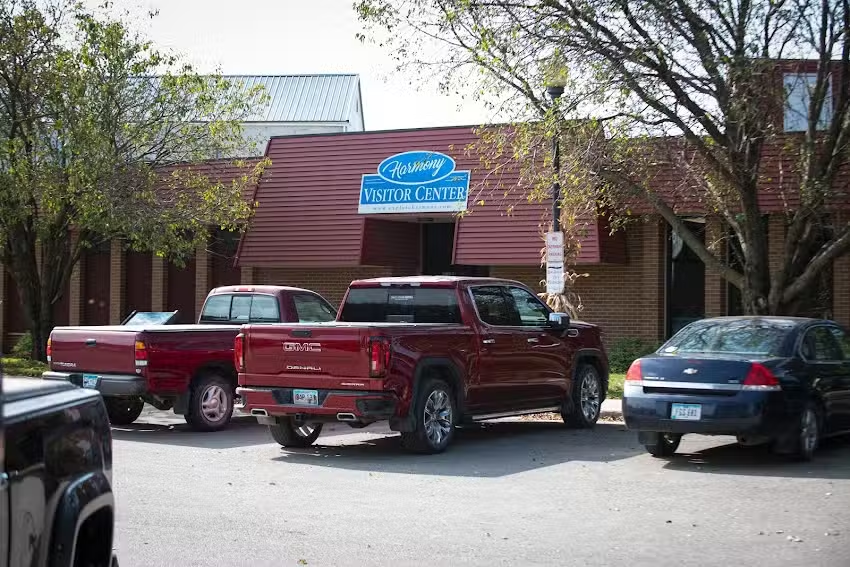
Harmony Visitor and History Center – Harmony Area Chamber of Commerce
BackThe Harmony Visitor and History Center, operated by the Harmony Area Chamber of Commerce, serves as a crucial first stop for visitors to this region of southeastern Minnesota. Functioning as both a tourist information center and a local historical museum, it aims to provide a comprehensive overview of the area's attractions. However, visitor experiences suggest that while it can be an invaluable asset for vacation planning, there are significant inconsistencies that potential visitors should be aware of.
A Hub for Regional Information and History
On its best days, the center excels as a primary resource for organizing activities in and around Harmony. Visitors have praised the friendly and knowledgeable staff for providing ample information through pamphlets, maps, and personal recommendations. This makes it an effective local travel agency for those looking to structure their visit. The center is particularly important for tourists interested in the two main regional draws: the extensive Amish communities and the renowned Niagara Cave. Information on how to respectfully visit and shop at Amish farms is critical, and this center is positioned to provide that essential context for a positive experience in cultural tourism.
Beyond its role in promoting tourism, the center houses exhibits curated by the Harmony Area Historical Society. This dual purpose enriches the visitor experience, offering more than just brochures. Displays on local geology, including the area's distinct Karst topography, and the history of local families, such as the "Century Farm families" showcased in on-demand videos, provide valuable context to the landscape and community. This integration of history and tourism information sets it apart from a standard information booth.
Amenities and Strategic Location
The center is also lauded for its practical amenities. Clean public restrooms and a unique book-sharing corner, where visitors can take donated books for a small contribution, add to a welcoming atmosphere. Its physical location is another significant advantage. Situated at the trailhead for the Harmony-Preston Valley State Trail, it's an ideal starting point for outdoor enthusiasts. This 18-mile trail connects to the larger 60-mile Root River State Trail system, making the center a logical spot for cyclists and hikers to park, gather information, and begin their journey. This connection positions it as a key facility for those engaging in adventure travel in the region.
Challenges: Staffing and Operating Hours
Despite its strengths, the center faces considerable operational challenges that detract from its reliability. A recurring point of frustration among visitors is inconsistent staffing. Several reports indicate arriving during stated business hours only to find the center empty and locked, leaving them without access to information or assistance. For a facility that serves as the main tourism agency for the town, this unpredictability is a major drawback. Visitors who have traveled specifically to get advice on Amish tours or local attractions are left disappointed and unable to plan their day effectively.
Compounding this issue are the limited operating hours. The center closes at 2:00 PM from Monday to Wednesday and 3:00 PM from Thursday to Saturday, with no service on Sundays. These restricted hours are inconvenient for travelers arriving in the afternoon and severely limit opportunities for spontaneous itinerary planning. Visitors are advised to call ahead to confirm that someone is present before making a special trip.
Managing Visitor Expectations: The Accessibility Question
A nuanced but important issue is the center's role in managing visitor expectations. While the building itself has a wheelchair-accessible entrance, this does not extend to all the attractions it promotes. One visitor expressed significant disappointment after being unable to visit nearby Amish shops because they were not wheelchair accessible, a fact they presumably learned only after arriving. While the accessibility of third-party businesses is not the center's fault, a top-tier destination management organization should provide comprehensive information, including accessibility limitations. A key function of a visitor center is to help all tourists, including those with mobility challenges, create a feasible and enjoyable plan. Providing clear and upfront details about which sites are and are not accessible would prevent disappointment and demonstrate a higher level of service.
Final Assessment
The Harmony Visitor and History Center holds the potential to be an outstanding resource. Its blend of historical exhibits and practical tourist information, combined with its prime location on a major bike trail, makes it a valuable community asset. When staffed and open, it effectively supports local tour operators and helps visitors craft memorable family vacations. However, the inconsistent staffing and restrictive hours are significant flaws that can undermine a visitor's experience. Travelers should view it as a helpful but potentially unreliable resource. The best approach is to use its website, `exploreharmony.com`, for preliminary planning and to call ahead to ensure the center is open before visiting in person.