
Gullah Geechee Visitor Center
BackA Cultural Nexus and Travel Resource on St. Helena Island
The Gullah Geechee Visitor Center, located at 870 Sea Island Parkway on St. Helena Island, South Carolina, presents itself as more than a typical tourist stop. It functions as a dual-purpose entity: a deeply immersive cultural gallery and a practical starting point for travelers wanting to engage with the region's unique history. For potential visitors, understanding this hybrid nature is key to appreciating what the center offers and where it might fall short of certain expectations. This establishment serves as a vital access point to the Gullah Geechee Cultural Heritage Corridor, a National Heritage Area designated by Congress to recognize the unique culture of the Gullah Geechee people. These are the descendants of West and Central Africans who were enslaved on the isolated coastal plantations of the Carolinas, Georgia, and Florida, and due to this isolation, they retained a remarkable amount of their African linguistic and cultural heritage.
The Strengths: A Rich Tapestry of Art and History
The primary draw of the Gullah Geechee Visitor Center is its role as a steward of cultural preservation. Visitors consistently praise the establishment for its powerful and well-curated collection that connects African art, contemporary American pieces, and local Gullah Geechee history. It operates as a high-caliber gallery and museum, showcasing items that tell a profound story of resilience, freedom, and artistic expression. The atmosphere is often described as vibrant and soothing, allowing for a contemplative experience. For those embarking on a journey of cultural tourism, this center is an indispensable first stop. It provides the necessary context for everything else a visitor might see on St. Helena Island and the surrounding Sea Islands.
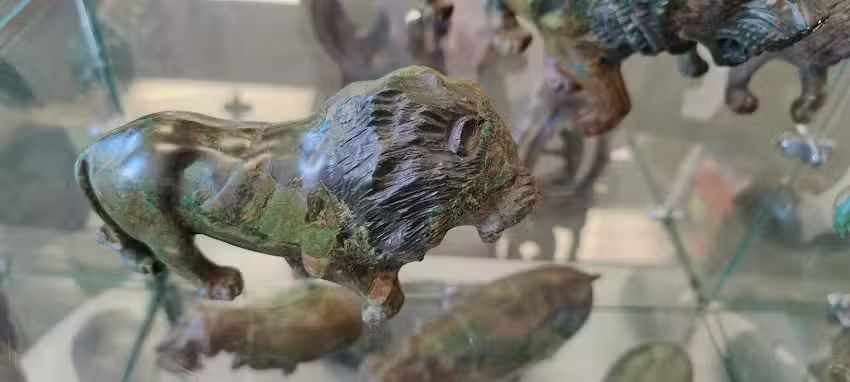
The collection itself is a significant point of merit. It is not a simple gift shop with mass-produced trinkets. Instead, it features incredible, often museum-quality, artwork, antiques, and handcrafted items. Patrons have been particularly impressed by large, intricate pieces like hand-carved vases standing several feet tall, which speak to the immense skill and dedication of the artists. This focus on authentic, high-quality art provides a direct connection to the living traditions of the Gullah Geechee people, whose arts like sweetgrass basket weaving are enduring cultural legacies. The center, therefore, acts as a commercial gallery for these important works, providing a platform for artists and a unique acquisition opportunity for serious collectors.
Furthermore, its function as a tourist information center is crucial for anyone planning a substantive trip. While it may not be a travel agency in the traditional sense of booking flights and hotels, it serves a more specialized and arguably more valuable role. It equips travelers with knowledge and resources to undertake meaningful heritage tours. Visitors can gain insights into significant local sites, such as the nearby Penn Center (one of the first schools for formerly enslaved people), and understand the broader historical landscape of the Reconstruction Era in Beaufort County. This makes the center an essential tool for vacation planning for those who wish to move beyond surface-level tourism.
Points of Consideration for Potential Visitors
While the praise for the center is nearly universal, there are practical aspects that prospective visitors should consider. The most frequently mentioned point is the cost of the items for sale. Multiple visitors have noted that the prices are "astronomical." This is not a criticism of value, but an observation about accessibility. The pieces offered are unique works of art and rare antiques, and their prices reflect that quality and rarity. Therefore, visitors should manage their expectations: this is a place to admire and learn, but for the average tourist, purchasing a significant piece may be prohibitive. It is best viewed as a gallery where items happen to be for sale, rather than a souvenir shop.
Another practical limitation is the center's operational schedule. It is open from 10:00 AM to 5:00 PM, Monday through Saturday, and is closed on Sundays. This is a critical piece of information for weekend travelers, as a Sunday visit is not an option. For individuals planning short trips or weekend getaways, it is essential to structure their itinerary around this schedule to avoid disappointment. This logistical detail underscores the importance of checking hours in advance when engaging in South Carolina travel.
Finally, the center's focus is highly specialized. Its dedication to Gullah Geechee history and art is its greatest strength, but it also defines its audience. For travelers whose primary interest in the Sea Islands is recreation, beaches, or general sightseeing, the deep historical and cultural dive offered here may be less of a priority. It is an institution with a specific, profound mission, and it appeals most to those with a genuine interest in African American history, art, and the unique cultural fabric of the Lowcountry. It is less of a general-purpose welcome center and more of a focused cultural embassy.
Conclusion: An Essential, Albeit Niche, Destination
In summary, the Gullah Geechee Visitor Center on St. Helena Island is a highly recommended and valuable institution. It successfully balances its roles as a museum, an art gallery, and a vital resource for tourism focused on heritage and culture. The quality of its collection is exceptional, providing a powerful educational experience. However, visitors should be aware of the high price point for the art and antiques on sale and plan their visit carefully around the six-day operational week. It stands as a must-see destination for anyone serious about understanding the history of the region and the enduring legacy of the Gullah Geechee people, serving as a perfect starting point for deeper explorations into the surrounding historical sites.