
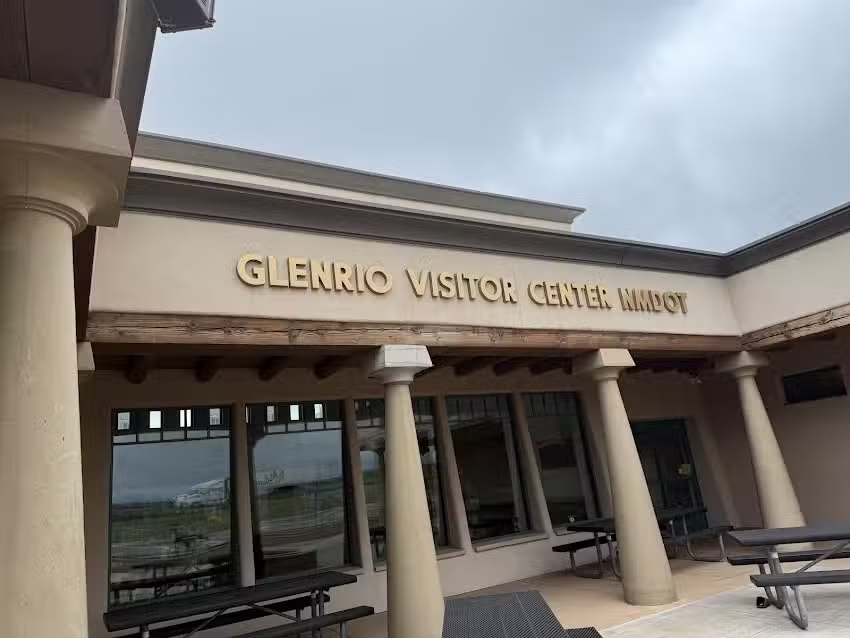
Glenrio Welcome Center
BackPositioned directly on Interstate 40 at the Texas-New Mexico border, the Glenrio Welcome Center serves as the state's official first handshake for westbound travelers. Operated by the New Mexico Tourism Department, this facility transcends the typical rest stop, functioning as a vital hub for information and travel planning. It provides a comprehensive introduction to the state's attractions, far beyond what a simple online search might yield. For those embarking on a journey through New Mexico, a stop here can fundamentally shape a more informed and enriched travel experience. The center's overall high rating, based on a large volume of visitor feedback, suggests a consistent and positive reception, though a closer look reveals a more nuanced picture with both significant strengths and notable weaknesses.
A Hub for Personalized Tourism Services
The most consistently praised aspect of the Glenrio Welcome Center is its staff. Numerous accounts describe the employees as exceptionally welcoming, friendly, and, most importantly, knowledgeable. They operate less like passive attendants and more like proactive hospitality professionals, effectively serving as on-site tour operators. Visitors report receiving personalized recommendations tailored to their interests, whether they are looking for national park information, cultural sites, or unique local events. This level of personalized service elevates the center from a simple repository of pamphlets to a genuine travel agency, capable of helping visitors build or refine their itineraries on the spot. The staff's ability to provide tailored advice adds a significant human element to trip planning that is often lost in the digital age.
Complementing the staff is an extensive collection of free resources. The center is stocked with a vast array of brochures, state maps, and informational materials covering nearly every corner of New Mexico. This makes it an invaluable resource for road trip planning, allowing travelers to discover potential destinations and activities they may have otherwise overlooked. For those who prefer tangible materials to navigate with, the high-quality maps are a particularly welcome feature. The interior is thoughtfully arranged, with displays of local artifacts that offer a preliminary glimpse into the region's rich history and culture, setting the stage for the journey ahead.
Facility and Amenities: A Mixed Experience
The physical building and its grounds are generally seen as a major asset. The welcome center is modern, spacious, and designed to be accessible, featuring ample parking for cars, RVs, and commercial trucks. The surrounding landscape is well-maintained with desert flora, providing a pleasant environment to stretch your legs after a long drive. Shaded picnic areas offer a comfortable spot for a break, and the iconic "Welcome to New Mexico" sign has become a popular photo opportunity for visitors.
For those traveling with pets, the center provides designated outdoor areas. This is a crucial amenity for long-distance travelers, ensuring their animal companions also have a safe space to get some exercise. However, some visitors have noted that the pet areas can be overgrown with plants that have thorns or burrs, which could pose a comfort or safety issue for animals. This requires pet owners to be vigilant when using these spaces.
The Question of Cleanliness and Maintenance
While many visitors describe the facilities, including the restrooms, as clean and well-kept, this is not a universal opinion. A notable portion of feedback points to issues with restroom cleanliness, with some describing them as "gross." This discrepancy suggests that maintenance standards may be inconsistent, potentially varying based on the time of day, staffing levels, or the sheer volume of traffic the center receives. For an establishment that serves as a first impression of the state, this inconsistency is a significant drawback. A traveler's experience can be soured by unclean facilities, regardless of how friendly the staff might be.
Operational Limitations and Minor Drawbacks
Limited Hours of Operation
Perhaps the most significant limitation of the Glenrio Welcome Center is its operating hours. The facility is consistently open from 7:30 AM to 4:00 PM daily. While these hours may cover the bulk of daytime travelers, they exclude anyone arriving in the late afternoon or evening. Travelers who have been on the road all day and cross the border after 4:00 PM will find the main building closed. They miss out entirely on the expert advice from the staff and the wealth of informational materials inside. This rigid schedule diminishes the center's utility and means a large number of potential visitors cannot access its primary services, reducing it to little more than a parking area after hours.
Small Inconsistencies in Service
A minor but interesting point raised by some visitors is a perceived insistence from staff to sign the guestbook. While intended to gather visitor data for the tourism department, this interaction has been described as slightly pushy by a few. It's a small detail, but it can detract from an otherwise welcoming atmosphere for those who prefer not to share their information or feel pressured to do so. This, combined with the variable state of the restrooms, points to small operational inconsistencies that prevent the center from being a universally flawless experience.
Conclusion: An Essential, If Imperfect, First Stop
The Glenrio Welcome Center is undoubtedly a valuable asset for travelers entering New Mexico. It functions effectively as a preliminary provider of tourism services, offering personalized advice and comprehensive resources that can genuinely enhance a trip. The friendly, concierge-like staff and the modern, spacious main building are standout features. However, the experience is not without its flaws. The limited operating hours are a major practical constraint, and the inconsistent restroom cleanliness is a notable concern that detracts from the otherwise positive impression. While the pet area is a welcome addition, it requires careful use. Ultimately, for travelers who arrive during its open hours, the center is an essential first stop. Its role in providing direct access to expert travel planning assistance makes it far more than a simple rest area, but potential visitors should be aware of its limitations to set proper expectations.