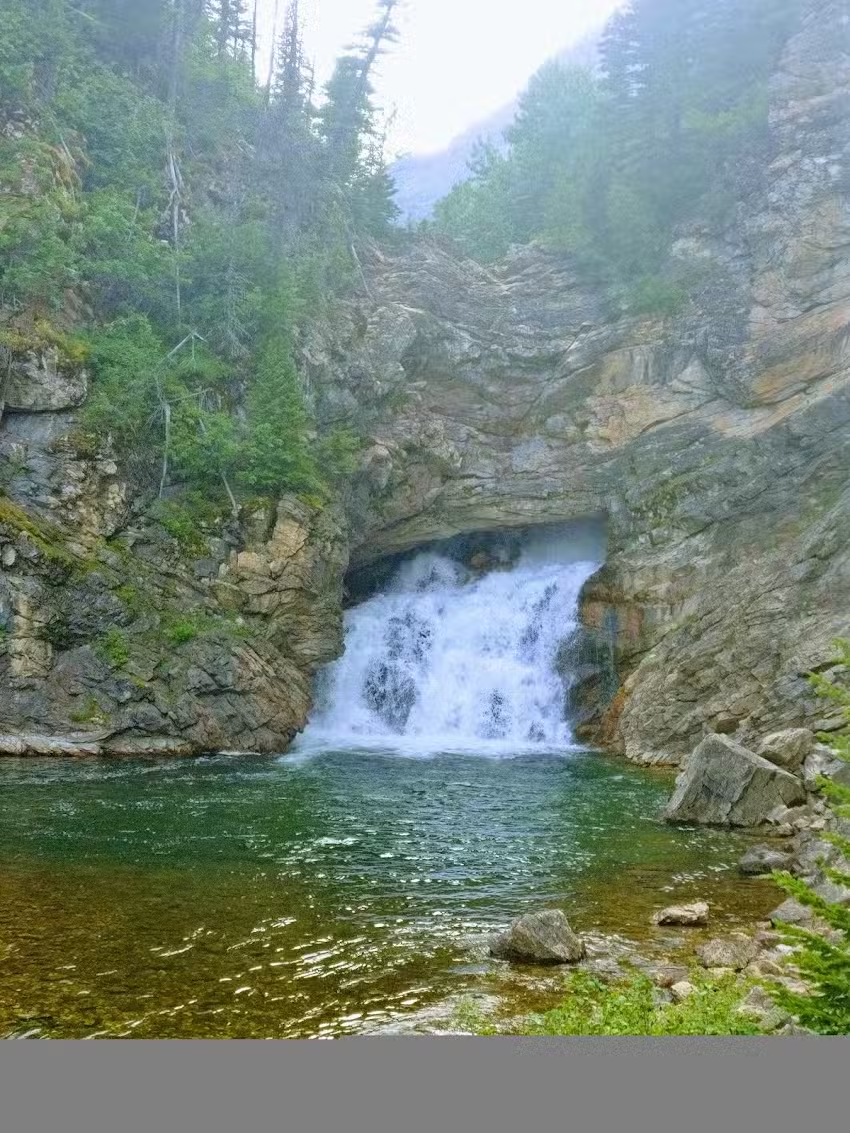
Glacier National Park Headquarters
BackLocated at 64 Grinnell Drive in West Glacier, Montana, the Glacier National Park Headquarters serves as the primary administrative and informational hub for one of the United States' most treasured natural landscapes. While its official designation is a headquarters, for prospective visitors, it functions as the most critical of travel agencies, offering essential services and information that can make or break a trip. With a solid 4.4-star rating based on over 150 reviews, it's clear that many visitors find its resources invaluable. However, navigating its services requires understanding both its significant strengths and its notable limitations.
The Essential First Stop for Park Navigation
The primary role of the Glacier National Park Headquarters is to provide authoritative, real-time information. In an environment where conditions can change rapidly—from sudden road closures on the iconic Going-to-the-Sun Road to trail restrictions due to wildlife activity—this facility is the definitive source for accurate updates. Visitors consistently praise the staff for being friendly and knowledgeable, acting as expert travel consultants who can help shape a safe and rewarding visit. This is where you come to obtain maps, learn about ranger-led programs, and get detailed advice on everything from hiking difficulty to the best spots for wildlife viewing. For anyone engaging in adventure travel, such as multi-day backcountry hiking, the headquarters or one of the associated ranger stations is indispensable for securing the necessary wilderness permits.
One of the most complex aspects of visiting Glacier in recent years has been the implementation of a vehicle reservation system. This system, required for areas like the west side of Going-to-the-Sun Road and the North Fork during peak hours (7 a.m. to 3 p.m. in the 2025 season), can be a major source of confusion. The headquarters staff are equipped to explain the nuances of this system, though it's crucial to note that reservations themselves must be made online through Recreation.gov and are not available in person at the park. They can, however, provide clarity on reservation windows, which often open 120 days in advance, with a second batch released the evening before the entry date. This expert advice is a cornerstone of their tourism services and is vital for effective vacation planning.
Strategic Advantages and Insider Tips
The information provided by the headquarters can offer strategic advantages for gaining park access. For instance, one user review highlighted a crucial tip: booking a service like a boat tour with the Glacier Park Boat Company can guarantee entry into that specific area of the park, bypassing the need for a separate vehicle reservation for that entrance. This kind of insider knowledge is exactly what makes a stop here so valuable. The staff can also advise on alternative entry strategies, such as entering the park before 7 a.m. or after 3 p.m. when reservations are not required. This level of detailed destination management is what sets it apart from generic online resources.
Furthermore, the headquarters is the go-to place for specific permits related to adventure travel. Backcountry wilderness permits, for example, are managed through a complex system of advance reservations and a limited number of walk-up permits. The staff at the Apgar Wilderness Permit Center (near the main headquarters) and other ranger stations can provide up-to-the-minute availability charts and help hikers craft a viable itinerary planning strategy. For serious backpackers, arriving early—even before the offices open—is often recommended to secure these coveted walk-up permits during peak season.
Significant Drawbacks and Areas for Improvement
Despite its many positives, the Glacier National Park Headquarters has one glaring weakness: its operating hours. The facility is open from 8:00 a.m. to 4:30 p.m. on weekdays but is closed on Saturdays and Sundays. This schedule is profoundly inconvenient for the vast majority of tourists who travel over the weekend. Arriving on a Friday evening with plans to start your adventure on Saturday morning means you will find the main informational hub completely inaccessible. While other visitor centers in the park, like the Apgar Visitor Center, may have weekend hours during peak season, the main headquarters' closure is a significant operational flaw for a tourist-facing entity.
Another point of consideration is managing expectations. While it functions as an information center, it is not a full-service tour operator. Its scope is limited to activities and regulations within Glacier National Park. Staff will not assist with booking accommodations outside the park, flights, or rental cars. Their purpose is park-centric, focused on providing the tools for a self-directed experience. Visitors looking for comprehensive, all-inclusive booking services for their entire trip will need to consult private travel agencies.
Finally, due to its importance, the headquarters and nearby visitor centers can become very crowded, especially during the summer months. This can lead to lines and wait times for speaking with a ranger. The complexity of the systems they manage—from vehicle reservations to wilderness permits—means that consultations can be time-consuming. Prospective visitors should be prepared for this and, if possible, try to visit during non-peak times of the day to get the most efficient service.
Conclusion: An Indispensable but Imperfect Resource
The Glacier National Park Headquarters is an essential resource for anyone serious about making the most of their visit. It provides the most accurate and reliable information available, offering clarity on complex entry systems and providing invaluable safety and logistical advice. It is the definitive starting point for any national park tours, whether self-guided or professionally led. The expertise of the staff in itinerary planning for both casual sightseers and hardcore adventurers is unmatched.
However, its utility is severely hampered by its weekday-only schedule, a major oversight for a facility serving a tourist destination that peaks on weekends. Visitors must plan their trips with this limitation in mind, either by arriving on a weekday or by relying on other, potentially more crowded, visitor centers within the park. Ultimately, the headquarters is a powerful tool in a visitor's arsenal, but one that requires strategic timing and a clear understanding of what it can and cannot provide.