Frontier Village, Jamestown
BackFrontier Village in Jamestown, North Dakota, presents a complex picture for today's traveler. Primarily known as the home of the "World's Largest Buffalo," a 26-foot-tall, 60-ton concrete monument officially named Dakota Thunder, the site has long been a landmark for those undertaking cross-country journeys. For decades, this statue has served as the main draw, but the adjacent recreated pioneer town offered a deeper, more immersive experience. However, prospective visitors should be aware of significant changes to its operational status that impact the overall experience.
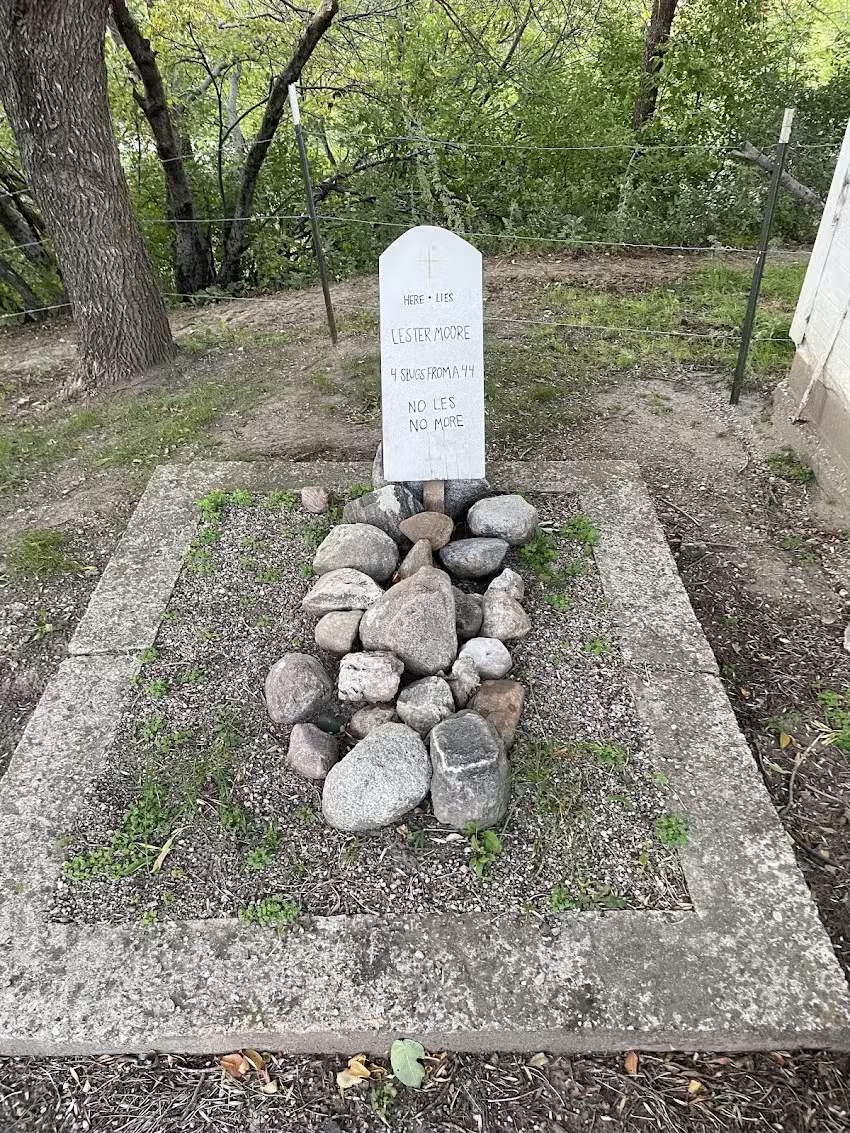
The location's primary function can be seen as a point of interest for heritage tourism, aiming to give visitors a tangible connection to America's frontier past. When fully operational, the village was a charming collection of original and replica buildings moved from across the region to create a cohesive pioneer settlement. Visitors could walk through a late 19th-century main street, stepping into structures like a sheriff's office, a blacksmith shop, a post office, and a church. This setup provided a distinct educational component, making it a popular stop for families and history enthusiasts. The appeal was its authenticity and the quiet, self-paced nature of the visit. Based on past visitor experiences, the atmosphere was enhanced by passionate staff and volunteers, with some singling out specific individuals, like a greeter named Bill, for their wealth of historical knowledge that brought the static displays to life.
The Experience: What It Offered
One of the most praised aspects of Frontier Village was its accessibility. Entry to the village itself was traditionally free, with a suggested donation of around $5 per vehicle. This pricing strategy made it an incredibly attractive stop for those on a long road trip destination itinerary, allowing travelers to stretch their legs and absorb some local culture without a significant financial commitment. The presence of clean, well-maintained restrooms was another practical perk frequently noted by those who had been on the road for hours.
Beyond the general pioneer theme, the village held a special significance for fans of Western literature. A dedicated schoolhouse served as a tribute to the celebrated author Louis L'Amour, who was born near Jamestown. This building wasn't just a display; it was often staffed by an expert dedicated to discussing the author's life and works. Visitors have recounted delightful interactions with this guide, who would share detailed histories and even offer free books to younger visitors to spark their interest in the genre. This specific focus represents a successful example of niche cultural tourism, catering to a specific interest group and adding a unique layer to the site's offerings.
The on-site Trading Post was another highlight, functioning as a gift shop where visitors could purchase souvenirs, local crafts, and memorabilia related to the Old West, the buffalo, and Louis L'Amour. This retail component, combined with the educational buildings, made the village a self-contained tourist attraction that offered more than just a photo opportunity with the giant statue.
The Reality Check: Current Status and Limitations
Herein lies the most critical information for anyone currently involved in travel planning. While the iconic Dakota Thunder statue and the adjacent National Buffalo Museum remain open and are major attractions in their own right, the Frontier Village itself has ceased operations. Following the dissolution of the board that managed it, the collection of historical buildings was closed to the public in 2022. This is a significant drawback, as the village was the heart of the historical experience that complemented the roadside landmarks.
For new visitors, this means the experience is fundamentally different from what is described in older reviews and travelogues. The ability to wander through the historic buildings, interact with knowledgeable guides in the L'Amour shack, or browse the old-timey shops is no longer available. While the grounds may be partially accessible, the buildings themselves are not. This has led some recent visitors to describe the village portion as looking neglected or feeling incomplete, which is an unfortunate consequence of its closure. It's a stark reminder that even established attractions can change.
Furthermore, while the site is synonymous with buffalo, visitors should manage their expectations regarding live animals. The National Buffalo Museum, a separate and worthwhile fee-based institution on the hill, does maintain a herd of live bison, including a rare white buffalo. However, seeing them is not always guaranteed, and as one visitor noted, sometimes they are not visible from the main viewing areas. The experience is centered more on the museum's exhibits and the majestic statue rather than on a guaranteed wildlife sighting.
Final Assessment for Travelers
So, is it still worth the stop? The answer is yes, but with revised expectations. If your goal is to see the World's Largest Buffalo, take a memorable photo, and visit the excellent National Buffalo Museum, then the trip remains highly recommended. These elements alone make it a quintessential North Dakota stop. The site is still a valuable part of any road trip destination plan through the northern plains.
However, if you are drawn by stories of a fully immersive and interactive pioneer village, you will be disappointed. The closure of the village's buildings removes a substantial part of the attraction's soul. The charm described in past reviews—the friendly historical experts, the quaint interiors, the feeling of stepping back in time—is largely absent. What remains are the impressive bookends of the experience: the statue and the museum. For any travel agency or independent traveler, it is crucial to verify the status of individual components of the site before promising a specific experience. The Frontier Village of the past was a five-star stop for many; the current site is a different, more limited, but still significant landmark.