
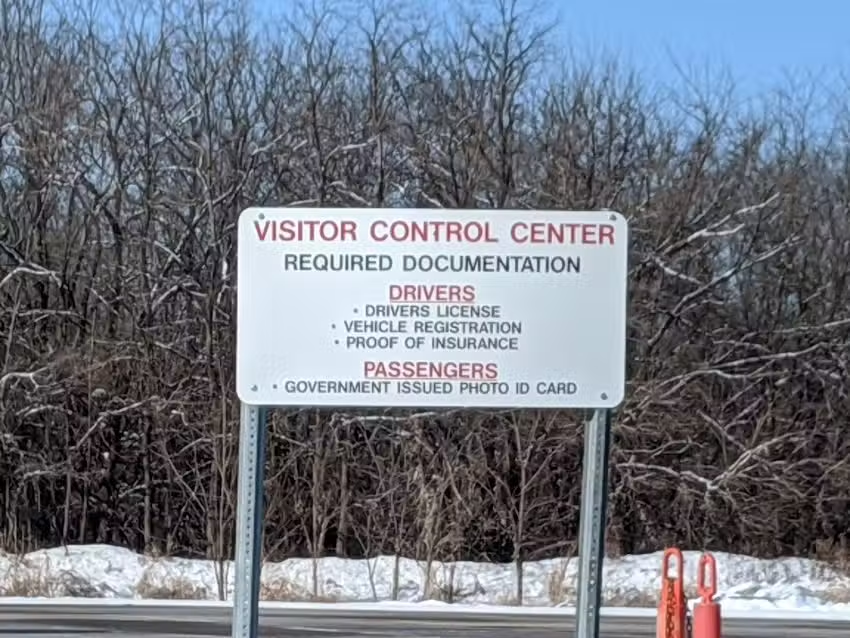
Fort Leavenworth Visitor Control Center
BackLocated at 1 Sherman Avenue, the Fort Leavenworth Visitor Control Center (VCC) operates not as a conventional travel agency, but as the mandatory and sole gateway for all non-Department of Defense (DoD) affiliated individuals seeking entry to the historic Fort Leavenworth. Any successful vacation planning involving a trip to the fort begins here. It is a critical piece of infrastructure that balances public access with the stringent security requirements of an active military installation. For potential visitors, understanding the dual reputation of this center is key to setting realistic expectations for their visit. The center functions as an essential administrative checkpoint, but the quality of the visitor experience itself is a subject of significant debate among those who have passed through its doors.
The Entry Process: Procedure and Efficiency
Functionally, the VCC serves a clear and necessary purpose. Open from 7:00 AM to 4:00 PM on weekdays and closed on federal holidays, it processes all requests for temporary access passes. The procedure is a standardized element of modern travel services for accessing military sites. Visitors must present a valid government-issued photo ID, such as a driver's license or passport, for all passengers over the age of 16. Subsequently, a routine background check is performed using the National Crime Information Center (NCIC-III) database to screen for any disqualifying factors. For many, this process is reported to be straightforward and relatively quick. Some accounts describe the experience as professional and efficient, with staff capably handling the necessary paperwork to get visitors on their way. An online pre-registration portal has also been introduced, allowing visitors to submit their information up to 10 days in advance to potentially speed up the process upon arrival. When approved, the virtual pass is linked to the visitor's ID in the security system, eliminating the need for a paper document. This modern approach suggests a commitment to streamlining the entry process. The building itself is wheelchair accessible, ensuring it can accommodate all visitors.
Purpose of the Visit: A Hub for Historical Tourism
The rigorous access procedure is in place because Fort Leavenworth is a significant center for historical tourism. Established in 1827, it is one of the oldest active Army posts west of the Mississippi River and holds a wealth of American history. Once visitors successfully navigate the VCC, they gain access to several important sites:
- The Fort Leavenworth National Cemetery: Established by President Abraham Lincoln in 1862, it is the final resting place for over 30,000 veterans from conflicts dating back to the War of 1812. For many, visiting a loved one's gravesite is a deeply emotional and personal journey, making the initial experience at the VCC all the more impactful.
- The Buffalo Soldier Monument: A powerful tribute dedicated to the 9th and 10th Cavalry Regiments, composed of African American soldiers who played a crucial role in the westward expansion of the United States. This monument is a landmark of national importance.
- The Frontier Army Museum: This institution preserves and interprets the history of the Frontier Army and the fort's role from 1804 to the present day, offering educational displays for history enthusiasts.
The VCC, therefore, acts as a key component of destination management, controlling access to these cherished national treasures. The importance of the sites within the fort underscores the center's role in facilitating public engagement with military history.
The Visitor Experience: A Tale of Two Encounters
Despite the procedural necessity of the VCC, a significant and recurring theme in visitor feedback is the profoundly negative quality of customer service. Numerous recent reviews describe interactions with staff, particularly female employees at the front desk, as rude, unprofessional, and hostile. Visitors have reported being met with unwelcoming attitudes, dismissive questioning, and a general sense of being an inconvenience. One visitor, there for the solemn purpose of visiting a family gravesite, recounted an experience with a staff member who was demanding and exercised what felt like a "power trip." Another veteran expressed disappointment with the disrespectful treatment received. These accounts stand in stark contrast to the mission of a tourist information center, which should ideally be welcoming and helpful.
This pattern of poor service creates a jarring inconsistency. While some visitors leave with their passes quickly and without issue, a substantial number depart with a deeply negative first impression of the entire installation. This inconsistency makes it difficult for potential visitors to know what to expect. The issue appears to be specific to certain personnel rather than an overall systemic failure, as some reviewers have noted that while one staff member was rude, another who processed the pass was perfectly pleasant. This highlights a critical flaw in the center's operations: the lack of a consistent, professional standard of service for every visitor.
Final Considerations for Your Itinerary Planning
For anyone planning to visit Fort Leavenworth, the Visitor Control Center is a non-negotiable first stop. To ensure the smoothest process possible, it is advisable to arrive with all necessary documents in hand: a valid driver's license, vehicle registration, and proof of insurance. Utilizing the online pre-registration system is also a prudent step. However, visitors must also be mentally prepared for the possibility of an unpleasant customer service encounter. The volume of similar complaints suggests this is not an isolated issue but a persistent problem. While the procedural aspect of the VCC may be efficient, the human element is frequently reported as its greatest failing. The ultimate experience of visiting the historic sites on the fort may be profound, but it often begins with a frustrating and unwelcoming administrative hurdle that detracts from the overall visit.