Firefly Farm
BackWhen seeking out services related to tourism, clarity is paramount. The establishment located at 849 Hayground Road in Bridgehampton, listed as Firefly Farm, presents a unique case that warrants a closer look. While designated under the category of a travel agency, its actual operations are deeply rooted in the exclusive world of equestrian sports. Prospective clients should understand that this is not a conventional agency for booking flights or hotels. Instead, it functions as a high-caliber equestrian facility, offering a very specific and luxurious form of leisure travel centered around horses. Research indicates this address is closely associated with the well-known Two Trees Farm and has housed operations like Gray Horse Farm Hamptons, both respected names in the hunter/jumper show circuit. This suggests that Firefly Farm is likely a private training stable operating within a larger, renowned equestrian property, rather than a standalone public entity.
Equestrian Services as a Form of Niche Tourism
The core business at this location is providing elite equestrian services, which in itself is a significant niche within the travel industry. For its clientele, the facility acts as a destination specialist for all things related to horse riding and competition in the Hamptons. The services are comprehensive and cater to a discerning audience, from young aspiring riders to seasoned adult amateurs and professionals. The primary offerings are not pre-packaged holidays, but rather highly personalized training and care programs.
A significant aspect of the business that aligns with travel services is its role as a de facto tour operator for the competitive equestrian circuit. Clients who board and train here often travel to competitions across the country. The facility's staff would likely manage the complex logistics of these trips, including horse transportation, show entries, and accommodation arrangements for both staff and clients. This involves creating intricate and customized itineraries that revolve around the national horse show calendar. This seasonal migration, particularly between summer in the Hamptons and winter circuits in places like Wellington, Florida—a connection suggested by the business's Florida-based phone number—is a fundamental component of the luxury travel lifestyle for dedicated equestrians.
Strengths and Positive Aspects
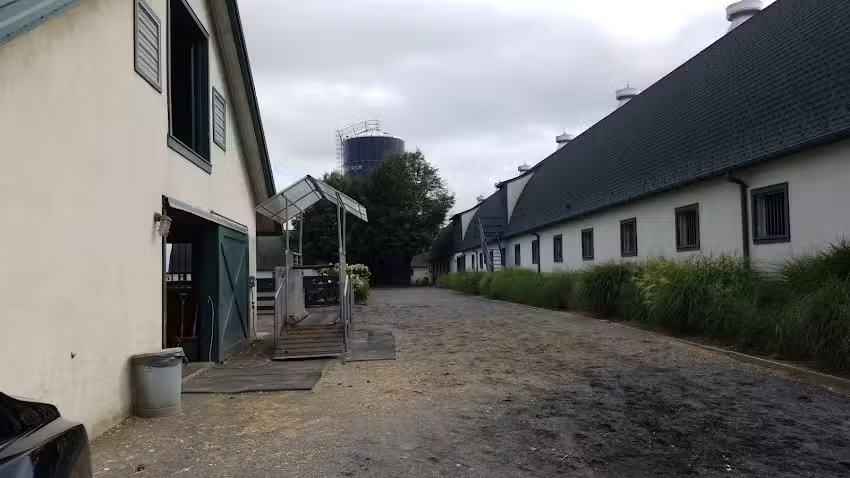
For those seeking a premier equestrian experience, this facility offers numerous advantages. The quality of instruction and training is expected to be exceptional, with trainers capable of developing riders from their first lesson to national championship levels. The care and conditioning of the horses are paramount, representing a significant positive for anyone looking to board a valuable animal. The facilities themselves, situated in the heart of the Hamptons' equestrian scene, are likely to be world-class, featuring top-of-the-line arenas, footing, and stabling.
- Expert Training: Access to highly qualified instructors who specialize in hunter, jumper, and equitation disciplines.
- Full-Service Boarding: Comprehensive care for horses, including grooming, exercise, and veterinary coordination, allowing owners peace of mind.
- Prime Location: Proximity to major equestrian events, most notably the Hampton Classic, is a major draw for competitive riders.
- Sales and Leases: The facility likely provides access to a network of high-quality horses for lease or purchase, facilitating a client's entry or advancement in the sport.
- Youth Programs: Offerings such as summer pony camps provide an immersive form of experiential travel for children, combining sport with horsemanship education.
Potential Drawbacks and Considerations
Despite the high quality of service, there are several factors potential customers must consider. The most significant is the barrier to entry. This is not a casual riding stable for public trail rides. The atmosphere is one of exclusivity and privacy, catering to a select clientele. This specialization is a strength for serious competitors but a clear negative for tourists looking for a simple one-hour ride.
Another major consideration is the cost. Equestrian sports at this level are notoriously expensive. The fees for boarding, training, lessons, and show campaigns can be substantial, placing the services firmly in the category of high-end luxury. This financial commitment is a critical factor and may not be transparent without a direct, serious inquiry. The operational hours, listed as 7:00 AM to 4:00 PM most days with Wednesdays off, reflect a schedule geared towards a dedicated training regimen rather than casual public access.
Navigating the Lack of Public Information
One of the most notable challenges for a prospective client is the apparent lack of a clear, dedicated public presence for "Firefly Farm" itself. The ambiguity surrounding the name and its association with other farms at the same address can be confusing. This scarcity of information makes it difficult to assess the specific programs, trainers, and pricing without leveraging personal connections or making a direct call. This operational model relies on word-of-mouth within the tight-knit equestrian community rather than public marketing, which can be intimidating for newcomers. The travel planning for engaging with this facility requires more initiative than booking a standard tour or activity. It is a closed ecosystem where reputation and referrals are the primary currency. For those outside this circle, understanding the offerings and determining if it's the right fit can be a considerable challenge.
In conclusion, while the classification of Firefly Farm as a travel agency is unconventional, it is not entirely without merit when viewed through the lens of specialized, high-net-worth tourism. It provides all-encompassing services that facilitate a travel-heavy lifestyle dedicated to equestrian competition. The positives are clear for the target audience: unparalleled access to expertise, facilities, and a network of fellow enthusiasts. However, the negatives are equally stark for the general public: high costs, exclusivity, and a lack of accessible information make it an unsuitable choice for anyone other than the most serious and well-funded equestrian competitor. It is a provider of a specific dream, but one that is available only to a select few.