
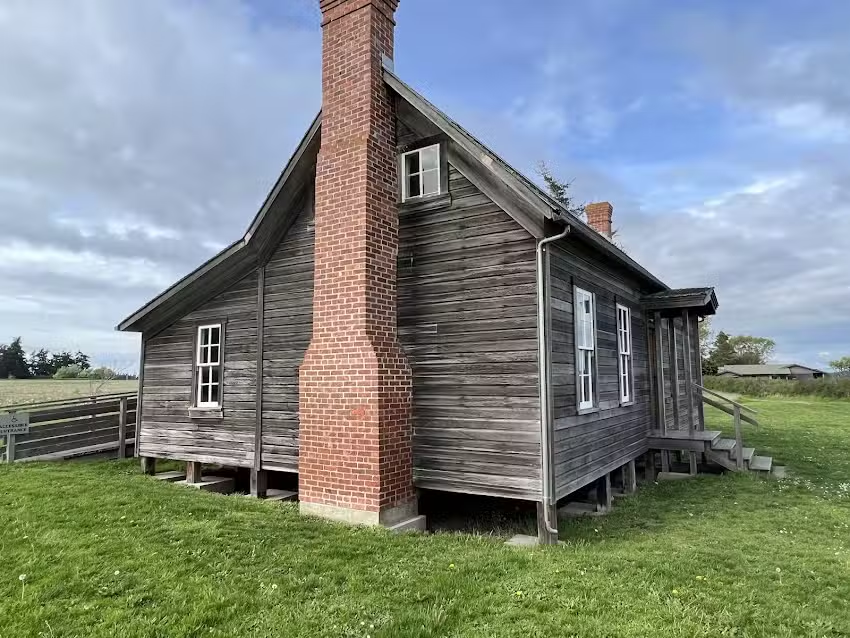
Ebey’s Landing National Historical Reserve Office
BackLocated at 162 Cemetery Road in Coupeville, Washington, the Ebey's Landing National Historical Reserve Office serves as the primary administrative center and public contact point for a unique piece of American heritage. It is crucial for potential visitors to understand that this is not a conventional travel agency offering flights or comprehensive vacation packages. Instead, it functions as a specialized tourist information center for the nation's first-ever National Historical Reserve. Established in 1978, the reserve is a complex partnership between the National Park Service, Washington State Parks, Island County, and the Town of Coupeville, all working together to preserve a living, working rural community that offers an unbroken historical record of Pacific Northwest settlement. The office is the visitor's essential first stop to obtain the knowledge and materials needed to properly appreciate this vast and historically significant area.
Services and Positive Aspects for Visitors
The primary strength of the Ebey's Landing office is its role as an informational gateway. Visitors consistently praise it as the ideal starting point for their journey into the reserve. Here, you can speak with knowledgeable staff, pick up detailed trail maps, find walking tour brochures, and get your National Park Passport stamped. For families, this is the place to acquire Junior Ranger booklets, a highly regarded program that engages children in the history and nature of the park, making it a hub for family-friendly activities. The availability of these resources transforms a simple visit into a structured and educational experience.
The office provides direct access to some of the most stunning landscapes in the Puget Sound region, making it a key destination for outdoor recreation. From this location, visitors can embark on several well-regarded hiking trails. The most frequently mentioned are:
- The Bluff Trail: This iconic trail offers dramatic, cliffside views over the Puget Sound, with the Olympic Mountains visible in the distance. Hikers report that the path is narrow in places and requires attention, but the payoff in scenery is immense. It is part of a larger loop that can be combined with a walk along the beach below, offering a varied hiking experience.
- The Pratt Loop Trail: Described as a gentler, more level walk, this 1.3-mile trail meanders along the edge of historic farmlands and through a short wooded section. It's an excellent option for a more casual stroll, offering beautiful pastoral views and a glimpse of historic farm structures like the old Pratt sheep barn. This trail also serves as a vital connector to the larger Kettles Trail system, which provides over 30 miles of multi-use trails.
- The Prairie Ridge Trail: This easy walk takes you between active farm fields, past the historic Jacob Ebey house and blockhouse, and connects to the Bluff Trail. It provides a tangible sense of the agricultural heritage that the reserve was created to protect.
Beyond the trails, the office is lauded for its practical amenities. Visitors will find free public parking and a well-maintained toilet facility on-site, small but significant details that enhance the overall experience. The entrance is also wheelchair accessible, ensuring that visitors with mobility challenges can access the information and the start of some of the easier paths.
The Unique Value of a National Historical Reserve
What sets this destination apart is its designation. Unlike a national park, the 17,572-acre Ebey's Landing National Historical Reserve is composed mostly of private property, including working farms and the historic town of Coupeville. The reserve's mission is to preserve this living landscape through a collaborative management model. This means visitors are not just entering a preserved natural space; they are stepping into a community where history is not confined to a museum but is visible in the cultivated fields, the century-old buildings still in use, and the layout of the roads. The office helps contextualize this unique arrangement, explaining how the partnership protects the area from unchecked development while respecting the rights of private landowners.
Points to Consider and Potential Drawbacks
Despite the overwhelmingly positive feedback, there are several critical factors that potential visitors must consider. The most significant is the office's limited operating hours. It is open only from Monday to Friday, typically from 8:00 AM to 5:00 PM, and is closed entirely on weekends. This schedule is a major inconvenience for tourists who plan weekend trips, as they will find the primary information hub shuttered. While the trails and the reserve itself are open year-round, arriving on a Saturday or Sunday means missing out on the valuable maps, guidance, and educational materials the office provides. It's essential to plan a weekday visit if you wish to utilize its services.
Another point of confusion for some first-time visitors is the location itself. The office is situated on Cemetery Road, and the approach, past a cemetery and what appears to be a private residence, can be misleading. Some have noted that it feels like you are driving to someone's house rather than a public facility. Being aware of this in advance can prevent confusion and ensure visitors they are on the right track.
It's also important to manage expectations. This is the administrative office for a Trust Board; it is not a large, well-staffed visitor center like those found in major national parks. The focus is purely on the reserve. As such, it does not function as a general tour operator for Whidbey Island. Its purpose is specific, and visitors seeking broader regional information might need to visit other centers, like the Coupeville Chamber of Commerce.
Finally, while the natural environment is a major draw, it comes with the inherent challenges of the outdoors. The experience is highly dependent on weather, with views being most spectacular on clear days. Some trails, particularly the Bluff Trail, can be narrow and have overgrown sections, so wearing appropriate footwear and long pants is advisable. A past review mentioned an issue with poison hemlock, and although it was reportedly brought under control, it serves as a reminder for all hikers to remain aware of their surroundings in any natural setting.
Conclusion
The Ebey's Landing National Historical Reserve Office is an indispensable resource for anyone wishing to thoughtfully engage with this historically and scenically rich corner of Washington. It excels as a tourist information center, providing the tools and context needed to understand the unique "living museum" concept of the reserve. For hikers, history enthusiasts, and families, the office is the perfect launchpad for a day of discovery. However, its significant limitation—the weekday-only hours—requires careful planning. Visitors who can align their schedules will be rewarded with access to unparalleled views, well-maintained trails, and a deeper appreciation for one of the most unique preservation efforts in the United States.