Eastern Sierra Visitor Center
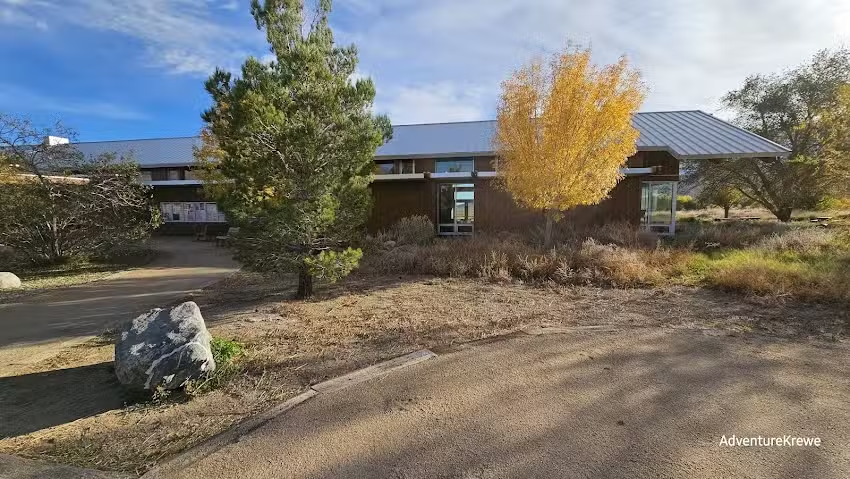
BackStrategically positioned at the junction of US-395 and CA-136, the Eastern Sierra Visitor Center is far more than a simple rest stop; it functions as an essential travel agency and information hub for one of California's most rugged and spectacular regions. Operated as a collaborative effort by multiple agencies—including the U.S. Forest Service, National Park Service, and Bureau of Land Management—it provides a level of authoritative, on-the-ground information that is critical for anyone planning to venture into the surrounding wilderness. Visitors often arrive with plans for serious adventure travel, and this center is purpose-built to ensure those plans are both ambitious and safe.
Expert Guidance and Essential Resources
The primary strength of the Eastern Sierra Visitor Center lies in its staff. Based on consistent visitor feedback, the personnel are not just employees but knowledgeable experts, likely rangers and specialists, who provide critical, real-time information. This is particularly vital for those attempting to summit Mt. Whitney, the highest peak in the contiguous United States, which looms visibly from the center itself. The staff offers indispensable advice on trail conditions, weather forecasts, and necessary precautions, effectively acting as frontline advisors for challenging outdoor recreation. They provide maps and detailed information for navigating nearby areas like the Alabama Hills, ensuring visitors can safely access these popular destinations.
Furthermore, the center is the exclusive issuing point for certain high-demand permits, including the Mt. Whitney Day Use Permit and overnight permits for the Mt. Whitney and North Fork of Lone Pine Creek trails. This makes a stop here non-negotiable for many hikers and climbers, solidifying its role as a key logistical point for any serious mountain tourism itinerary in the region.
Facilities That Cater to the Traveler
Beyond information, the center offers practical amenities that are highly valued by travelers. The facility is praised for its clean restrooms and ample parking, providing a welcome respite along the lengthy Highway 395 corridor. A particularly appreciated feature is an outdoor water spigot, allowing campers and hikers to fill up large water jugs before heading into arid environments where water is scarce. This thoughtful provision highlights the center's deep understanding of visitor needs.
Inside, the center houses several engaging exhibits that contribute to the cultural tourism experience of the area. A large 3D topographical model of the Sierra Nevada range gives visitors a unique perspective on the landscape they are about to enter. Exhibits also detail the complex history of the region, including the controversial story of the Los Angeles Aqueduct, providing context to the landscape's human and natural history. A well-stocked bookstore, operated by the Eastern Sierra Interpretive Association, offers a comprehensive selection of maps, field books, and local history titles, with sales supporting the center's programs. Visitors can also find a small gift shop with apparel related to the local peaks.
Points of Caution for Effective Trip Planning
Despite its many strengths, potential visitors should be aware of a few operational limitations. The most significant issue reported is the potential for unexpected midday closures. Due to staffing availability, the center may close for a lunch break, which can be a considerable inconvenience for travelers on a tight schedule or those needing to pick up a time-sensitive permit. It is highly advisable to call ahead to confirm hours on the day of your visit, especially if your plans depend on interacting with the staff.
Another key limitation is that the center does not sell National Park passes, a service many visitors might expect from an inter-agency facility. One reviewer attributed this to recent budget cuts. This means that travelers intending to visit nearby national parks like Death Valley or Sequoia and Kings Canyon should plan to purchase their passes online or at another location. Awareness of these two points is crucial for smooth trip planning and avoids potential frustration.
An Indispensable First Stop
Ultimately, the Eastern Sierra Visitor Center stands as an indispensable resource. Its role in promoting safe and informed eco-tourism is paramount. While the possibility of a midday closure and the lack of park pass sales are minor drawbacks, they are easily managed with prior planning. The wealth of expert knowledge, the issuance of critical permits, and the excellent traveler-focused facilities make it a mandatory first stop for anyone looking to properly engage with the majestic and demanding environment of the Eastern Sierra. The combination of practical support and educational enrichment ensures that visitors leave not only better prepared but also with a deeper appreciation for the region's unique character.