
Downtown Manchester Information Center
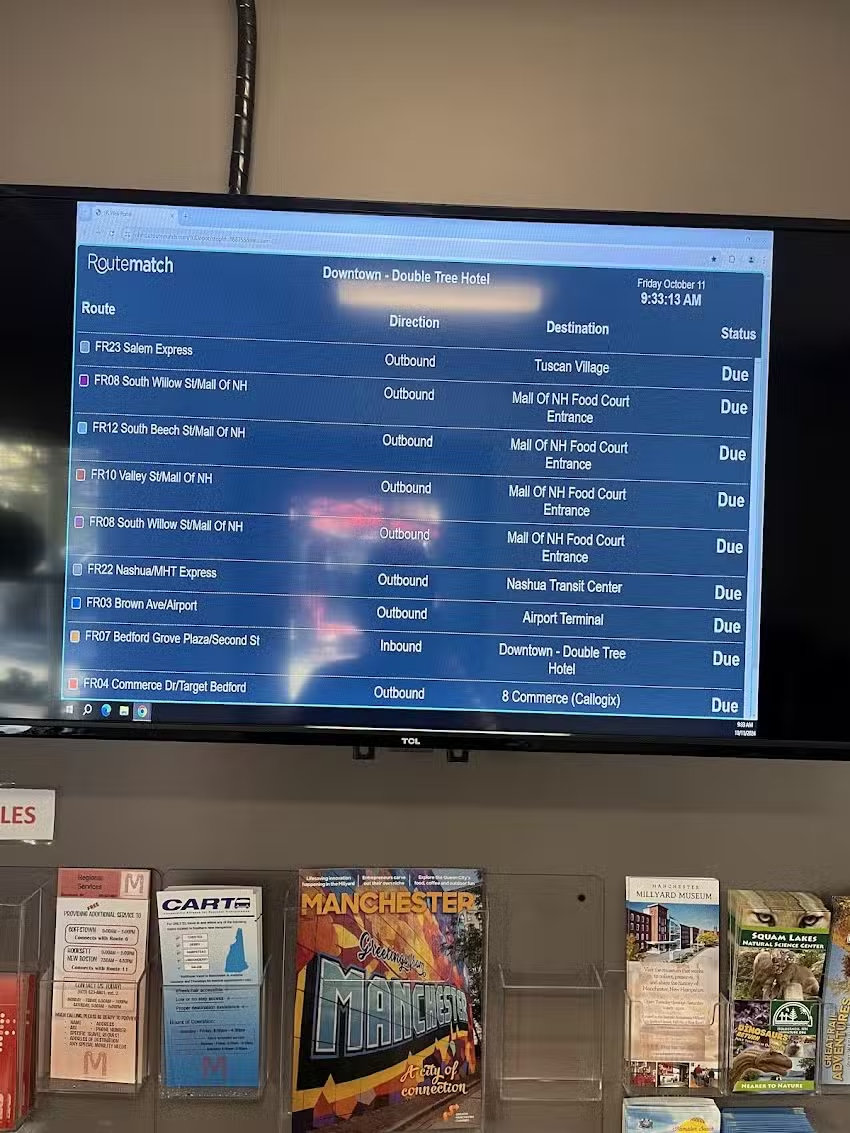
BackLocated at 775 Elm Street, the Downtown Manchester Information Center presents a classic case of mismatched expectations. While its name and its official classification as a travel agency suggest a hub for tourist resources, potential visitors should be aware that its primary, and arguably sole, function is that of a regional bus terminal. This distinction is crucial for anyone arriving in the city and looking for local guidance. The facility serves as the Manchester Transit Authority's Welcome Center, a vital piece of the region's public transit infrastructure, but it falls significantly short of being the comprehensive visitor center its name implies.
The Primary Role: A Transportation Hub
The true value of this establishment lies in its role as a central station for bus travel. It is the main point of contact for the Manchester Transit Authority (MTA), which provides essential local and commuter bus services. For residents and visitors needing to navigate the city or commute to nearby towns like Concord and Nashua, this center is indispensable. The services offered here are focused entirely on ground transportation, including purchasing tickets, obtaining route maps, and getting schedule information for various bus lines.
Several key operators utilize this space, making it a critical link for regional tours and intercity connections. Commuter services like the MTA's Zipline connect Manchester with surrounding communities, which is a significant benefit for the local workforce and students. However, it's important to note a recent and significant change in service: as of late 2023, Boston Express, a major carrier and subsidiary of Concord Coach Lines, no longer serves Manchester directly from this location. This is a considerable drawback for those specifically seeking a direct connection to Boston or Logan Airport via that popular service, and travelers will need to find alternative routes or carriers.
What the Center Does Well
Despite the naming issue, the facility offers several clear advantages for the specific purpose it serves:
- Extensive Operating Hours: The center is open from 6:30 AM to 9:30 PM on weekdays and from 10:00 AM to 5:30 PM on Saturdays. These long hours are exceptionally convenient for early-morning commuters and late-arriving travelers, a feature not often found in traditional tourist offices.
- Centralized Location: Situated on Elm Street, the main artery of downtown Manchester, the center is easily accessible by foot from many hotels, restaurants, and businesses. Its position makes it a logical starting point for any journey originating from the city's core.
- Accessibility: The entrance is wheelchair accessible, ensuring that travelers with mobility challenges can use the services without issue. This is a fundamental requirement for any modern public transit facility.
- Staff Expertise (in Transit): The staff on-site are employees of the bus system. While they are not equipped to act as tour consultants, they are knowledgeable about bus routes, schedules, and ticketing. For anyone needing assistance with public transit, their expertise is a direct and valuable resource.
The Shortcomings: A Misleading Identity
The most significant criticism, echoed in user feedback, is that the Downtown Manchester Information Center is not, in fact, an information center in the touristic sense. One visitor aptly noted, "No longer a true visitor center. The person in there works for the bus system. The info there was for bus system." This comment perfectly encapsulates the core issue. Travelers seeking recommendations for dining, information on sightseeing tours, maps of local attractions, or details on cultural events will leave disappointed. There are no brochures for local museums, no guides to walking trails, and no staff trained to provide the kind of advice a tourism agency would offer.
This creates a functional gap for visitors to Manchester. While the city has a wealth of attractions, from the Currier Museum of Art to the Millyard Museum, this centrally located facility does nothing to promote them. Vacation planners and spontaneous visitors alike are left to their own devices, relying on online searches or hoping to find information at individual venues. A true visitor center would consolidate this information, making the city more approachable and easier to navigate for tourists. The absence of such a service at a location with "Information Center" in its name is a missed opportunity for the city's tourism efforts.
The Surrounding Environment
It is also worth noting that, like many downtown transit centers in cities across the country, the immediate vicinity can present a mixed environment. Some visitors have commented on the presence of a homeless population nearby. While this reflects a broader urban social issue rather than a fault of the center itself, it is part of the experience of visiting this specific location and may influence a traveler's comfort and initial impression of the area.
Conclusion: Who Should Use This Center?
The Downtown Manchester Information Center is an essential travel service for a very specific user: the bus passenger. If your goal is to buy a bus ticket, understand the local MTA routes, or plan a trip to a connecting city via a participating bus line, this facility is precisely where you need to go. It is a functional, accessible, and conveniently located transportation hub that capably serves its primary purpose.
However, if you are a tourist looking for guidance on how to experience Manchester, this is not the right destination. The name is a misnomer, and setting expectations accordingly is key to avoiding frustration. For local attractions, tour packages, and general city information, you will need to seek out other resources online or at specific venues. This establishment functions as a bus station and nothing more, making it a vital piece of city infrastructure but a non-player in the broader tourism landscape.