
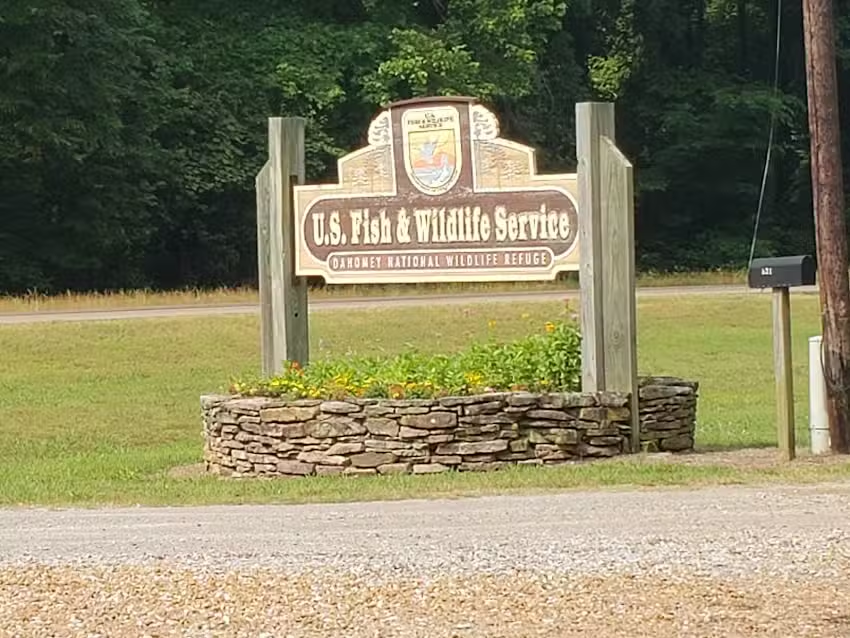
Dahomey National Wildlife Refuge Visitor Center
BackThe Dahomey National Wildlife Refuge Visitor Center serves as the primary access point and informational hub for one of Mississippi's significant natural preserves. While categorized by some platforms as a travel agency, its function is more specialized, operating as a crucial resource for visitors planning to engage with the nearly 10,000 acres of protected bottomland hardwood forest. This facility is not in the business of booking comprehensive holiday packages, but rather in equipping visitors with the knowledge and tools needed for a self-directed immersion into a genuine wilderness setting. Its value lies in the direct support it provides for a specific niche of tourism: eco-tourism and nature travel.
Prospective visitors will find that the center's primary strength is its role in preparation and education. Staffed by individuals with deep knowledge of the local ecosystem, it is the definitive starting point for any trip into the refuge. Here, you can obtain detailed maps, learn about recent wildlife sightings, and get up-to-date information on trail conditions and any area closures, which is an essential part of responsible travel planning. This aligns with feedback praising it as a "Great Learning Environment," a testament to the educational resources available, which likely include interpretive exhibits about the region's unique flora and fauna, and the importance of conservation efforts in the Mississippi Delta.
Services and On-Site Experience
Upon arrival, the Visitor Center immediately sets the stage for the type of experience to expect. It provides essential amenities like restrooms and, critically, a wheelchair-accessible entrance, ensuring that the initial point of contact is inclusive. For many, this is where the adventure travel begins. The center acts as a launchpad for various activities, primarily hiking and wildlife observation. Visitors can learn about the different trails available, including their lengths and difficulty levels. The presence of hiking trails is a confirmed highlight, offering a direct way to experience the dense forests and wetlands that define the refuge.
The information provided here is invaluable for photographers, birdwatchers, and anyone interested in self-organized wildlife tours. The refuge is a key habitat for a diverse range of species, including white-tailed deer, wild turkey, and numerous migratory birds making their way along the Mississippi Flyway. The center's staff can often provide tips on the best times and locations to spot specific animals, functioning in a similar capacity to a specialized tour operator by providing the intelligence needed for a successful visit, even if they don't offer formal guided tours.
Positive Aspects for the Modern Traveler
- Authentic Natural Experience: Unlike highly commercialized tourist spots, this center is the gateway to an untamed environment. It appeals to travelers seeking genuine encounters with nature, away from large crowds.
- Educational Value: For families, students, and curious adults, the center offers a rich learning opportunity about a critically endangered ecosystem. This focus on education enhances the value of the visit beyond simple recreation.
- Expert Local Knowledge: Direct access to staff and official resources is a significant advantage. This ensures visitors are well-informed about safety, regulations, and the natural history of the area, which is a service that elevates it beyond a simple park entrance.
- Accessibility: The commitment to a wheelchair-accessible entrance is a noteworthy positive, opening the experience to a broader range of visitors.
Considerations and Potential Drawbacks
However, potential visitors must approach a trip to Dahomey with a clear understanding of its limitations and challenges. One of the most telling pieces of feedback from a recent visitor was the advice, "Don't go alone." While given with a high rating, this comment points to a critical aspect of the refuge: its remote and wild character. This is not a curated park with constant staff presence throughout its vast expanse. The trails can lead deep into the wilderness where cell service may be unreliable or non-existent. For solo travelers or those unfamiliar with navigating natural landscapes, this can pose a significant safety risk. The center's role is to inform you, but the responsibility for safety ultimately rests with the visitor.
Furthermore, the services are concentrated at the Visitor Center itself. Once you venture into the refuge, amenities are sparse to non-existent. You must be self-sufficient, carrying your own water, food, insect repellent (a must in this type of environment), and first-aid supplies. This lack of convenience is a drawback for those accustomed to more developed recreational areas. The facility provides the plan, but it does not offer the all-inclusive support found in structured vacation packages. This destination demands a higher level of personal preparedness.
Points to Be Aware Of
- Remoteness and Safety: The sheer size and undeveloped nature of the refuge mean that visitors should be experienced or cautious. Traveling with a partner or group is highly advisable, especially for those undertaking long hikes.
- Limited On-Site Amenities: Do not expect cafes, gift shops, or widespread facilities. The experience is rustic, and preparation is key to comfort and safety.
- Environmental Challenges: Visitors should be prepared for natural conditions such as biting insects, the potential for encountering wildlife like snakes, and changing weather conditions. The refuge's low-lying areas can also be prone to flooding, making it essential to check conditions at the center before heading out.
- Misleading Categorization: While it may appear under a search for a travel agency, its services are strictly informational and educational for the on-site location. It does not provide booking services for travel or lodging in the broader region.
In conclusion, the Dahomey National Wildlife Refuge Visitor Center is an excellent and essential resource for a specific type of traveler. It is perfectly suited for the independent, self-reliant individual or group passionate about eco-tourism, birdwatching, and authentic wilderness immersion. The center successfully fulfills its mission of providing the necessary information and starting point for a safe and enriching visit. However, it is not a destination for those seeking casual, amenity-rich recreation or the services of a traditional tourism provider. The key to a positive experience lies in understanding what this facility offers—expert guidance for a wild adventure—and what it does not, requiring visitors to come fully prepared for the beautiful but demanding environment that awaits them.