D.C. Booth Historic National Fish Hatchery & Archives
BackLocated at 423 Hatchery Circle in Spearfish, South Dakota, the D.C. Booth Historic National Fish Hatchery & Archives presents itself as a multi-layered establishment that functions as a museum, park, and significant tourist attraction. Established in 1896, it is one of the oldest operational hatcheries in the United States, originally tasked with stocking trout throughout the Black Hills. Today, while it continues to raise tens of thousands of rainbow trout annually for stocking in tribal and military waters, its mission has expanded to include historical preservation and public education, drawing over 180,000 visitors each year. The high volume of positive feedback, culminating in a 4.8-star rating from over 1,600 reviews, suggests a consistently favorable visitor experience.
Key Attractions and Positive Aspects
One of the most frequently praised aspects of the D.C. Booth Hatchery is its value proposition: admission is entirely free. In a region dense with paid attractions, this facility offers an accessible and engaging option for families, couples, and individual travelers. The grounds are open to the public year-round from dawn until dusk, allowing for leisurely strolls and picnics, even when the historic buildings are closed for the season.
The interactive elements are a significant draw, particularly for visitors with children. For a nominal fee of one dollar, guests can purchase fish food and feed the large populations of brown and rainbow trout in the raceways. This activity is often described as a highlight, with reports of fish eagerly swarming and jumping, creating a memorable spectacle. Complementing this is the underwater viewing area, a feature consistently singled out in visitor accounts. This section allows guests to observe the large, mature trout from a unique submerged perspective, offering a different appreciation for the aquatic life housed at the facility.
Beyond its function as a hatchery, the site is steeped in history, making it a point of interest for cultural tourism. The entire 10-acre property is on the National Register of Historic Places and includes several well-preserved structures. These include:
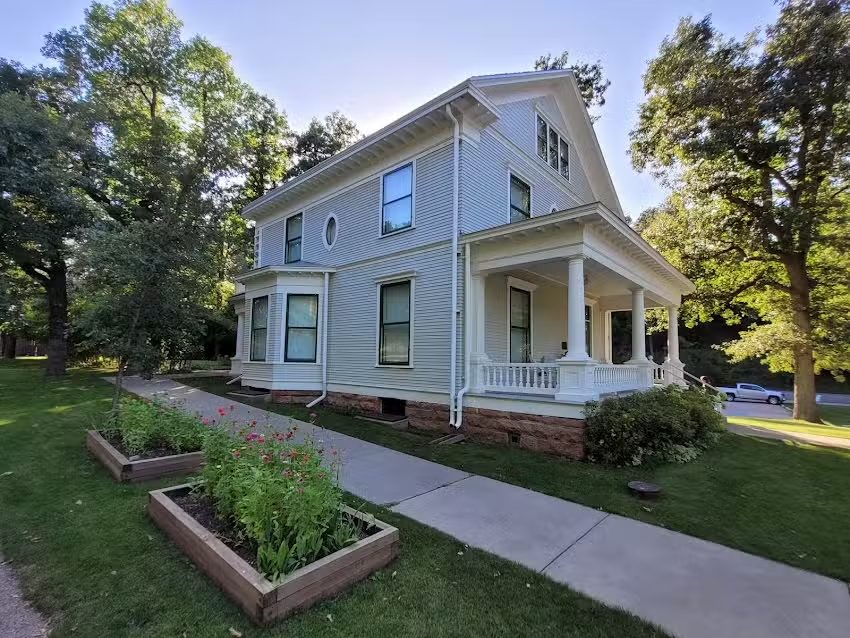
- The Booth House: Built in 1905, this Neo-Colonial Revival home of the hatchery's first superintendent, D.C. Booth, is largely unaltered and furnished with period pieces and family memorabilia, offering a glimpse into early 20th-century life at the facility.
- The Von Bayer Museum of Fish Culture: Housed in the original 1899 hatchery building, this museum displays artifacts from the nation's largest collection of fisheries history. It chronicles the evolution of fish culture and the work of American fisheries.
- Replica Fish Car No. 3: Before refrigerated trucks, specialized railway cars were used to transport fish across the country. This exhibit is the only one of its kind in the nation and details the 66-year "Fish Car Era" that was vital to fisheries propagation.
- The Yellowstone Boat: This wooden vessel, U.S. Fisheries Boat #39, was used in early 1900s expeditions to Yellowstone National Park to collect trout eggs, and its story adds another layer to the hatchery's rich history.
The beautifully maintained grounds, situated next to Spearfish City Park along Spearfish Creek, also contribute to the appeal. The setting is frequently described as peaceful and scenic, with walking trails offering pleasant views. This natural beauty positions the hatchery as a destination for light eco-tourism and outdoor relaxation.
Points for Consideration and Potential Drawbacks
While the overall reception is overwhelmingly positive, prospective visitors should be aware of a few practical limitations to aid in their travel planning. First, the scale of the hatchery is manageable, not massive. Many visitors report that a thorough tour of the exhibits and grounds can be completed in about one to two hours. This makes it an excellent half-day activity but not a full-day destination on its own.
A significant point of consideration is the seasonal operation of its main attractions. While the grounds are always open, the historic buildings—including the Booth House, the museum, the gift shop, and the railcar—are only fully open to the public during the summer season, typically from mid-May through September. Hours can also be variable and subject to change without notice, as the facility relies heavily on volunteers for tours and staffing. Visitors planning a trip in the shoulder seasons or off-season should check the official website or call ahead to confirm which buildings will be accessible.
Another practical issue noted by visitors is the lack of dedicated on-site parking for recreational vehicles (RVs). While standard vehicle parking is available, those traveling in larger rigs will need to find alternative parking. Fortunately, the adjacent Spearfish City Campground provides a convenient option for those planning to stay overnight. It's advisable for RV travelers to plan their parking logistics in advance, especially during peak tourist season.
Addressing the 'Travel Agency' Classification
The D.C. Booth Hatchery is sometimes categorized in business directories as a travel agency, which can be misleading. It is important to clarify that the facility does not operate as a commercial booking service. It does not arrange vacation packages, work with tour operators to create itineraries, or offer holiday deals. Instead, its role in the tourism sector is that of a key destination. For any destination management organization focused on the Black Hills, the hatchery is a primary point of interest. It's a vital stop for travelers undertaking adventure travel in the region, offering a blend of history, nature, and family-friendly activity. The volunteers on-site often provide information about other local attractions, acting as informal ambassadors for the area, but its core function remains that of a historic site and educational center, not a trip-planning service.
Conclusion
The D.C. Booth Historic National Fish Hatchery & Archives stands out as a valuable and highly-rated institution in Spearfish. Its primary strengths are its free admission, engaging and interactive activities suitable for all ages, and its unique collection of historical buildings and artifacts that tell a compelling story of conservation in the American West. The drawbacks are minor and manageable, relating mainly to the seasonal nature of its indoor exhibits and specific parking limitations for RVs. For those visiting the Black Hills, it offers a rewarding, educational, and budget-friendly experience that successfully merges history with nature.