Cruiser Rv
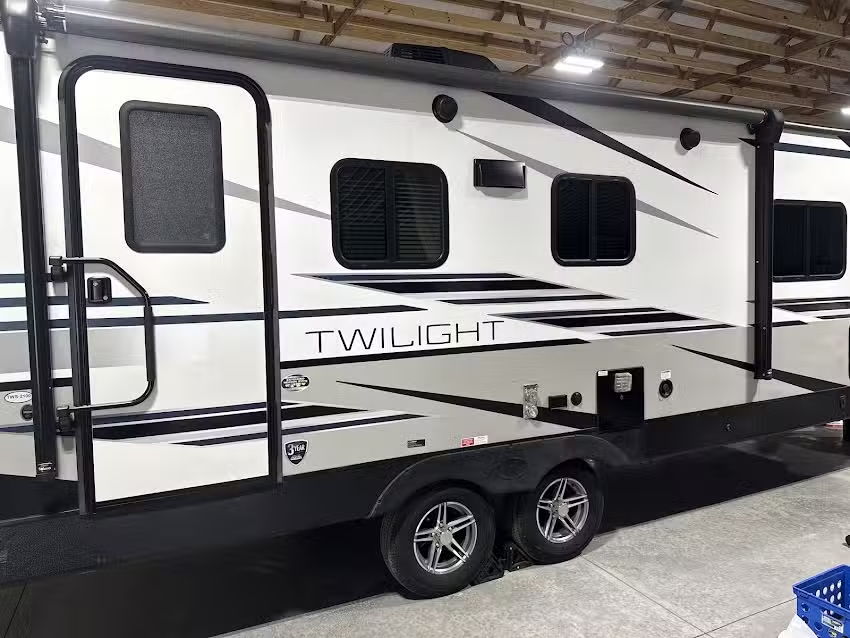
BackCruiser RV, a manufacturer based in Howe, Indiana, operates within the competitive market of towable recreational vehicles. The company produces a variety of travel trailers and toy haulers, including popular lines like the Stryker, MPG, Avenir, and Twilight. On the surface, their products present a strong appeal to consumers engaged in holiday planning, often featuring modern aesthetics, desirable floorplans, and features that cater to the contemporary traveler. However, a deeper analysis based on customer feedback reveals a significant disconnect between the initial impression and the long-term ownership experience, dominated by concerns over quality control and manufacturing consistency.
The Initial Attraction: Design and Features
One of the primary reasons customers gravitate towards Cruiser RV products is their design. The company appears to invest in developing floorplans that are both functional and appealing. For instance, some buyers are specifically won over by layouts that include features like a king-size bed, which can be a decisive factor when choosing a recreational vehicle. The exterior styling is often modern and eye-catching, creating a sense of excitement and value at the point of sale. This initial appeal is crucial in the RV travel market, where visual presentation and layout can heavily influence a purchase decision. The promise is one of comfortable and reliable travel, perfectly suited for a family camping trip or a long-term road adventure.
Systemic Issues in Quality Control and Craftsmanship
Despite the attractive designs, a recurring theme in owner experiences points to a profound lack of quality control during the manufacturing process. Multiple reports suggest that the final product leaving the factory is riddled with issues that range from minor cosmetic flaws to significant structural and safety hazards. It's a narrative that suggests the company may rely too heavily on its dealer network to act as a final quality check, a practice that leaves customers to discover defects themselves.
Common complaints highlight a startling lack of attention to detail. For example, owners have found excessive amounts of sawdust left inside hidden compartments and under membranes, indicating that cleanup is not a priority during assembly. This sloppiness extends to the installation of fixtures and hardware. Reviewers have cited instances of heater grilles falling off due to stripped screws, trim pieces detaching during travel, and even major appliances like an electric fireplace not being securely bolted into place. These are not isolated incidents but form a pattern that suggests a systemic issue in assembly line practices. Wiring management is another frequently criticized area, with reports of disorganized cables creating a messy and potentially hazardous environment, particularly behind fuse panels and under sinks.
Critical Failures in Electrical and Structural Systems
More alarming than cosmetic blemishes are the frequent and serious reports of failures in critical systems. The electrical wiring, in particular, has been a source of major concern and potential danger. Customers have documented numerous wiring mistakes, including air conditioners and thermostats wired incorrectly, rendering them non-functional. In one case, a solar panel charger was found to be wired backwards, preventing the batteries from charging.
The most severe of these electrical issues pose a direct fire risk. One owner described a circuit that nearly caused a fire, with a fuse melting its plastic housing instead of breaking the connection, causing a section of the ceiling to become hot to the touch. Another reported that running two air conditioners on the provided 30-amp setup in high temperatures consistently tripped breakers, a catastrophic failure if pets were left inside. These types of defects go beyond inconvenience and enter the realm of serious safety negligence, a critical consideration for anyone undertaking road trip planning.
Structural integrity and weatherproofing are also areas of significant weakness. Leaks are a commonly reported problem, originating from improperly installed slide-out seals, gaps in roof sealant, and poorly constructed compartments. These leaks have led to devastating consequences, such as rotted floors that gave way underfoot. In one documented instance, a floor rotted through twice due to two separate, unaddressed leaks over several years. Furthermore, issues like bubbles appearing in the roof membrane and weather stripping detaching from slide-outs point to the use of substandard materials or, more likely, improper installation techniques. The hot water exhaust on one unit was reportedly positioned to blow directly onto the trailer's siding, causing discoloration and marring the exterior.
Appliance Reliability and Post-Purchase Support
The core components and appliances integrated into Cruiser RV units have also proven unreliable for many owners. Dometic refrigerators that fail to cool adequately in temperatures above 80 degrees, electric water heaters that don't work due to incorrect wiring from the factory, and entertainment systems that constantly freeze are just a few examples. When a family is on a camper vacation, the failure of a key appliance like a refrigerator is not a minor issue; it can ruin a trip and lead to spoiled food and significant frustration.
Compounding these manufacturing defects is a post-purchase experience that many customers describe as frustrating and unhelpful. While some issues may be covered under warranty, the process of getting them fixed can be arduous. Owners have been told by dealers that the wait for warranty service is as long as six months, effectively sidelining their brand-new unit for an entire camping season. Customer service from the manufacturer has also been criticized. One owner of a two-week-old unit with multiple leaks and failing components was reportedly told by a company representative to search on YouTube for instructions on how to perform the repairs. In another case involving severe, recurring floor rot caused by a factory defect, the company allegedly declined to assist with the costly repairs, leaving the owner to bear the financial burden. This lack of accountability undermines any trust a consumer might have in the brand, turning the dream of adventure travel into a costly nightmare.
Conclusion: A Cautious Approach is Necessary
In summary, Cruiser RV presents a complex choice for potential buyers. The company succeeds in designing recreational vehicle models with appealing aesthetics and functional layouts that attract consumers. However, the evidence strongly suggests that these attractive designs are undermined by severe and consistent lapses in quality control. The prevalence of serious electrical faults, structural leaks, poor craftsmanship, and unreliable components indicates a fundamental problem in the manufacturing process.
For those considering purchasing from this manufacturer, the principle of "buyer beware" is paramount. A standard walk-through at a dealership is insufficient. A prospective customer should insist on an exhaustive pre-delivery inspection (PDI), testing every single system—electrical, plumbing, and all appliances—under load. It would be wise to climb on the roof to inspect every seal and seam personally. Given the challenges with warranty service, researching the reputation and service capacity of the selling dealer is as important as inspecting the RV itself. While the allure of a new RV is strong, the potential for significant, costly, and dangerous problems with these units requires a level of diligence far beyond the ordinary.