
CLOSED Visitor Information Center
BackTravelers navigating the historic curves of California Highway 49 through Tuolumne County might notice a point of interest on their digital maps designated as the "Visitor Information Center" in Chinese Camp. However, the reality of this location is more complex than its pin on the map suggests, beginning with its full name: "CLOSED Visitor Information Center." This name itself serves as the most critical piece of information for anyone considering a stop, creating a confusing contradiction with the "OPERATIONAL" business status sometimes found in online directories. For potential visitors, understanding the history and current state of this facility is key to managing expectations on their journey.
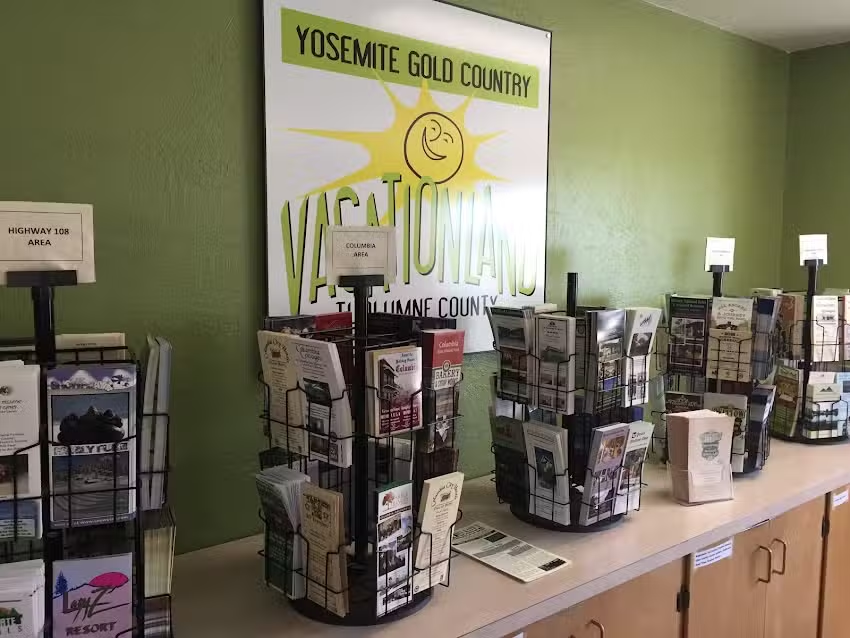
There was a time when this location served as a valuable resource for tourists. Situated at the junction of CA-49 and CA-120, it was a logical and convenient stop for those undertaking Yosemite travel planning or exploring the Gold Country. Reviews from nearly a decade ago paint a picture of a welcoming establishment. One visitor described it as a "nice quiet place to get some rest and have lunch on a long trip," highlighting well-maintained toilets and a picnic table with a pleasant view of the landscape. Another traveler praised the "very knowledgeable & helpful staff" who provided information not just about Yosemite but about other cities in the region. In its prime, this center fulfilled the essential role of a local tourist information center, offering human interaction and tailored travel advice that can be invaluable on the road.
The Decline of a Roadside Staple
Unfortunately, the era of helpful staff and readily available brochures at this specific location has passed. The most recent and definitive user feedback, though several years old, states simply, "It was closed - 06/26/2019." This comment aligns with the official name and signals a permanent shift in its function. The discrepancy with the "operational" status appears to be a data error, a digital ghost of a service that no longer exists. The context of the surrounding area further supports this conclusion. Chinese Camp is a town with a rich Gold Rush history, once a bustling hub for thousands. Today, it is a quiet, sparsely populated community, making the economic viability of a dedicated visitor center challenging.
Travelers pulling off the highway today should not expect to find a functioning travel agency or information desk. The building is shuttered. While remnants of its past life, like the picnic tables, might still be present, their condition and accessibility are not guaranteed. It is best viewed not as a service point, but as a simple roadside pull-off. It may offer a chance to stretch your legs, but it is not a place to acquire maps, ask for directions, or seek assistance with booking services for local attractions.
What Went Wrong and What to Expect Now
Several factors contribute to the center's current state. Small, rural information outposts often rely on local funding or volunteer efforts, which can be difficult to sustain. Furthermore, the rise of digital navigation and online travel resources has changed how people plan their trips, reducing the need for physical information centers, especially in smaller communities.
Pros:
- Strategic Location: It is located at a key intersection for travelers heading to Yosemite's northern entrances or exploring the historic Highway 49 corridor.
- Potential Rest Area: The location may still offer a basic, rustic spot to pull over, rest, and perhaps have a picnic, away from the traffic of larger towns.
Cons:
- Permanently Closed: The core function of providing information, maps, and assistance is gone. The name explicitly states it is "CLOSED."
- Misleading Information Online: The "OPERATIONAL" status found on some platforms is incorrect and can lead to wasted time and frustration for travelers who stop expecting service.
- No Amenities Guaranteed: Any remaining facilities, such as restrooms or picnic tables, are not officially maintained as part of an active visitor center, so their cleanliness and usability are uncertain.
- Lack of Services: Visitors will find no staff, no brochures, and no help with any form of travel planning or emergency assistance.
Where to Find Reliable Travel Information
For travelers in need of the services once offered by the Chinese Camp center, the official resource for the region is the Tuolumne County Visitors Bureau. With a primary, year-round visitor center located in the nearby city of Sonora, they provide comprehensive and up-to-date visitor information services. Here, travelers can find:
- Detailed maps of the county and Yosemite National Park.
- Brochures for local attractions, lodging, and dining.
- Expert advice from staff on road conditions, park reservations, and hidden gems in the Gold Country.
- Information on local events and festivals.
Relying on these official centers in larger towns like Sonora is the most effective strategy for planning your journey. Attempting to stop at the defunct Chinese Camp location for information will only lead to disappointment. While it stands as a monument to a different era of road travel, it no longer serves as a functional part of the modern tourism infrastructure. It is a historical footnote on a historic highway, a quiet place for a brief pause, but certainly not an active tourist center.