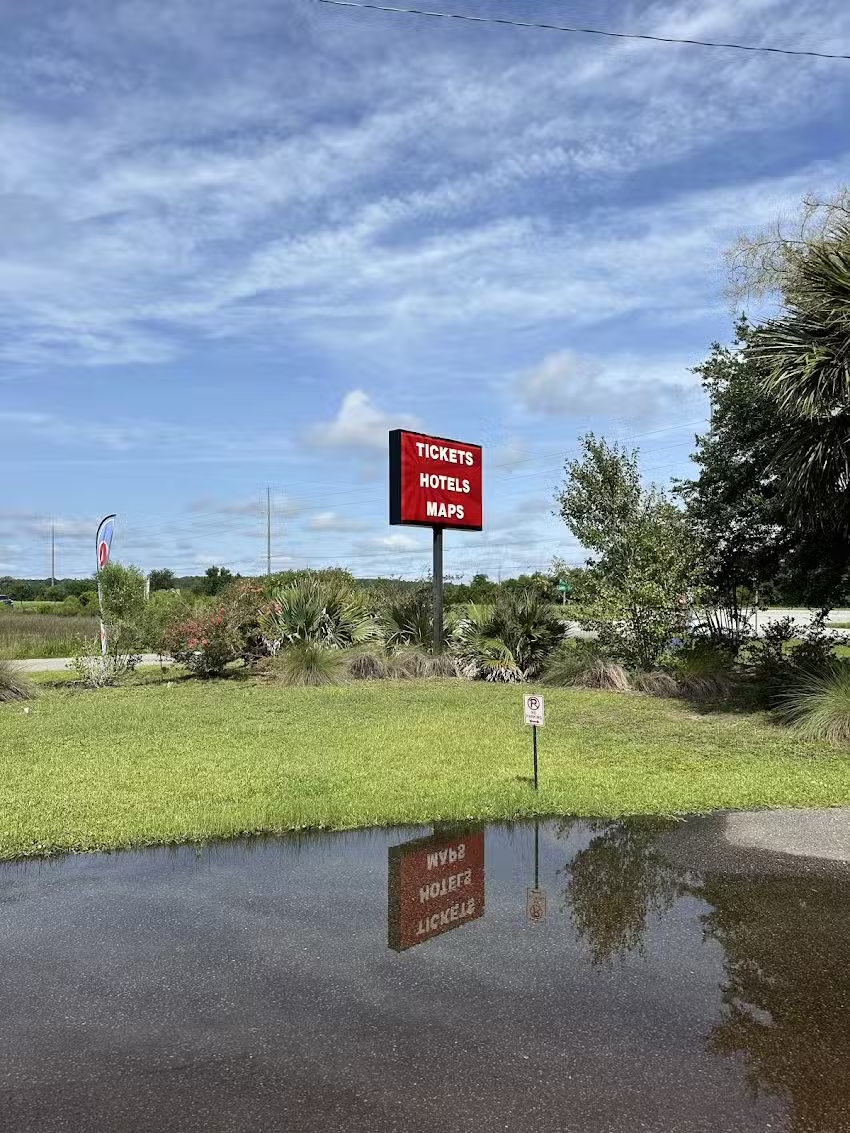
Charleston Tourist Center
BackLocated at 3937 Savannah Highway on Johns Island, the Charleston Tourist Center presents itself as a convenient stop for travelers heading towards the historic heart of Charleston or the nearby resort islands. With its visible roadside presence, including large "OPEN" flags and a whimsical yellow inflatable man that has become a local landmark for some, this establishment aims to be a primary point of contact for visitors. However, a deeper look into customer experiences reveals a significant disconnect between its appearance as a helpful tourist information center and its actual operational reliability. The facility's performance is marked by critical inconsistencies that potential visitors should be aware of before planning a stop.
First Impressions vs. Operational Reality
For many travelers, a tourist center is a sanctuary—a place to rest after a long drive, gather local knowledge, and finalize trip planning. The Charleston Tourist Center appears to fit this role, and some visitors have noted its utility as a simple rest area. It is equipped with a wheelchair-accessible entrance, which is a commendable feature. Yet, the most persistent and damaging feedback revolves around its unreliable business hours. Multiple prospective visitors have reported arriving during stated business hours, drawn in by prominent "OPEN" flags, only to find a locked door. One particularly frustrating instance cited by a visitor was a sign indicating the center was "closed for March Madness." This level of unprofessionalism is a major red flag for a business that should be a reliable resource for travelers who are often on tight schedules.
This inconsistency suggests a fundamental operational flaw. A travel agency or information hub that cannot maintain its own schedule undermines its very purpose. Travelers waste time, fuel, and energy detouring to a location that fails to deliver on its implicit promise of service. This unreliability seems to be a recurring theme, not an isolated incident, leading to significant frustration among those who make the effort to stop.
Communication and Accessibility: Critical Failures
Effective communication is the backbone of any service-oriented business, especially in the tourism sector. Here, the Charleston Tourist Center exhibits another critical failure. A review from a person who had to use the parking lot due to car trouble highlighted a crucial issue: the listed phone number, (843) 573-4849, was not functional. For any business, a non-working phone line is a serious problem. For a tourist center, it's a complete breakdown in service. Visitors may need to call for various reasons:
- To confirm operating hours (a necessary step, given the reports of unexpected closures).
- To inquire about specific vacation packages or ticket availability.
- To ask for directions or clarification on their services.
- To seek assistance in an emergency, as was the case for the stranded motorist.
The inability to reach the center by phone renders any potential off-site booking services useless and isolates the business from its customer base. It suggests a lack of attention to basic business infrastructure, which can leave potential customers feeling ignored and helpless.
Location: A Double-Edged Sword
The center's location on Savannah Highway is strategic in that it intercepts a high volume of traffic. However, this strategic placement comes with a significant and dangerous drawback. Visitors have pointed out that entering and exiting the parking lot is a hazardous endeavor. The highway is a busy, multi-lane thoroughfare with no traffic lights to facilitate safe entry or exit. Drivers are forced to cross several lanes of fast-moving traffic, a maneuver that is both stressful and risky. This logistical challenge is a major deterrent. A place intended to provide convenience and assistance should not pose a safety risk to its patrons. For families with children or less confident drivers, this accessibility issue could be a reason to avoid the center altogether, regardless of the services offered inside.
The Core Services: An Unanswered Question
Despite its name, there is a conspicuous lack of detailed feedback regarding the actual services provided by the Charleston Tourist Center. The available reviews focus almost exclusively on the external experience—the frustration of finding it closed, the difficulty of access, the non-working phone, or the charm of its inflatable mascot. There is little to no mention of the quality of information provided, the helpfulness of the staff, or the value of the tours and tickets sold. This raises questions about its primary function. Is it a comprehensive destination management company or merely a ticket reseller? Does it partner with reputable tour operators to offer a wide range of guided tours?
Without positive testimonials about its core offerings, it's difficult for a potential customer to gauge its value. While some third-party sources suggest it operates as a hub for booking local tours, often at a discount, the lack of an official website or professional online presence makes it difficult to verify these claims or browse options in advance. This opacity, combined with the operational issues, makes it a gamble for travelers seeking reliable travel deals or expert advice on planning their itinerary.
Final Assessment for the Prospective Visitor
The Charleston Tourist Center on Johns Island is an establishment with significant potential that is currently marred by severe operational and logistical shortcomings. On the one hand, it provides a physical stop for travelers and has the capacity to offer valuable services like tour bookings and local information. The curious case of its inflatable man bringing daily joy to a local child adds a touch of quirky, unintentional community engagement.
On the other hand, the reality for many visitors is one of frustration and disappointment. The unreliable hours, misleading "OPEN" signs, a non-functional phone number, and a dangerous entrance/exit are not minor inconveniences; they are fundamental failures that undermine the business's credibility. Travelers planning to visit the Charleston area should approach this center with caution. It is advisable not to make it a critical part of your itinerary. If you do decide to stop, be prepared for the possibility that it may be closed without notice. Relying on this center for last-minute adventure travel plans or essential bookings could prove to be a risky strategy. Until these foundational issues are addressed, it remains a service that, for many, fails to deliver on its promise.