CATO Travel
BackA Specialized Agency with a Highly Specific Clientele
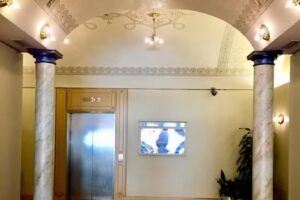
CATO Travel presents a unique case in the landscape of travel agency options. Situated within the Longworth House Office Building in Washington, D.C., its very address signals a departure from the typical storefront operation catering to the general public. Research and the agency's own information confirm this initial impression: CATO Travel, which stands for Combined Airlines Ticket Offices, was established in 1940 and operates with a clear and focused mission. It serves as the dedicated government travel services provider for Members of Congress, Capitol Hill staffers, and members of the U.S. Capitol Police. This specialization is the defining characteristic of the business, shaping every aspect of its operations, from accessibility to service style.
The Strengths: Personalized Service and Deep Expertise
For its target audience, CATO Travel offers significant advantages. The most prominent positive feedback available, a 5-star review from user David Greer, highlights the agency as being "Always accommodating and reliable," and specifically names staff members "Missy and Johnathan" for their excellent care. While a single review is a very small sample size, its content points to a core strength: a highly personalized, relationship-based service model. In an environment where schedules are demanding and travel can be complex and last-minute, having dedicated, reliable agents who understand the specific needs of government personnel is a considerable asset. The agency's website reinforces this by listing its key staff, including managers and reservations agents, fostering a sense of familiarity and direct contact.
This focus translates into a deep well of expertise in a very particular niche. Navigating the regulations, per diems, and security protocols associated with official government travel is a complex task. CATO Travel's decades of experience since its 1940 inception demonstrate a sustained ability to manage these intricacies. They provide an online booking portal specifically for domestic government travel, with instructions tailored to House, Senate, or Police personnel, while advising that more complex international delegations (CODELs/Staffdels) should be handled directly over the phone. This hybrid approach showcases an understanding of their clients' needs—offering technological convenience for simpler trips and expert human oversight for more complicated customized travel itineraries.
Points for Consideration: Exclusivity and Limited Public Information
The very factors that make CATO Travel effective for its intended clients are what render it unsuitable for the general public. The most significant barrier is accessibility. Its location within a secure federal office building means it is not a walk-in business for someone planning a family vacation or a honeymoon. Its services and expertise are tailored exclusively to the legislative branch community. Therefore, anyone seeking vacation packages or leisure travel planning should look elsewhere.
Another major point of consideration for any potential client is the scarcity of public-facing reviews and information. Outside of its own simple, functional website and a single Google review, there is a near-total lack of a digital footprint. In an era where consumers often rely on a broad base of user-generated feedback to make decisions, this can be a significant drawback. It creates an opaque image for outsiders and makes it difficult to gauge the experiences of a wide range of clients. This low profile is likely intentional, reflecting a business model built on internal reputation and word-of-mouth within a closed community rather than public marketing. They don't need a flashy presence because their client base is predefined and captive.
The agency’s online presence reflects its functional, no-frills approach. The website is straightforward, providing necessary tools for its clients, such as links to create a user profile, make online reservations, and view trip details. It is a tool for a specific job, not a platform for inspiration. For a corporate or government client, this efficiency is likely a plus. However, it lacks the engaging content and detailed service descriptions that prospective clients of a typical corporate travel management firm might expect to see before initiating contact.
Final Assessment for Prospective Clients
Evaluating CATO Travel requires understanding its purpose. It is not a conventional travel agency competing for public business. Instead, it is a specialized service provider embedded within the ecosystem it serves.
- The Positives: For a Member of Congress or a Capitol Hill staffer, the value proposition is clear. They get a team of agents with over 80 years of institutional knowledge, a personal touch as evidenced by client feedback, and processes built specifically around the rules of government travel services. Reliability and accommodation are paramount, and the agency appears to deliver on these fronts. The wheelchair-accessible entrance is also a practical plus.
- The Negatives: The primary negative is one of applicability; it is not open to the public. For its actual user base, the only potential drawback is the lack of extensive public feedback, which limits the ability to see a diversity of opinions on their service quality. The reliance on manual ticketing for online reservations made on weekends also presents a minor operational constraint that users must be aware of.
In conclusion, CATO Travel operates as a highly specialized instrument of convenience and expertise for the U.S. legislative branch. Its value is not in broad appeal or public accolades, but in its focused and reliable execution of business travel solutions for a clientele with unique and demanding requirements. While it holds little relevance for the average traveler, it stands as a prime example of a niche service provider that thrives by deeply understanding and catering exclusively to its specific community.