Capulin Volcano National Monument Visitor Center
BackServing as the gateway to a significant geological feature in northeastern New Mexico, the Capulin Volcano National Monument Visitor Center functions as the essential hub for anyone planning to experience this extinct cinder cone volcano. While it is officially a National Park Service facility, its role in preparing and informing visitors makes it the de facto tour operator for the monument. The center provides the necessary context, safety information, and logistical support that shapes the entire visit, from the moment of arrival to the ascent up the volcano's slope.
Based on extensive visitor feedback, the most consistently praised aspect of this establishment is its staff. The park rangers and employees are frequently described as exceptionally friendly, knowledgeable, and genuinely passionate about the monument. Their proactive and encouraging attitude significantly enhances the visitor experience. Accounts detail rangers going above and beyond, such as offering encouragement to elderly visitors attempting a hike, ensuring guest safety during inclement weather, and providing personal comfort items when the gift shop could not. This level of personalized service is rare and transforms a simple nature stop into a memorable part of any road trip destination itinerary.
The Visitor Experience: What to Expect
Upon arrival, the visitor center is the mandatory first stop where entrance fees are paid and essential information is distributed. The center itself houses a small museum with exhibits on the area's geology and history, a bookstore, and a short film that provides an overview of the Raton-Clayton Volcanic Field. This initial briefing is crucial for effective travel planning, as it outlines the available activities and, most importantly, the significant restrictions for accessing the main attraction.
The primary activity is the two-mile scenic drive up Volcano Road, which spirals around the cone to a parking area at the rim. From the summit, visitors are rewarded with panoramic views that can stretch across five states on a clear day. Two main hiking trails are accessible from the top:
- The Crater Rim Trail: A one-mile paved loop that circles the entire rim, offering 360-degree vistas of the surrounding volcanic field and the crater below. While paved, it is described as moderately difficult with some steep sections.
- The Crater Vent Trail: A much shorter but steep 0.2-mile paved trail that descends directly into the volcano's vent, allowing for a unique perspective from inside the cone.
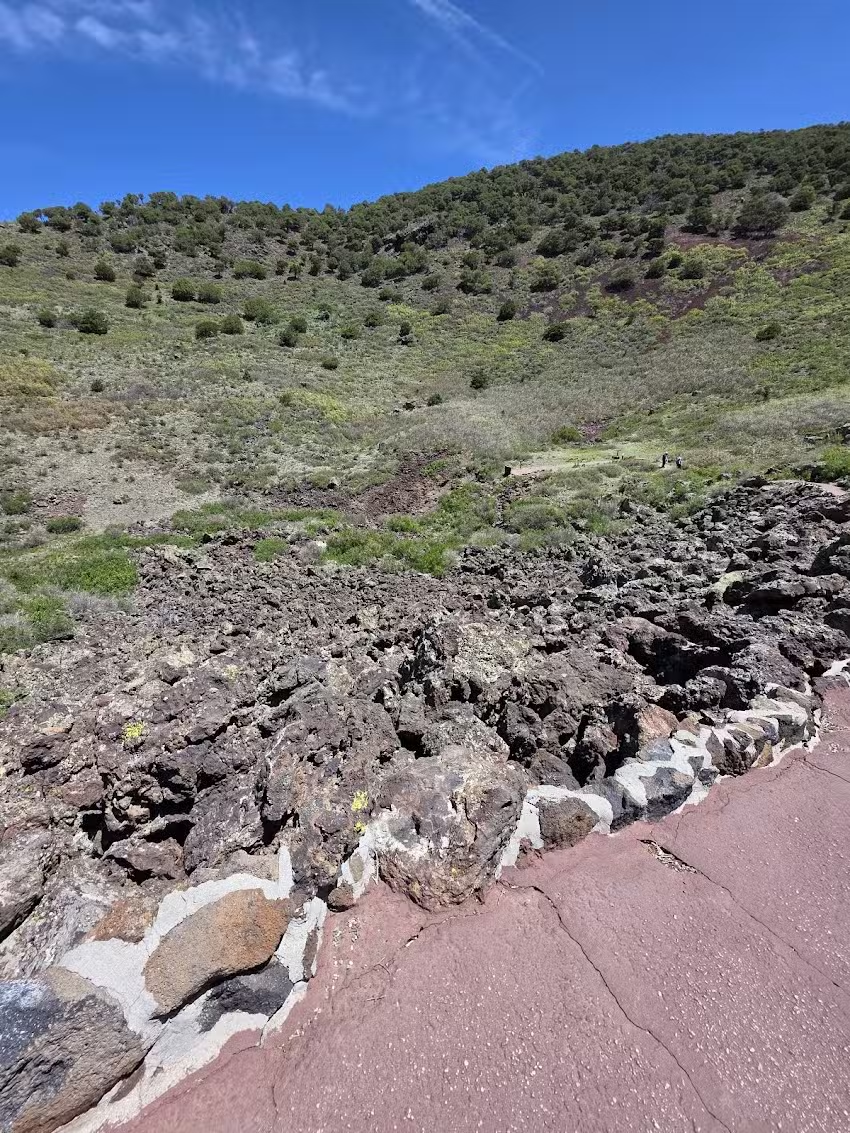
For those interested in eco-tourism and more extensive hiking, there are additional trails at the base of the volcano that depart from the visitor center area, including the ADA-accessible Nature Trail and the more strenuous Boca and Lava Flow trails. These options make the monument a viable stop for various fitness levels and interests, from casual sightseeing to more involved adventure travel.
Strengths of the Operation
The center's success in destination management is evident in its high visitor satisfaction ratings. The combination of a unique, accessible natural wonder with an outstanding team of professionals creates a highly positive experience. The facility is well-maintained, with adequate parking for cars and RVs (at the base), and the wheelchair-accessible entrance ensures inclusivity. Its consistent operating hours, seven days a week, provide reliability for travelers. Many visitors, particularly those on long drives, find it to be an unexpectedly rewarding stop that is perfect for family vacations, offering both education and physical activity.
Critical Limitations and Potential Downsides
Despite the overwhelmingly positive feedback, potential visitors must be aware of several critical limitations. The most significant issue is the strict vehicle restriction on Volcano Road. Vehicles longer than 26 feet or wider than 8 feet are prohibited from driving to the summit. This includes all towed trailers and larger RVs. While there is a designated parking area at the visitor center where trailers can be unhitched, those traveling in a single large RV will not be able to drive to the rim and will miss the main part of the experience. This is a crucial piece of information for anyone planning to visit in a recreational vehicle and a major drawback for that segment of travelers.
Secondly, the quality of the visit is highly dependent on the weather. The volcano's elevation of over 8,000 feet means conditions can be windy and change rapidly. Fog and rain can completely obscure the panoramic views that are the primary draw for many. While some find that misty conditions add a unique atmosphere, those seeking the famous five-state view should check the forecast carefully. The road to the rim may also close temporarily due to snow, ice, or thunderstorms.
Other Considerations for Travelers
Travelers should also note that this is not a full-service destination. Beyond the visitor center's gift shop, which has limited supplies, there are no food or gas services available in the immediate vicinity. It is advisable to arrive with a full tank of gas and bring your own water, snacks, sunscreen, and hats, as the trails offer little shade. Finally, while the monument is an excellent stop, some feel the entrance fee ($20 per private vehicle as of recent data) is steep for an experience that may last only a couple of hours, especially if not using a national parks pass.
In conclusion, the Capulin Volcano National Monument Visitor Center effectively facilitates a remarkable natural encounter. Its greatest asset is its professional and personable staff, who elevate the experience significantly. For travelers with appropriately sized vehicles and an eye on the weather forecast, it is a highly recommended stop. However, the strict vehicle restrictions are a major impediment that must be factored into any travel planning, preventing a portion of road travelers from fully accessing what this unique destination has to offer.