Captain Casey’s Island Cruises L.L.C.
BackCaptain Casey's Island Cruises L.L.C. operates as a specialized tour operator out of Curtis Merritt Harbor in Chincoteague, Virginia, focusing on private and intimate maritime journeys. This service distinguishes itself by offering personalized excursions for small groups of up to six passengers aboard a 24-foot tritoon boat. This focus on small-group travel is a significant departure from larger, more impersonal commercial tours, aiming instead for a tailored experience centered on the region's rich ecology and history.
The Onboard Experience and Service Quality
A consistent theme emerging from customer feedback is the exceptional quality of the guide, Captain Casey himself. He is repeatedly described as highly knowledgeable not only about locating wildlife but also about the history of the islands. Patrons frequently mention his passion for the area, his personable nature, and his ability to create a friendly and engaging atmosphere. This expertise appears to be a cornerstone of the business, transforming a simple boat ride into an educational and narrative-driven event. The vessel is consistently noted for being clean, comfortable, and well-suited for its purpose, providing a stable and spacious platform for wildlife sightseeing.
The company also receives high marks for its flexibility and customer accommodation. Reports indicate a willingness to go above and beyond, such as ensuring a quality tour despite inclement weather. Furthermore, the service is highlighted as being particularly family-friendly excursions, with one family noting the captain's patience and kindness toward their one-year-old child. This level of personalized service suggests that custom requests and the specific interests of the passengers are a priority.
Tour Offerings and Wildlife Encounters
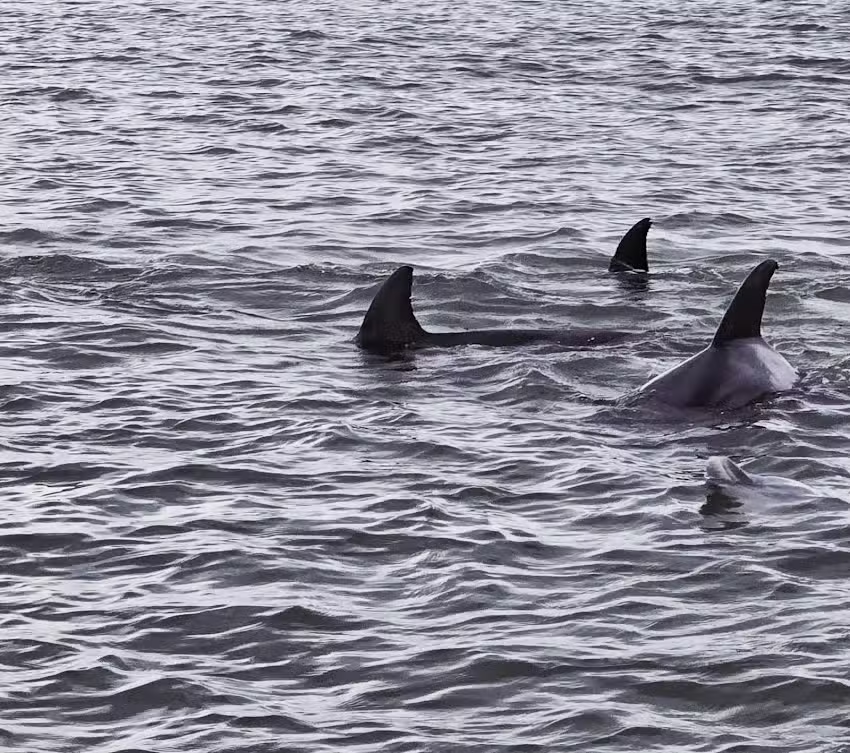
The primary draw for many visitors is the opportunity to see the famous wild ponies of Chincoteague, and by all accounts, Captain Casey's has a high success rate. The tours are designed to maximize chances of viewing not just the ponies, but also pods of dolphins, bald eagles, and various shorebirds. Customer testimonials frequently express delight at seeing dolphins up close and observing multiple bands of horses. The captain's familiarity with the local waters and animal habits is cited as a key factor in these successful sightings.
The official website outlines several types of Chincoteague boat tours, including:
- Wildlife Cruise: The most popular option, focused on finding the northern and southern pony herds, dolphins, and eagles.
- Deluxe Cruise: A longer, three-hour tour that combines comprehensive wildlife searching with a full circumnavigation of Chincoteague Island.
- Sunset Cruises: Combining scenic views with wildlife spotting during the golden hour, a popular choice for photographers and couples.
- Customizable Tours: The company emphasizes that its private charters can be tailored to the specific desires of the group, whether the focus is on history, relaxation, or specific wildlife.
Considerations Before Booking
While feedback is overwhelmingly positive, potential customers should consider a few key points. As a provider of private and semi-private tours, the cost is likely higher than that of larger group tours in the area. This is a premium service, and the pricing reflects the exclusivity and personalized attention. It is advisable to book well in advance, especially during peak tourist seasons, as the boat's limited capacity of six passengers means that availability is scarce.
Additionally, like any nautical activity, all tours are subject to weather conditions. While the captain may still operate in light rain, severe weather can lead to cancellations or altered experiences. It is also important for visitors to manage expectations; while the captain has a great track record, wildlife sightings are never guaranteed. Finally, a practical tip mentioned by a past customer is to dress in layers and bring blankets for sunset cruises or cooler days, as the temperature on the water can be significantly lower than on land.