Cane River National Heritage Area, Inc.
BackCane River National Heritage Area, Inc. operates as the central nervous system for tourism in a historically significant swath of Louisiana. Rather than a conventional travel agency that books flights and hotels, this non-profit organization functions as a crucial destination management entity, tasked by the U.S. Congress to preserve and promote the unique, multicultural landscape it oversees. For travelers seeking a deep and authentic experience of Louisiana's Creole culture, this office is the definitive starting point for effective travel planning. However, its structure and operational limitations present a double-edged sword for potential visitors.
The organization is responsible for a vast 116,000-acre area that is not a single park but a lived-in, rural region rich with historic plantations, churches, and homes. This includes nationally recognized sites like the Cane River Creole National Historical Park, which itself contains the Oakland and Magnolia Plantations, Melrose Plantation, and the historic city of Natchitoches, the oldest permanent settlement within the Louisiana Purchase. The primary role of Cane River National Heritage Area, Inc. is to provide the context, stories, and resources needed to connect these disparate sites into a cohesive journey. They are the official storytellers and curators of the region's complex history, which involves a blend of French, Spanish, African, American Indian, and Creole influences.
The Strengths: An Authoritative Resource for Cultural Tourism
For the discerning traveler, the greatest asset of this organization is its authority and comprehensive knowledge. It acts as an indispensable resource for building customized itineraries focused on cultural tourism and heritage tours. The staff and the materials they provide offer unparalleled insight into the area’s history, from its colonial origins to the realities of plantation life and the evolution of Creole traditions. This is not a superficial overview; it is a deep dive facilitated by the very entity charged with the region's preservation.
Positive visitor feedback often highlights the serene beauty and pristine condition of the locations within the heritage area, a testament to the organization's successful preservation efforts. User reviews frequently mention the relaxing atmosphere and clean environments, ideal for leisurely walks and picnics. This reflects well on the agency's role in maintaining the integrity and appeal of the historical sites they promote. Furthermore, the organization actively fosters community engagement by supporting local events, such as parades and festivals, which enriches the visitor experience and supports sustainable eco-tourism by integrating visitors into the living culture of the region.
Key Services and Offerings
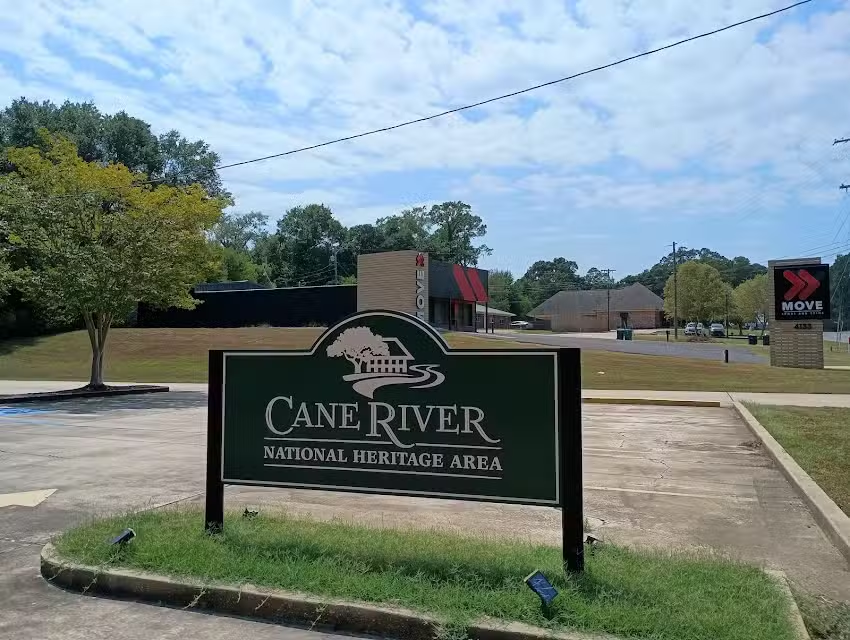
- Expert Information: The office, located at 4115 University Pkwy, serves as a primary hub for maps, brochures, and expert recommendations. Visitors can gain a clear understanding of the geography and significance of the various sites before setting out.
- Guided Walking Tours: The organization collaborates on free, guided walking tours that delve into the history of the Natchitoches historic district. This is a significant value-add for tourists, providing expert interpretation at no cost. For larger groups, they are the main point of contact for arranging more extensive tours.
- Partnerships and Coordination: They work in partnership with numerous local sites, including state historic sites and national parks. This network ensures that visitors receive accurate and consistent information across the entire heritage area. They essentially act as the coordinating body for a wide array of local excursions.
- Accessibility: The main office features wheelchair-accessible entrances, demonstrating a commitment to making the region's history available to all visitors.
The Drawbacks: Navigating the Limitations
Despite its invaluable role, Cane River National Heritage Area, Inc. has practical limitations that potential visitors must consider. The most significant challenge is its operating hours. The office is open only from 9:00 AM to 4:00 PM on weekdays and is closed entirely on weekends. This schedule is a major inconvenience for the majority of tourists, particularly those on short weekend trips who would benefit most from expert orientation upon arrival. This limitation means that spontaneous travelers or those arriving after hours or on a Saturday will miss the opportunity to engage directly with the organization's resources and staff, undermining its function as a welcoming hub for visitors.
Another point of potential confusion is the nature of its business. While categorized as a travel agency, it does not function as a commercial tour operator. Visitors cannot book accommodations, purchase tickets for specific plantation tours, or arrange transportation through this office. Its role is strictly informational and educational. Those looking for all-in-one vacation packages will need to manage their own bookings with individual sites and local service providers. The organization's website is a rich source of information for planning, but the execution of those plans—the actual reservations—is left to the traveler.
Managing Expectations
It is crucial for visitors to understand that Cane River National Heritage Area, Inc. is not the destination itself, but the key to unlocking it. Its physical address is an administrative office and information center, not a central museum or attraction. The real "product" is the sprawling, multi-site heritage area. Travelers who arrive expecting a centralized visitor complex might be disappointed. The value lies in using the organization's resources to plan a journey through the dozens of historical sites scattered throughout the region.
Conclusion
Cane River National Heritage Area, Inc. is an essential, authoritative entity for anyone serious about understanding the rich cultural tapestry of the Natchitoches region. It excels as a facilitator of deep, meaningful heritage tours and is the premier resource for crafting a well-informed itinerary. The passion for preservation and education is evident in the quality of the sites and the information provided. However, its limited weekday-only office hours are a significant practical barrier for many tourists. It best serves the meticulous planner who can connect with them in advance or during their limited hours. For those seeking comprehensive booking services or weekend-of assistance, it falls short of the traditional tour operator model. Ultimately, it is a highly recommended, albeit functionally specific, starting point for any exploration of this unique corner of America.