
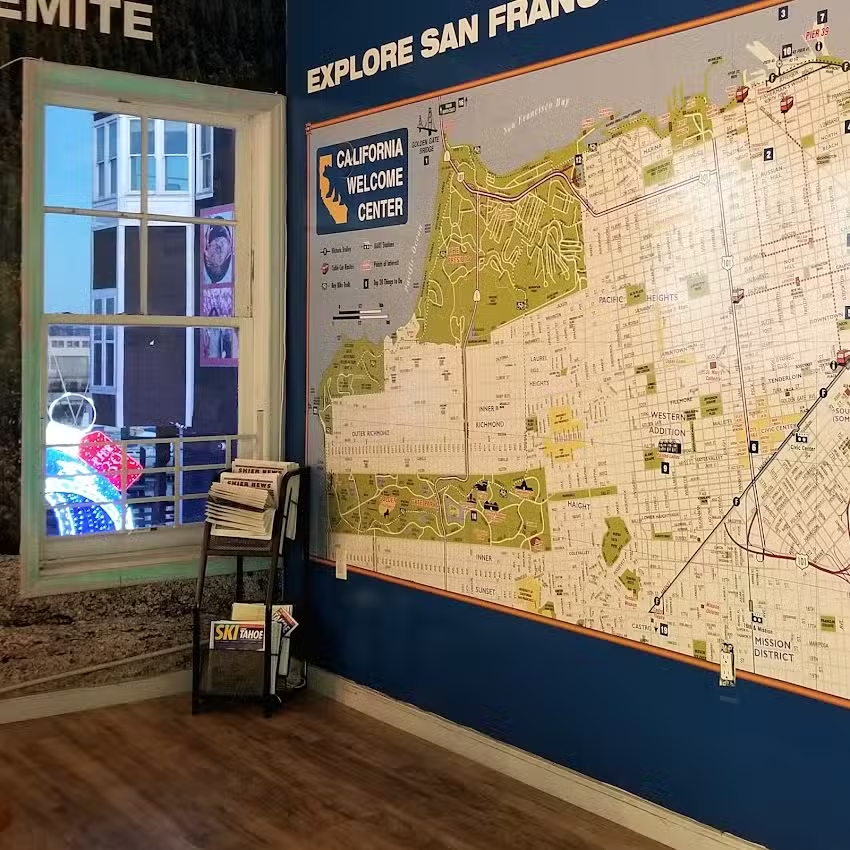
California Welcome Center
BackSituated at the bustling Pier 39, the California Welcome Center serves as San Francisco's official, state-designated resource for travelers. As part of a network of over 20 such centers across California, its stated mission is to act as a personal concierge for visitors, offering tailored information to enrich their stay. Its location is undeniably strategic, placing it directly in the path of thousands of tourists daily who flock to Fisherman's Wharf. The center aims to be more than just a counter with pamphlets; it is designed to be a comprehensive hub for travel planning, offering a multitude of services under one roof. However, visitor experiences suggest that the quality of service can vary dramatically, creating a dichotomy between its official promise and its on-the-ground reality.
The Potential for Exceptional Service
On its best days, the California Welcome Center at Pier 39 embodies the ideal of a premier tourist information center. Numerous visitors have lauded the staff for being exceptionally friendly, knowledgeable, and genuinely helpful. Specific employees, such as Mel and Corvina, have been singled out in reviews for their positive energy and insightful advice. Patrons describe staff who go beyond simply pointing to a map, instead offering practical, money-saving tips and assistance with itinerary planning. One notable example frequently mentioned is the advice on public transportation; visitors have been guided toward purchasing a daily transit pass for a reasonable price, a tip that significantly improves the ease and affordability of navigating the city.
This level of service aligns perfectly with the center's role as an official state resource. The staff, at their best, act as true travel specialists, providing insights that a visitor might not find online. They assist with understanding the city's layout, from reaching Chinatown and Japantown efficiently to making sense of the cable car system. This personalized touch transforms the center from a passive repository of information into an active partner in a traveler's journey. The extensive operating hours, running from 8:30 AM to 9:00 PM seven days a week, further enhance its utility, ensuring that early risers and late arrivals alike can access its resources.
A Hub for Practical Traveler Needs
Beyond personalized advice, the center offers a robust suite of tangible services that cater to the practical needs of almost any traveler. This is where it functions most effectively as a one-stop travel agency. The services available include:
- Ticket Sales: Visitors can purchase tickets for many of San Francisco's most popular attractions, such as Alcatraz, the Aquarium of the Bay, and various bus tours. This can be a significant time-saver and sometimes comes with discounts not available elsewhere.
- Reservations: The staff can assist with hotel reservations, helping travelers find accommodations.
- Practical Rentals: For families or those with mobility concerns, the center offers wheelchair and stroller rentals, a highly convenient service in a large, walkable area like Pier 39.
- Luggage Storage: A key offering for those with awkward gaps between hotel checkout and flight departure times is the on-site luggage storage.
- Connectivity and Shipping: The center provides internet access and even USPS shipping services, allowing visitors to send postcards or purchases home directly.
These concrete services provide a reliable baseline of value. Even if a visitor has a less-than-stellar interaction regarding travel advice, they can still accomplish a great deal of practical trip planning and logistics at this single location.
Inconsistent Experiences: The Risk of Disappointment
Despite the glowing reports, there is a significant counter-narrative from visitors who have left the California Welcome Center feeling disappointed and unassisted. This suggests a notable inconsistency in the customer experience, likely dependent on the specific staff member on duty. One detailed account highlights a particularly negative interaction where a request for advice on airport transportation was met with a generic "Take an Uber," a response that lacks the insider knowledge a traveler would hope for from an official welcome center. This same visitor, upon arriving in person, found the center to be little more than "shelves of brochures," with a staff member who seemed uninformed and offered irrelevant discount cards to high-end restaurants rather than tailored suggestions.
This experience stands in stark contrast to the praise heaped upon employees like Mel. It points to a critical flaw: the center's greatest asset—its human expertise—is also its most unreliable variable. The complaint that the center can feel like a passive collection of pamphlets rather than a dynamic source of information is a recurring theme in mixed reviews. For a traveler seeking authentic, up-to-date knowledge about the city, being directed to a brochure that they could have found in any hotel lobby is a frustrating outcome. This inconsistency means that while some visitors receive valuable help in discovering San Francisco tours and activities, others may feel they are navigating a tourist trap information booth.
Making the Most of Your Visit
Given the variable nature of the advisory services, potential visitors should approach the California Welcome Center with a clear strategy. For concrete needs, it remains an excellent resource. If you need to buy tickets for a bay cruise, store your bags for a few hours, or simply pick up a physical city map, the center is a reliable and convenient option. Its function as a sales point for vacation packages and tours is straightforward and efficient.
When seeking advice, however, it pays to be prepared. Arrive with specific questions rather than a vague request for "things to do." If the first staff member you speak with is unhelpful or provides only generic answers, don't be discouraged. It may be worthwhile to wait for another employee or return at a different time, as you might then encounter one of the highly-praised experts. Ultimately, visitors should view the center as a primary stop for logistics and a potential, but not guaranteed, source for high-quality, personalized recommendations for their holiday packages or daily excursions.